


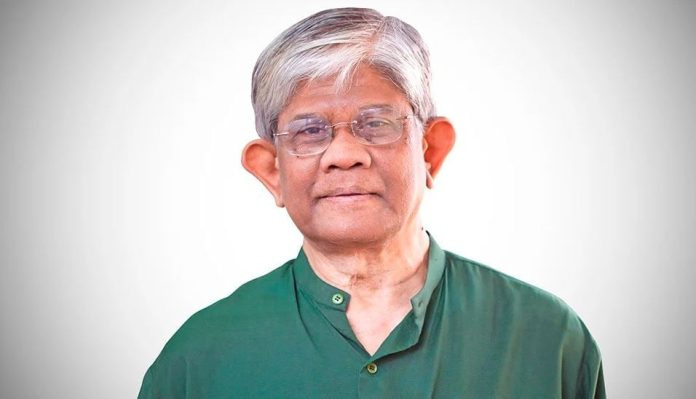
Finance Adviser Dr Salehuddin Ahmed has cautioned that Bangladesh will struggle to move forward if it continues relying on debt without significantly increasing income tax collection. He delivered the warning on Wednesday at a seminar marking VAT Day and VAT Week 2025, held at the NBR revenue building in Agargaon.
NBR Chairman Md Abdur Rahman Khan presided over the event.
Dr Ahmed said Bangladesh must rethink its entire revenue approach. “With our limited resources, progress is possible—but this will be our biggest challenge. Without increasing income tax, it will be very difficult to move forward by taking more loans,” he said.
He urged the government to shift from a VAT-heavy revenue model to one led by income tax. “We should be income tax–dependent, not VAT-dependent,” he said, calling for a technology-driven, citizen-friendly overhaul of the tax administration.
The adviser highlighted concerns that some VAT collected from consumers does not reach the government treasury. “If you or I pay VAT, it must reach the exchequer. Unfortunately, that does not always happen,” he said, stressing the need for tighter monitoring to prevent leakages.
He also noted that a culture of avoiding VAT persists among both consumers and businesses. “People often go to another shop just to avoid paying VAT. This mindset needs to change,” he said, adding that taxpayers expect better public services in exchange for taxes. “People will only be convinced to pay taxes if they see clear returns.”
Dr Ahmed urged the NBR to accelerate VAT modernisation within the next couple of months so the next government can continue reforms “in right earnest.”
Revenue System Must Not Harass Taxpayers
NBR Chairman Md Abdur Rahman Khan stressed fair treatment of taxpayers, saying revenue mobilisation should be approached with care. “Revenue collection is like harvesting honey. You must keep the taxpayer alive—you cannot kill the goose that lays the golden eggs,” he said.
He acknowledged that VAT growth had stagnated since 2012, partly because the new VAT law—intended to simplify the system—became more complex than the 1991 Act.
The NBR chief also admitted substantial leakages in income tax collection. “The largest share of revenue should come from income tax, then VAT, and the smallest from customs. But revenue is not rising at the rate it should,” he said.
He argued that full digitalisation of the revenue administration is the only sustainable solution. “Even after 32 years, we have not achieved complete digitalisation. When expenditure rises and income remains low, debt increases—this is true for families and for the state,” he said.
Rahman added that revenue collection, although growing, remains far below potential. The VAT registration threshold was reduced from Tk 3 crore to Tk 50 lakh, but the expected influx of new registrants never came.
“Businesses know who remains outside the net. Some prefer investing abroad because they do not get adequate support here. If we cannot ‘nurse’ those who pay taxes, investment will not grow,” he said.
The NBR chairman reiterated that taxpayers must be treated as partners. “Harassment deters investment and compliance. We must keep taxpayers alive,” he said.