


The national budget was presented with a vision of transforming Bangladesh into a trillion-dollar economy by 2034 and building a welfare-oriented state through short-, medium-, and long-term development plans. Finance and Planning Adviser Amir Hossain Chowdhury outlined these goals during his budget speech.
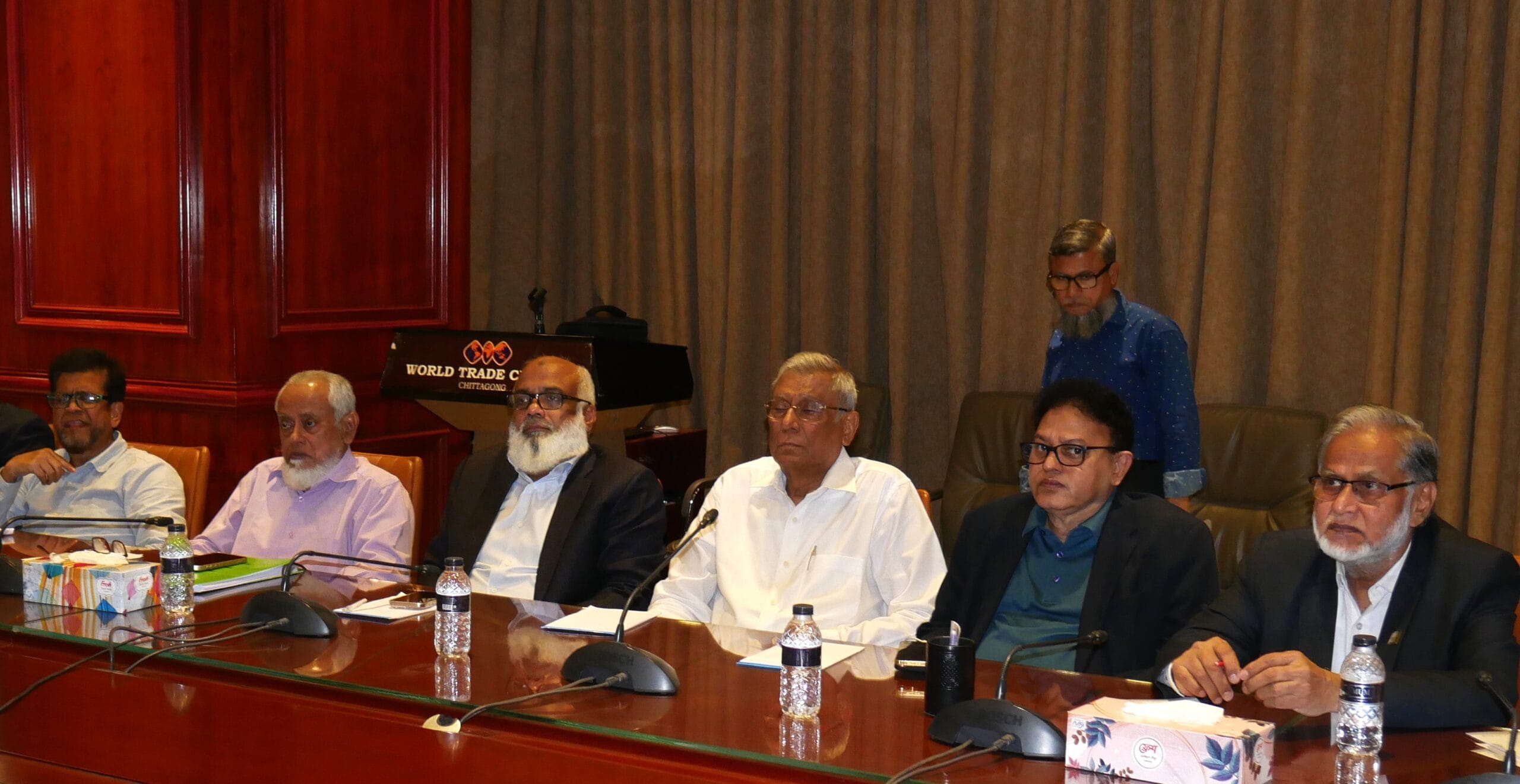
In its reaction to the budget, leaders of the Chattogram Chamber of Commerce and Industry (CCCI) praised the government’s efforts to curb inflation, ensure food security, and maintain supply-chain stability despite global economic uncertainty and ongoing geopolitical conflicts. They described the budget as people-friendly and business-oriented, highlighting measures aimed at broadening the tax net while reducing the burden of VAT and taxes on ordinary citizens.
The Chamber noted that initiatives to modernise Chattogram Port and introduce new policies to attract domestic and foreign investment would strengthen the region’s economic prospects. It also welcomed plans to implement the Dhaka–Chattogram Elevated Expressway and reduce travel time between Dhaka and Chattogram, describing these projects as transformative for Bangladesh’s economic connectivity.
Business leaders further urged the government to ensure uninterrupted supplies of gas, electricity and water to industries in the Chattogram region, while expanding utility services in the Mirsarai Economic Zone to make the area more attractive for investment.
According to the proposed budget, total expenditure has been set at Tk 938,000 crore, total revenue at Tk 695,000 crore, and the overall budget deficit at Tk 243,000 crore. Chamber leaders viewed the government’s emphasis on domestic financing over foreign borrowing as a sign of growing economic resilience. They also welcomed the prioritisation of human resource development and the education sector.
Among the tax measures, the turnover tax threshold for individual taxpayers has been increased from Tk 3 crore to Tk 4 crore, while the tax-free limit on bank deposits has been raised from Tk 300,000 to Tk 400,000, a move expected to encourage greater savings within the banking system.
The Chamber also praised several social welfare initiatives, including increases in social safety-net allowances, the introduction of a Tk 2,500 family card scheme, expanded support for persons with disabilities, the phased provision of cards for farmers, agricultural loans of up to Tk 10,000, collateral-free loans of up to Tk 1 million for young entrepreneurs, and education loans of up to Tk 1 million for students pursuing higher studies abroad.
Business representatives welcomed measures to simplify the corporate tax system, facilitate online tax return submissions and maintain existing corporate tax rates.
The Chamber believes that maintaining a reduced tax rate for private educational institutions will encourage greater investment in the education sector.
It also welcomed the withdrawal of regulatory duties on 113 imported products, supplementary duties on nine products, and the reduction of customs duties on 69 products from 25% to 15%. Additional incentives for importing raw materials used in baby food, spices, poultry, dairy and fisheries production are expected to ease inflationary pressures and enhance consumers’ purchasing power.
Energy-related incentives received particular praise. The budget offers tax concessions on the import of solar panels, lithium batteries and solar equipment, measures expected to improve energy efficiency and promote renewable energy adoption. Incentives for the semiconductor industry and reduced advance income tax on imported electric vehicles (EVs) are also expected to attract both local and foreign investment while reducing dependence on conventional fuels.
The Chamber further welcomed tax benefits for importing raw materials used in cancer drug manufacturing, which it believes will help expand domestic pharmaceutical production. A waiver of 5% advance tax on kidney dialysis filters was also highlighted as a significant relief for patients.
In the technology sector, leaders praised tax exemptions for freelancers using formal banking channels, tax-free income provisions for content creators, and the elimination of turnover tax for start-ups, innovation-driven enterprises and technology-based businesses. The budget also increases the tax-free threshold for SME entrepreneurs to Tk 5 million, and to Tk 7 million for women and entrepreneurs with disabilities.
To encourage investment outside the major metropolitan areas, the budget proposes accelerated depreciation benefits on investments in productive industries, tourism and sports facilities located beyond the Dhaka and Chattogram city corporation areas, allowing 60% depreciation in the first year and 40% in the second year.
Finally, the Chamber observed that reforms in customs, logistics, private ports and terminal operations, along with related policy measures, would help enhance the efficiency of Chattogram Port and attract greater domestic and international investment centred around Bangladesh’s principal maritime gateway.