


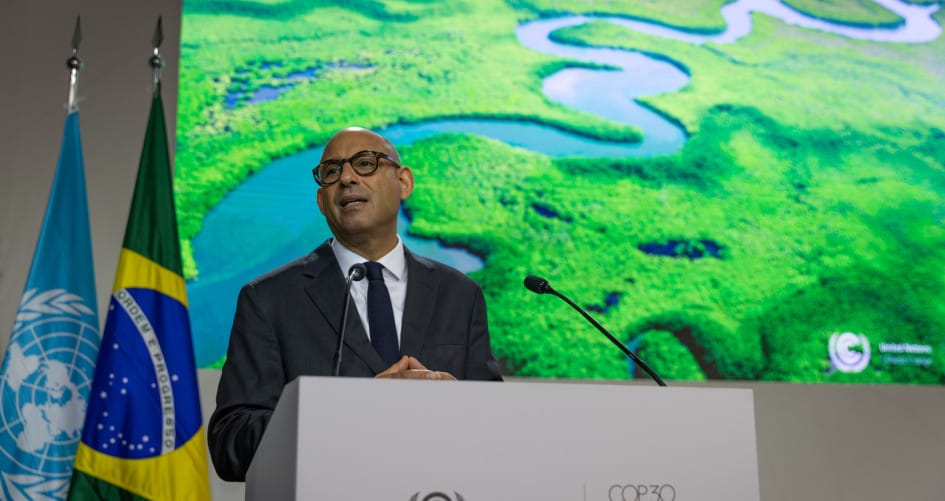
30th United Nations Climate Change Conference (COP30) opened today in Belém, on the edge of the Amazon rainforest, marking a pivotal moment in global climate diplomacy. The summit brings together world leaders, scientists, activists, and civil society representatives in what Brazil is calling a mutirão — a collective task — to confront the escalating climate crisis.
Hosted under Brazil’s presidency, COP30 will revolve around an “action agenda” of 30 key goals, each steered by dedicated activation groups to scale up real-world climate solutions. The conference, running through November 21, is chaired by Brazil’s Secretary for Climate, Energy and Environment, André Corrêa do Lago, and is the first-ever COP held in the Amazon region.
Symbolism and Urgency at the Amazon’s Doorstep
Belém’s selection as host city underscores both the symbolism and urgency of this year’s conference. The Amazon — often called the lungs of the Earth — is under mounting threat from deforestation, fires, and droughts. Brazil, home to the world’s largest tropical forest, hopes to spotlight Indigenous leadership and knowledge as essential to preserving biodiversity and stabilizing the global climate.
President Luiz Inácio Lula da Silva opened the summit with a call for collective mobilization to end tropical deforestation and honor past climate commitments. “This is the time for action, not promises,” Lula said, urging wealthier nations to deliver long-delayed climate finance and step up emissions cuts.
From Commitments to Implementation
COP30 is being billed as the “Implementation COP,” focusing on turning previous pledges into measurable outcomes. Delegates will negotiate on climate finance for forest protection, adaptation strategies for vulnerable nations, and mechanisms for accountability and transparency in global climate action.
For the first time, a UN climate conference formally acknowledges that the world has already surpassed the 1.5°C warming limit — a sobering admission that underscores the urgency of stronger mitigation and adaptation measures.
Tensions Over Responsibility and Finance
Even as the conference opens, tensions are surfacing between industrialized and developing nations over financing and responsibility. A group of 25 UN experts is preparing to issue a statement calling for the full implementation of the International Court of Justice’s recent ruling, which established that all states have legal obligations to prevent and mitigate climate harm — with developed countries required to act first under the “common but differentiated responsibilities” (CBDR) principle.
Small Island States, representing some of the world’s most climate-vulnerable nations, have warned that the moral test of the Paris Agreement lies in whether major emitters deliver real support. “We did not cause this crisis, yet we bear its consequences,” said a delegate from the Alliance of Small Island States (AOSIS), demanding stronger finance commitments and a rapid fossil fuel phase-out.
Developing nations are also pushing for new frameworks such as debt-for-climate swaps to ease economic pressure and fund clean energy transitions.
Global Politics in Play
Global geopolitics continue to shadow the negotiations. U.S. President Donald Trump has again withdrawn the United States from the Paris Agreement and announced he will not attend COP30, calling climate change “the greatest hoax ever.” Analysts warn, however, that Washington may still exert influence indirectly through trade and diplomatic channels.
China is expected to take a more active role this year, touting its rapid advances in renewable energy, while the European Union faces internal political pressure that has slowed its emissions targets. Observers suggest that in the absence of the U.S., joint leadership between the EU and China could shape the outcome of Belém’s talks.
Climate Migration and the Human Cost
According to the UN Refugee Agency (UNHCR), climate-related disasters have displaced nearly 250 million people worldwide over the past decade — an average of 70,000 people every day. Floods, storms, and droughts are now major drivers of forced migration, with countries such as Sudan, Myanmar, and Haiti among the hardest hit.
UNHCR chief Filippo Grandi urged negotiators to channel more climate finance toward vulnerable communities, warning that “funding cuts are severely limiting the ability of displaced families to protect themselves from extreme weather.”
A Call for Inclusion and Indigenous Leadership
This year’s COP highlights Indigenous participation more prominently than ever. Indigenous leaders from across the Amazon and beyond are advocating for land rights and recognition of their traditional knowledge as essential tools for forest conservation. Civil society and youth groups are also playing a visible role, pressing for accountability and demanding that governments move from rhetoric to results.
Looking Ahead
As COP30 unfolds over the next 11 days, the world will watch whether Belém delivers on its promise to shift from negotiation to implementation. The decisions made here will determine not only the fate of the Amazon but also the credibility of the global climate system built over the past three decades.
The 30th UN Climate Change Conference in Belém, Brazil, is not just a global climate summit, but also the largest gathering of global political, economic and humanitarian crises.
Held in the heart of the world’s most important rainforest, the conference demonstrates that the climate crisis is no longer just a matter of science, but also of international law, human rights, justice and survival, said Professor Dr. Ahmad Kamruzzaman Majunder, Professor of the Department of Environmental Science, Stamford University Bangladesh.
The crisis of trust between rich and poor countries, the ambiguity of climate finance, and the growing number of displaced people show that time is running out. With the International Court of Justice ruling, the legalization of the 1.5°C target, the call to move away from fossil fuels, and the “Baku-to-Belém” roadmap—COP30 is a turning point that will either show the way to a sustainable future or add another failed chapter to the history of climate commitments, he added.