


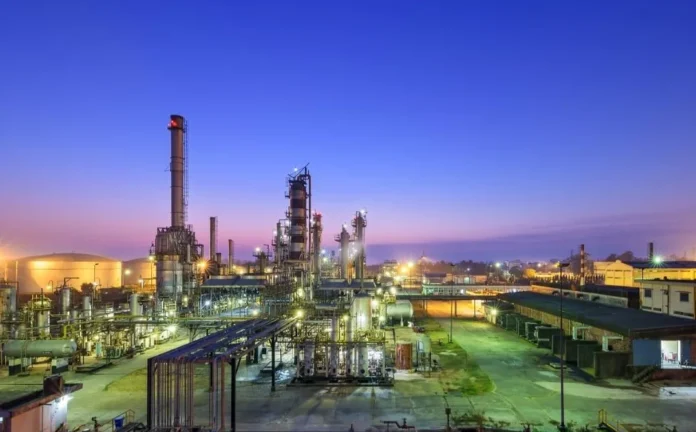
The Islamic Development Bank (IsDB) has agreed to provide a $1.04 billion loan to state-owned Bangladesh Petroleum Corporation (BPC) for the implementation of the country’s largest oil refinery expansion project — the second unit of Eastern Refinery Limited (ERL-2), officials confirmed.
The project, officially titled the “Modernisation and Expansion of Eastern Refinery Limited”, is estimated to cost $2.89 billion and is considered a key component of Bangladesh’s long-term energy security strategy.
“The government will sign the loan agreement with IsDB shortly for implementation of the project, as the lender has agreed to provide more than $1 billion in financing,” Energy and Mineral Resources Division Secretary Mohammad Saiful Islam told Just Energy News.
Another official familiar with the process said the agreement is expected to be signed in mid-June after the IsDB formally places the financing proposal before its board next month.
In a major procedural step, Bangladesh Petroleum Corporation on Sunday invited Requests for Expression of Interest (REOI) for the appointment of a Project Management Consultant (PMC) for the refinery project.
Describing the move as a significant milestone, ERL Managing Director Sharif Hasnat said the refinery expansion would substantially strengthen Bangladesh’s refining capacity and energy infrastructure.
“The successful implementation of the project will have a positive impact on strengthening the country’s refining capacity and energy infrastructure,” he said, adding that BPC aims to appoint the consultant within 42 days.
Refinery capacity to triple
The proposed ERL-2 unit will have an annual crude oil refining capacity of 3 million tonnes. Once operational, it will raise the total capacity of Bangladesh’s only state-run refinery to 4.5 million tonnes a year from the current 1.5 million tonnes.
Officials estimate the expanded refinery could meet 45% to 50% of domestic demand for refined petroleum products, compared with roughly 20% at present, significantly reducing dependence on imported refined fuel.
Bangladesh currently consumes around 7.5 million tonnes of refined petroleum products annually, forcing the country to spend large amounts of foreign currency on imports and subsidies.
The expanded facility is also expected to produce Euro-5 standard fuels, including gasoline, diesel, motor spirit and octane, while upgrading the existing refinery’s output to cleaner fuel standards.
Delays and financing challenges
The refinery expansion project has faced repeated delays for more than a decade because of financing constraints, bureaucratic hurdles and policy uncertainty.
The initiative was first conceived in 2010 following a feasibility study completed in 2009. An attempt to implement the project in 2013 at an estimated cost of Tk13,000 crore failed to progress. A second attempt in 2022, backed by government funding estimated at Tk23,000 crore, also stalled.
In 2024, business conglomerate S Alam Group proposed constructing ERL-2 with backing from the then Awami League government, but the plan collapsed after the fall of former Prime Minister Sheikh Hasina amid mass political unrest.
The interim administration later revived the project and sought foreign financing, including from Middle Eastern lenders. While earlier efforts to secure loans from Saudi Arabia and other Gulf countries did not succeed, the IsDB financing package now appears set to move the project forward.
In November 2025, the Project Evaluation Committee granted preliminary approval for implementation between December 2025 and November 2030 at an estimated cost of Tk35,465 crore following revisions by the Planning Commission.
Project director yet to be appointed
Despite progress on financing, the Energy and Mineral Resources Division has yet to appoint a project director for ERL-2, a position considered crucial for implementation oversight.
Officials said the delay in appointing a project director has raised concerns within sections of the energy sector bureaucracy as the government prepares to move into the execution phase of the multi-billion-dollar refinery project.
Sources said some officials within the ministry including EMRD Deputy Secretary Asma Ara Begum are lobbying for the position, further complicating the appointment process.
Strategic importance
Established in 1968 in Chattogram under the supervision of French contractor Technip, Eastern Refinery Limited remains Bangladesh’s only crude oil refinery.
To support future refinery expansion, BPC has already installed a Single Point Mooring (SPM) system with a double pipeline capable of transporting 4.5 million tonnes of crude oil directly from large offshore vessels to onshore refinery facilities.
The project will include site preparation, detailed engineering, procurement, civil and mechanical construction, installation of 20 processing units and 18 utility and offsite units, alongside new electricity and gas connections.
Energy officials believe the project will play a central role in reducing Bangladesh’s dependence on imported refined petroleum products, easing pressure on foreign exchange reserves and improving long-term fuel security.