


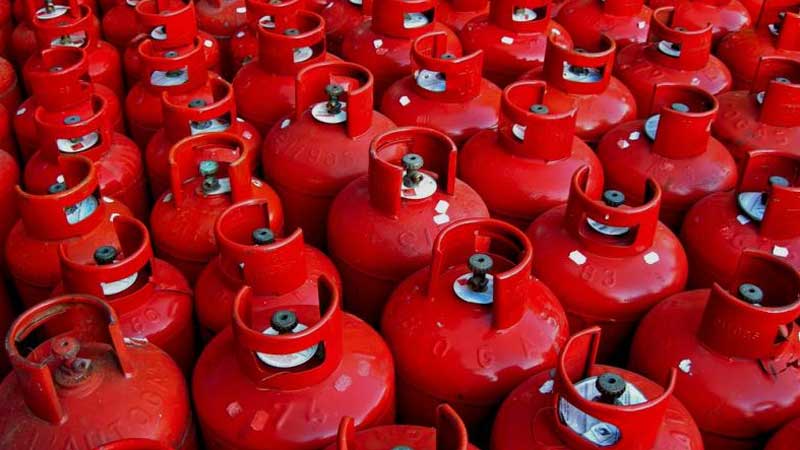
Bangladesh’s liquefied petroleum gas (LPG) market has entered a renewed period of disruption, with consumers across major cities paying well above government-fixed prices despite official assurances that supplies remain adequate.
In Dhaka, Chattogram, Khulna, Rajshahi, Sylhet, Faridpur and Mymensingh, 12kg LPG cylinders are selling for between Tk 1,650 and Tk 2,200, significantly higher than the Tk 1,306 rate set by the Bangladesh Energy Regulatory Commission (BERC) for January. Official data show that LPG imports are stable and national stock levels are sufficient, raising concerns over market manipulation and distribution bottlenecks.
Rahim Uddin, a textile company executive living in Dhaka’s Mirpur area, said he recently paid Tk 4,500 for a 35kg cylinder from a Petrobangla-affiliated brand, far above the official price. “The distributor said there was a shortage and that it was difficult to arrange a cylinder,” he said.
Similar complaints have emerged outside the capital. In Magura, the owner of Jolojon Hotel & Restaurant said he paid Tk 3,900 for a 35kg cylinder, around Tk 400 above the official rate, adding that new supplies were unavailable due to a traders’ strike.
Md Anwar Hossain, an LPG retailer in Magura, said supplies from several major brands, including Bashundhara, Jamuna, Beximco, Omera, TMSS and Delta, had been scarce for weeks. He added that customers were being forced to buy United Aygaz cylinders at inflated prices without the option to exchange empty bottles, a departure from normal practice.
Attempts to contact Bashundhara distribution officials in Dhaka for comment were unsuccessful.
Distribution pressures
Traders argue that the crisis stems not from import shortages but from a distribution system dominated by a small number of large operators who allegedly impose inflated wholesale prices.
Kamal Hossain, an LPG trader in Dhaka’s Sadarghat area, said selling at the government-set price had become unviable. “Companies are charging us up to Tk 1,340 per cylinder. If we sell at Tk 1,306, we incur losses,” he said.
In Chattogram, Abdur Rahman, a local distributor manager, said higher supplier costs were inevitably passed on to consumers, pushing prices for a 12kg cylinder to Tk 1,700–1,800.
Recent documents seen by industry sources suggest some major importers may have sold LPG above BERC-approved rates, raising questions about regulatory oversight and enforcement.
Consumers under strain
Urban households, particularly those without access to piped gas, are bearing the brunt of the price surge. In Dhaka’s Rampura area, homemaker Shahana Begum said the cost of a cylinder had jumped from Tk 1,400 last month to Tk 2,100. “We have no alternative,” she said.
Small businesses are also struggling. In Khulna, restaurant owner Saiful Alam said his operating costs had risen sharply. “We use at least two cylinders a day. At these prices, small eateries cannot survive without increasing food prices,” he said.
Rajshahi resident Tanvir Hossain reported waiting three days for a refill, eventually paying Tk 1,900 amid uncertainty over availability. “Some shops claimed cylinders were finished even though stock was visible,” he said.
Strike exacerbates crisis
The situation has worsened following an indefinite nationwide strike called by the LP Gas Traders Cooperative Society, which has halted LPG distribution. Traders argue that the government-fixed price fails to reflect rising distribution and operational costs.
The association’s president, Selim Uddin, said only about 12.5 million of the estimated 55 million cylinders in the country were currently in circulation. “The rest remain idle, creating artificial scarcity and putting pressure on traders,” he said, calling for higher margins and reduced regulatory intervention.
Calls for intervention
Industry analysts and consumer rights groups warn that growing concentration among a few major LPG importers and bottlers has increased the risk of price manipulation, particularly in major urban centres.
With seasonal demand rising, consumers fear further price increases unless authorities take swift action to enforce pricing rules, ensure fair distribution, and protect households and businesses that rely heavily on LPG for daily cooking.