


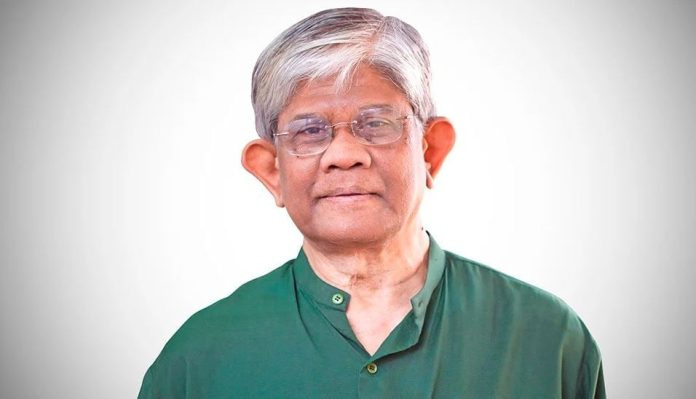
Bangladesh’s next elected government will face major challenges in stabilising the economy and restoring sustainable growth, Finance Adviser Salehuddin Ahmed said on Tuesday.
Speaking to reporters after a meeting of the advisers’ council committee on government purchase, Ahmed said reviving industry and business activity, creating jobs, controlling inflation, reforming the banking sector and strengthening institutions would be the most pressing tasks.
He said the immediate challenge would be to “activate” the economy, noting that employment growth depends on the recovery of business and industrial activity. Without job creation, household purchasing power would remain weak, he said.
Bangladesh’s industrial base remains fragile and the economy continues to rely on a narrow range of export sectors, Ahmed said. The country cannot follow the development models of Hong Kong or Singapore and should instead focus on strengthening small and medium-sized enterprises.
Inflation remains a major concern and cannot be addressed through monetary policy alone, he said. Higher import costs, energy prices, supply-side constraints and market management issues have made inflation a multi-dimensional problem requiring a coordinated, long-term policy response.
The banking sector remains one of the most complex challenges, Ahmed said, citing high levels of non-performing loans, weak governance and lingering confidence problems. Although deposit inflows have increased in recent months, credit growth remains subdued, reflecting limited confidence in the system.
Ahmed said Bangladesh must reduce its heavy reliance on bank financing by developing the capital market and bond market, adding that long-standing structural weaknesses, legal disputes and regulatory constraints have slowed reform efforts.
He said reforming the National Board of Revenue would also be a key challenge for the next government. While some structural changes have been introduced, broader policy reforms have yet to be fully implemented. A tax policy guideline is being prepared for the incoming administration, he said.
Energy security will remain another major issue, with Ahmed calling for greater emphasis on domestic gas exploration, offshore drilling and renewable energy, particularly solar power. Progress in solar energy has fallen short of its potential, he said.
On illicit financial flows, Ahmed said information has been collected on those involved and on destination countries, but recovering funds from abroad remains complex and time-consuming. Stronger coordination among government agencies will be needed, he added.
Ahmed urged the next government to consolidate ongoing reforms rather than start anew, improve coordination and strengthen institutional capacity, saying these steps were essential to restoring economic stability.