


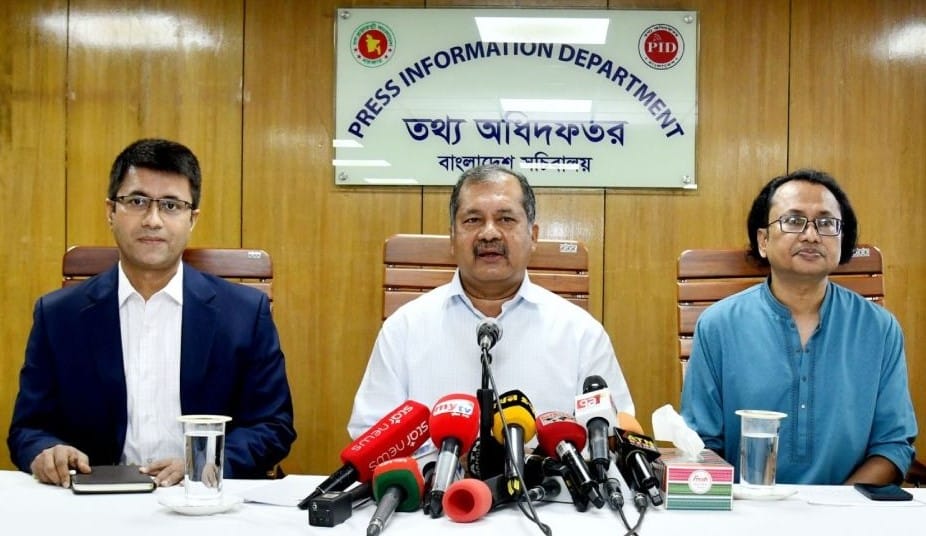
Information and Broadcasting Minister, Zahir Uddin Swapan, has said the government has exempted around 65% of low-income and marginal electricity consumers from the latest power tariff increase approved by the Bangladesh Energy Regulatory Commission (BERC), citing the global energy crisis and domestic economic realities.
Speaking at an emergency press briefing at the Press Information Department (PID) conference room in Dhaka on Saturday, Mr Swapan said the government’s measures would shield the majority of ordinary consumers from higher electricity costs.
“Sixty-five per cent of general and low-income electricity users have been completely protected from the additional burden of this price increase,” he said. “Previously, they would have fallen within the scope of BERC’s tariff adjustment.”
The minister noted that BERC operates as a quasi-judicial authority and had carried out the tariff adjustment as part of its routine regulatory responsibilities based on established criteria.
However, he said the government’s priority had been to protect vulnerable consumers. “As a result of this decision, wealthier consumers may face higher costs, while 65% of ordinary low-income citizens will remain exempt from the increase,” he added.
At the briefing, the Prime Minister’s Adviser on Information and Broadcasting, Dr Jahed Ur Rahman, presented a written statement from the Ministry of Power and Energy outlining the government’s position and the broader energy situation.
Both officials explained the rationale, scale and structure of the recent increases in electricity and energy prices.
Deputy Chief Information Officer Mohammad Fakhrul Islam was also present. Mr Swapan said Bangladesh, like other countries dependent on imported energy, was facing significant challenges amid the current global energy market conditions.
He argued that the country would be less reliant on imports today had there been stronger policies over the past two decades to develop and extract domestically identified energy resources.
“If appropriate policies had been in place to utilise our own discovered energy resources, we would not now be so dependent on imports,” he said.
“Because of past policy failures, Bangladesh has been more exposed to the impact of the global energy crisis. As an importing country, we are now required to set prices in line with international market realities.”
The minister also criticised the previous Awami League government, alleging widespread corruption and mismanagement in the power and energy sectors over the past decade and a half.
“The cycle of corruption and plunder that developed in the electricity and energy sectors over the last 10 to 15 years is well known,” he told journalists. “It will take time to restore the sector and bring it back onto a sustainable path, but the current government’s commitment is clear.”
He said the government was pursuing long-term plans aimed at achieving greater energy self-sufficiency and keeping prices at affordable levels, while also addressing immediate challenges.
Mr Swapan added that the government continues to provide substantial subsidies to the power sector, amounting to approximately Tk410 billion annually.
He linked current pressures on public finances to what he described as the wider burden of loan defaults, money laundering and the growth of the informal economy.
The minister also expressed a commitment to strengthening regular communication between the government, the media and the public without relying on formal or ceremonial events.
“The government wants to inform the public, and the public also wants information,” he said. “We want to establish a normal process of information sharing in which we meet regularly with journalists on important issues and seek their views.”
\Thanking the media for helping keep the public informed, Mr Swapan said the government would continue to ensure accountability by communicating its actions to citizens through the press.