


Bangladesh’s state-owned enterprises (SOEs) drained nearly Tk882 billion from the national exchequer in a single fiscal year, posing one of the country’s most significant fiscal risks, according to a new World Bank-backed study released on Wednesday.
The report warned that the deteriorating financial condition of public enterprises has become “unsustainable” amid falling tax revenues, slowing economic growth and mounting pressure on government finances.
It noted that growing SOE losses are diverting resources away from critical sectors such as healthcare, education and social protection.
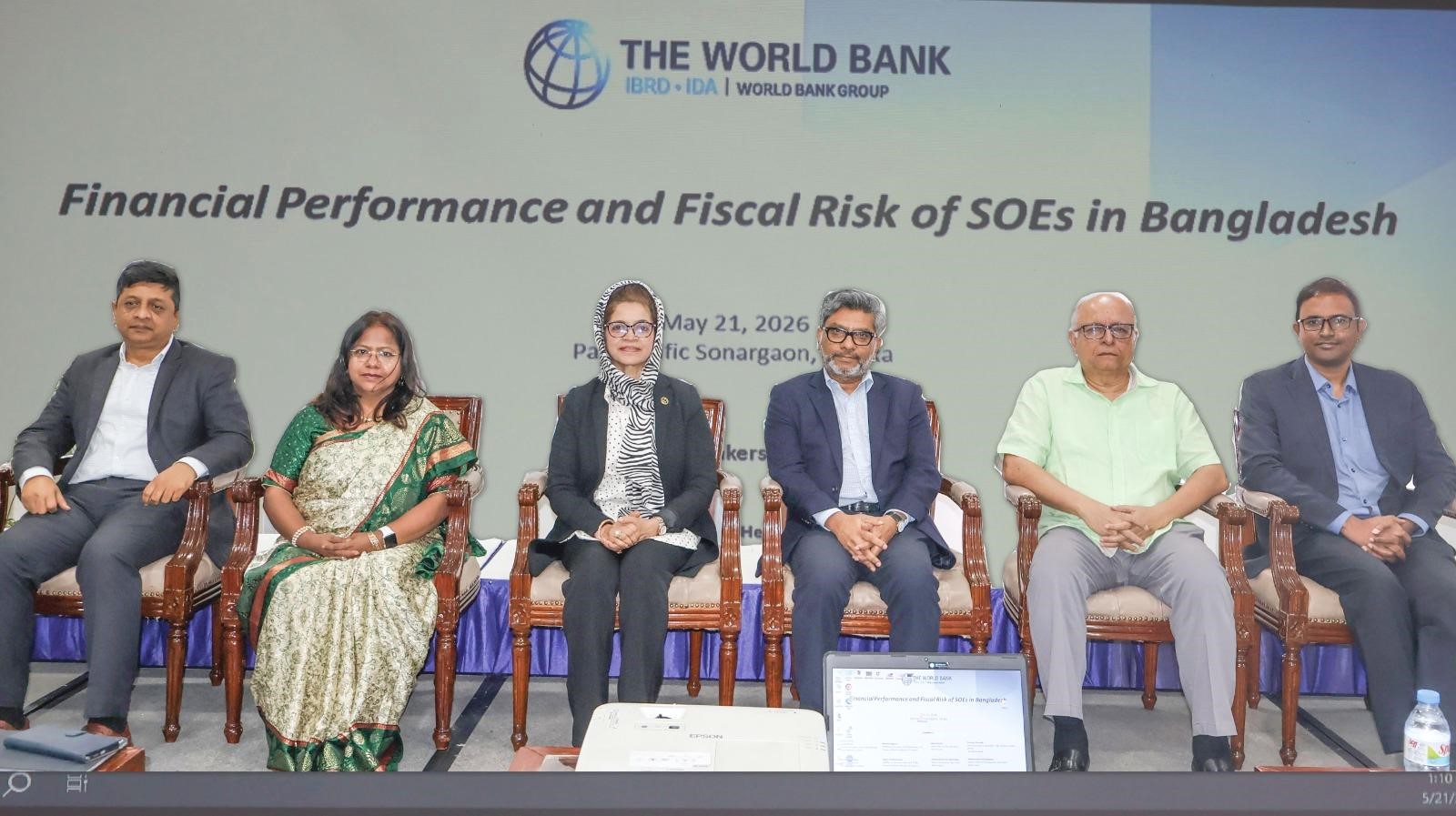
The findings were presented at a dissemination workshop in Dhaka on 21 May based on the report, Financial Performance and Fiscal Risk of SOEs in Bangladesh. The study was conducted under the Strengthening Public Financial Management for Better Service (SPFMS) programme with support from the Policy Research Institute (PRI) of Bangladesh.
According to the study, Bangladesh’s non-financial SOEs recorded a combined adjusted loss of Tk441 billion in the 2023–24 fiscal year, while total government support — including subsidies and development financing — rose to approximately Tk882 billion, equivalent to 1.7% of GDP.
The energy and power sector accounted for the bulk of the losses. The Bangladesh Power Development Board alone incurred losses exceeding Tk444 billion during FY2024 due to high generation costs, expensive capacity payments to private power producers and electricity tariffs set below production costs.
The report said politically influenced investment decisions, controversial agreements with independent power producers and weak corporate governance had significantly undermined the financial sustainability of the sector.
Other major loss-making entities identified in the report included Bangladesh Oil, Gas and Mineral Corporation, Bangladesh Rural Electrification Board, Trading Corporation of Bangladesh and several state-run manufacturing enterprises in the fertiliser, sugar and jute sectors.
The study found that many manufacturing SOEs continue to suffer persistent losses despite operating in competitive markets where private-sector firms remain profitable.
The report also highlighted structural weaknesses in the governance of Bangladesh’s SOEs, citing fragmented legal frameworks, excessive bureaucratic control, weak oversight and limited financial transparency as major causes of poor performance.
In a regional comparison, Bangladesh performed significantly worse than neighbouring economies. While Bangladeshi SOEs posted a negative return on assets of 5.2% in FY2024, India’s state-owned enterprises generated positive returns of 9.7%, while Vietnam’s achieved around 11.9% in recent years.
According to the study, Bangladesh could potentially mobilise more than Tk1.2 trillion in additional fiscal resources if SOEs achieved a 10% return on assets and reduced their dependence on subsidies.
The report recommended sweeping reforms, including restructuring commercially viable SOEs, introducing independent and professionally managed boards, strengthening financial disclosure requirements, reducing political interference and gradually opening monopoly sectors to competition.
It also proposed the eventual privatisation or closure of chronically loss-making enterprises that no longer serve strategic national purposes.
Among those attending the workshop were Tanvir Ghani, Special Assistant to the Prime Minister on Investment and Capital Market Affairs; Suraiya Zannath, Lead Governance Specialist and SPFMS team leader at the World Bank; Henri Fortin, Lead Public Sector Specialist at the World Bank; and Dr Khurshid Alam, Executive Director of the Policy Research Institute.