


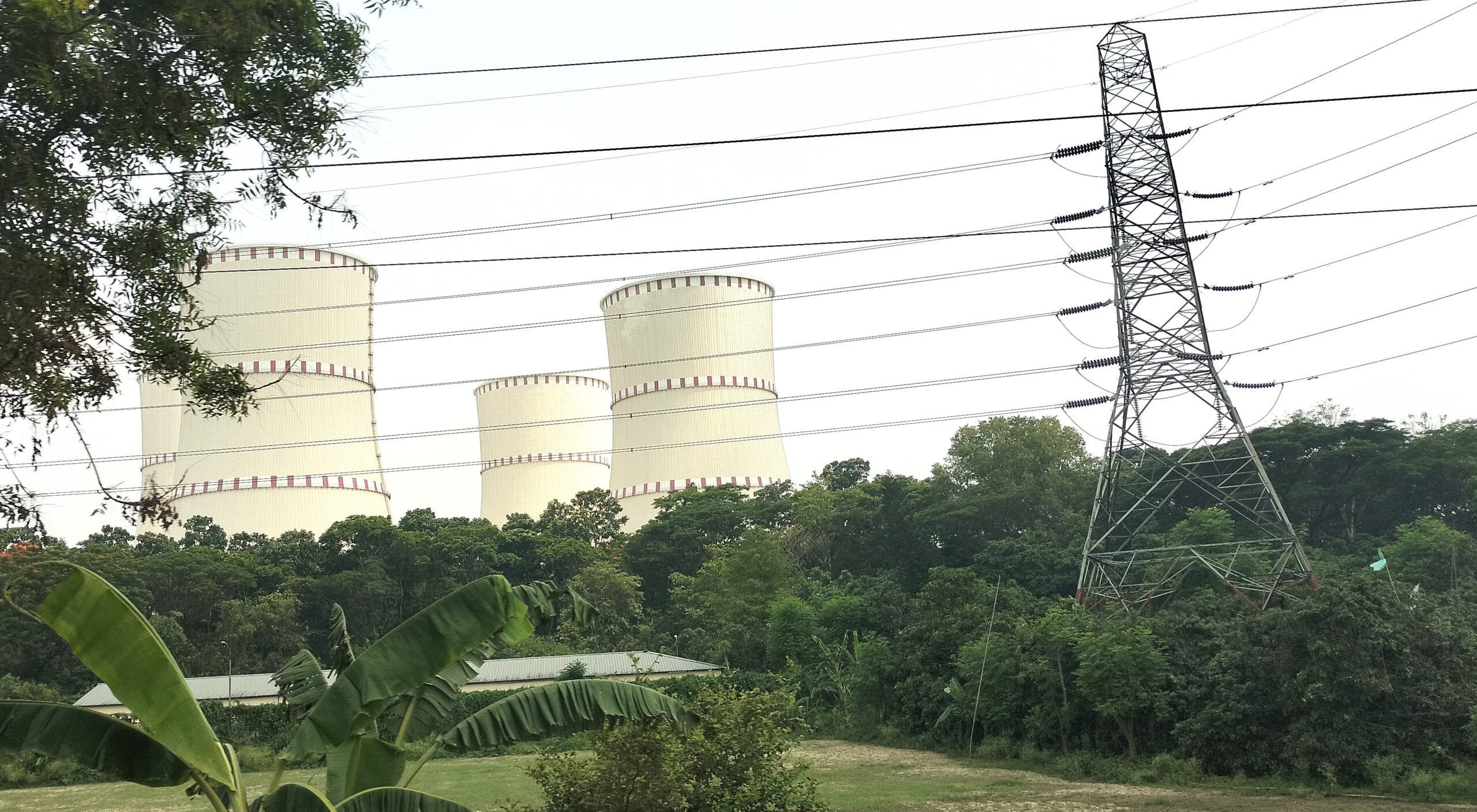
Bangladesh has yet to finalise the electricity tariff for the roughly $13 billion Rooppur Nuclear Power Plant, the country’s largest infrastructure project, as authorities continue to grapple with unresolved issues surrounding plant maintenance and spent fuel management.
During a two-day visit to the Rooppur Nuclear Power Plant in Pabna on 12-13 June, Just Energy News sought answers as to why the tariff has yet to be determined.
Officials involved in the project said the final cost of electricity generated by the plant cannot be calculated until long-term operational expenses, including maintenance and nuclear waste management, are fully assessed.
Rooppur Nuclear Power Plant Project Director Kabir Hossain told Just Energy News that the plant’s direct generation cost has been estimated at Tk4.31 per kilowatt-hour (kWh).
However, he said the final consumer tariff cannot be determined until operation and maintenance costs, as well as expenses related to spent fuel management, are incorporated.
“The generation cost has been estimated, but the final tariff will depend on maintenance contracts and spent fuel management arrangements,” Hossain said.
Bangladesh has yet to sign a long-term maintenance agreement with Russia’s state-owned nuclear corporation Rosatom or any other operator. Negotiations between Dhaka and Moscow over the terms of such an agreement are ongoing, officials said.
Despite securing a Russian credit facility worth $11.38 billion to construct the plant, the former Awami League government did not conclude a long-term maintenance agreement with Rosatom. Energy analysts warn that delays in reaching such an agreement could increase the project’s operating costs.
Spent fuel management remains another major factor in determining the final tariff, officials said.
Although Russia has amended relevant legislation to facilitate the return of spent fuel from overseas nuclear power projects, Bangladesh and Russia have yet to sign a formal agreement governing the process.
Officials said the issue was discussed during recent meetings between Bangladeshi authorities and senior Rosatom representatives, including during a courtesy call by Rosatom Director General Alexey Likhachev on Prime Minister Tareque Rahman.
Science and Technology Secretary Md Anwar Hossain said the government intends to return spent fuel to Russia under a future bilateral arrangement.
So, it will delay the Power Purchase Agreement (PPA) with another state-owned Bangladesh Power Development Board (BPDB), another official said.
Meanwhile, Science and Technology Minister Faqir Mahbub Anam said electricity generated by the nuclear plant would be cheaper than power produced from imported fossil fuels once the facility becomes fully operational.
“The per-unit tariff of electricity from Rooppur will be comparatively lower than that of fossil fuel-based power plants,” he said.
The first unit of the plant is currently undergoing commissioning and testing, while fuel loading for the second unit is expected to begin next June. Once both reactors are operational, the facility is expected to supply between 2,100 MW and 2,200 MW of electricity to the national grid.
The uncertainty surrounding the final tariff was also highlighted by the Bangladesh Power Development Board (BPDB) during a public hearing in Dhaka on 20 May.
At the hearing, BPDB projected a provisional tariff of Tk6.72 per kWh for electricity generated by the Rooppur plant.
BPDB Chairman Rezaul Karim said the estimate was based on assumptions because the utility had not yet received complete financial data from the plant authorities.
“I have sent letters to the Rooppur authorities requesting the total project cost and operation and maintenance expenses so that we can determine the per-unit electricity tariff. We have yet to receive that information,” Karim said.
He said the final tariff would be fixed only after the required financial information becomes available.
“We determined the projected tariff based on assumptions,” he said.
The Rooppur Nuclear Power Plant, Bangladesh’s first nuclear energy facility, is expected to play a central role in strengthening the country’s long-term energy security and reducing dependence on imported fuels. However, the project’s economics remain under close scrutiny as commissioning progresses.
The project is being implemented under an intergovernmental agreement between Bangladesh and the Russian Federation.
In December 2015, the Bangladesh Atomic Energy Commission signed a contract with Atomstroyexport, Rosatom’s engineering arm, to construct two nuclear reactor units with a combined generation capacity of 2,400 MW.
The agreement includes equipment supply, personnel training and nuclear fuel delivery.