


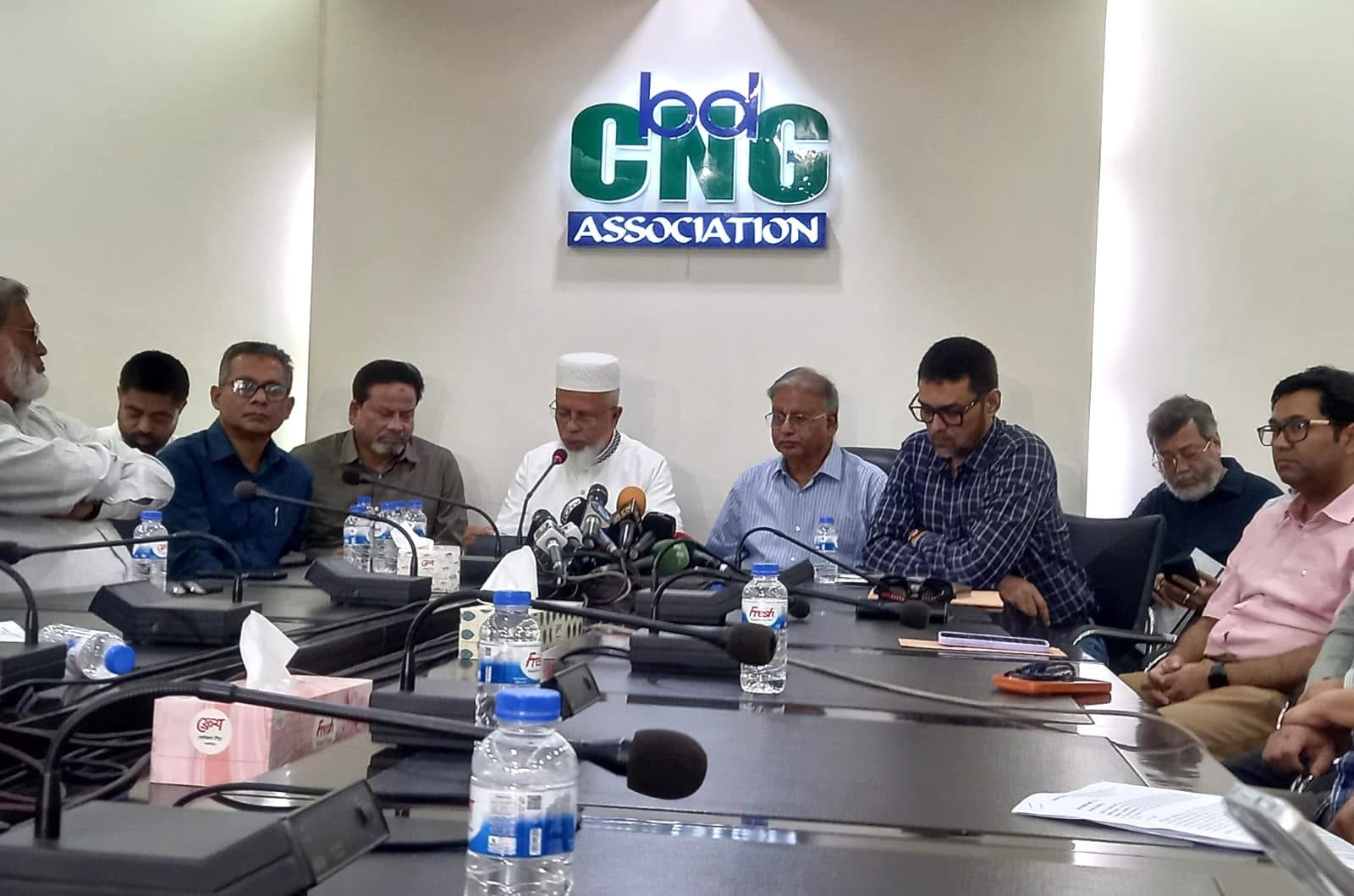
Owners of CNG filling stations have withdrawn their planned countrywide shutdown slated for July 30, citing an acute gas supply crunch that could worsen public suffering.
All stations will now remain open that day, although operators have warned of an indefinite strike from August 23 if their demands remain unmet.
The decision was announced at a press conference on Monday at Akram Tower in the capital’s Bijoynagar by the Bangladesh CNG Filling Station and Conversion Workshop Owners Association, which had earlier called a daylong closure from 6:00am to midnight on July 30.
Leaders of the association said they stepped back from the programme considering the ongoing disruption in gas supply nationwide, which has already strained transport operations and commuters.
However, they set August 22 as the deadline for the government to address their four-point demand, including a significant increase in sales commission. Failure to reach a resolution, they said, would trigger an indefinite shutdown of CNG stations across the country from August 23.
Drivers reel under gas shortage
The announcement comes as a severe gas crisis continues to hit the capital, leaving CNG-run vehicles among the worst affected. Drivers reported spending hours in queues at filling stations, often returning without fuel due to low pressure.
Long lines of vehicles were seen from early morning in areas such as Malibagh, Khilgaon, Mugda, Motijheel, Maniknagar and Banasree. As gas pressure dropped further during the day, several stations were forced to suspend operations temporarily.
Drivers complained that reduced trips due to fuel shortages have cut their daily earnings, while fixed expenses—including loan instalments and daily deposits—remain unchanged.
Long-standing demands
The association’s key demands include raising the commission on CNG sales to Tk 13.96 per cubic metre from the existing Tk 8, introducing an automatic adjustment mechanism in line with future fuel price hikes, scrapping additional deposits imposed on older customers due to gas price increases, and rationalising land lease and licence renewal fees charged by government agencies.
Leaders said they have been pressing these demands since 2013, arguing that rising electricity costs, currency depreciation and operational expenses have eroded profitability. Despite multiple assurances from authorities, they claimed, little progress has been made.
“We were pushed into CNG investments earlier, but now we are struggling to sustain operations,” a leader said, adding that inadequate gas pressure has further increased electricity consumption and operating costs.
While the July 30 reprieve offers temporary relief to commuters, uncertainty looms over the sector as the August deadline approaches, raising fears of wider disruption to urban transport if negotiations fail.