


China is seeking to deepen its nuclear-energy cooperation with Bangladesh through a proposed memorandum of understanding covering nuclear research, technology development, safety and advanced reactor technologies, including small modular reactors (SMRs).
The proposed agreement between the China Atomic Energy Authority (CAEA) and Bangladesh’s Ministry of Science and Technology (MoST) was submitted recently, according to officials familiar with the process.
The development comes days after Bangladesh and the United States signed a strategic civil nuclear cooperation memorandum in New York on 25 September 2026.
The MoST has circulated the draft agreement among relevant ministers and authorities for their comments.
If concluded, the proposed agreement would provide a broad framework for peaceful nuclear cooperation between Bangladesh and China and could expand their partnership beyond Bangladesh’s existing large-scale nuclear power programme.
Broad scope of nuclear cooperation
The draft is titled the “Memorandum of Understanding between the China Atomic Energy Authority and the Ministry of Science and Technology of Bangladesh on Cooperation in the Sustainable Development of Nuclear Energy”.
It proposes cooperation in a wide range of peaceful nuclear applications.
Under Article 1, the two sides would promote cooperation in nuclear energy and nuclear technology applications in accordance with their respective laws, regulations, international commitments and applicable treaties.
The proposed areas include fundamental and applied research and development in peaceful nuclear applications, as well as the engineering, procurement and construction of research reactors.
The draft also provides for research and development of new nuclear power technologies, including small modular reactors.
Other areas include nuclear safety and security, emergency preparedness and response, radiation protection, radioactive-waste management, and the use of nuclear technology in agriculture, industry, healthcare and environmental protection.
The two sides would also cooperate on human-resource development through academic programmes, technical training, scientific visits, fellowships and other educational activities.
They would exchange information and experience relating to nuclear-energy policies, legislation, regulations and technical standards.
The inclusion of research reactors and SMRs potentially broadens Bangladesh-China nuclear cooperation beyond the country’s current large-scale nuclear power programme.
Research and technology exchange
The proposed MoU envisages the exchange of scientific and technical information, as well as joint studies and research programmes.
Researchers, scientists and technical experts from both countries could participate in research and development activities, academic education and training, scientific visits and fellowship programmes.
The two sides could also organise conferences, seminars, workshops and other scientific and technical events.
Specific projects would be carried out by organisations designated by the two parties. Where necessary, separate agreements would be signed for individual projects.
This would allow the proposed MoU to serve as an umbrella framework while leaving commercial, technical and project-specific arrangements to be negotiated separately.
MoU would not be legally binding
The draft makes clear that the proposed agreement would be administrative in nature rather than a legally binding international treaty.
Article 5 states that the MoU would not create legal rights or legally binding obligations for the participants.
References to commitments in the agreement would instead represent undertakings by the parties to make their best efforts to implement the areas of cooperation.
Financial arrangements would depend on the availability of funds from the participating organisations or their designated entities, according to Article 6.
The structure would therefore give both sides flexibility to identify and develop specific projects without creating automatic financial or legal obligations.
China proposal follows US nuclear agreement
The proposed Chinese agreement comes as Bangladesh is expanding its international partnerships in the nuclear sector.
Bangladesh and the United States signed a strategic civil nuclear cooperation MoU in New York on 25 September, establishing a framework for peaceful nuclear cooperation.
The US agreement places emphasis on nuclear safety and security, safeguards and non-proliferation. Bangladesh and the United States are both parties to the Nuclear Non-Proliferation Treaty and have safeguards agreements and Additional Protocols with the International Atomic Energy Agency.
The proposed Chinese agreement would add another major international partner to Bangladesh’s nuclear cooperation network, although the draft remains a framework for cooperation rather than a commitment to a specific reactor project.
Rooppur remains Bangladesh’s flagship nuclear project
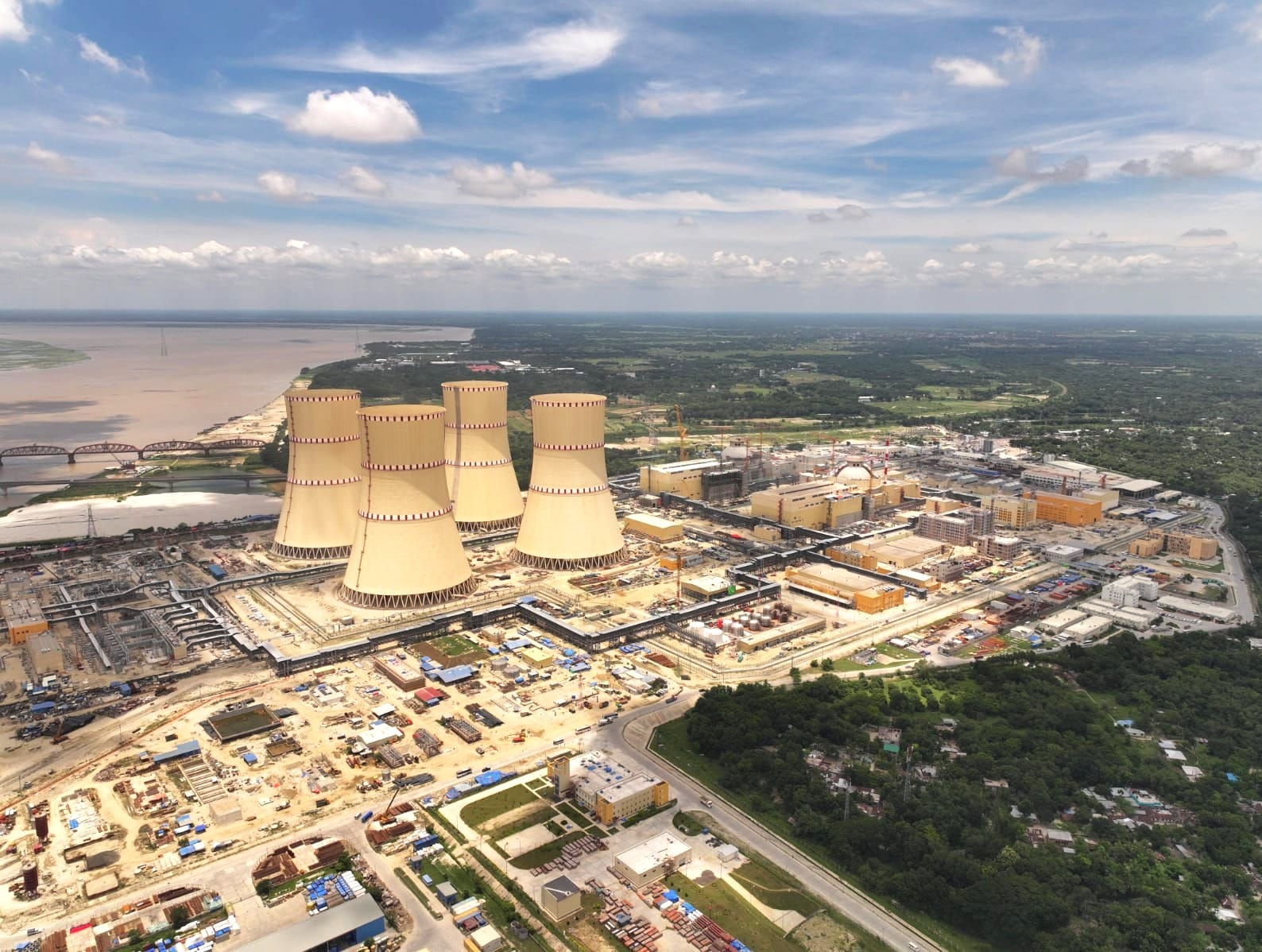
Bangladesh is developing its first nuclear power plant at Rooppur in Pabna, comprising two Russian-designed VVER-1200 reactors with a combined generating capacity of 2,400MW.
The project represents Bangladesh’s first major move into commercial nuclear power generation and is being developed with Russian technology and financing support.
The proposed Chinese agreement would not replace the Rooppur project. Instead, it could expand Bangladesh’s cooperation with Beijing into nuclear research, training, nuclear applications and emerging reactor technologies.
China and Bangladesh already have a longstanding relationship in the nuclear sector. The two countries signed an agreement on cooperation in the peaceful uses of nuclear energy in 2005.
The proposed new MoU would provide a broader framework for cooperation as Bangladesh seeks to strengthen its long-term energy security.
Potential opening for small modular reactors
One of the notable elements of the proposed agreement is its explicit reference to small modular reactors.
SMRs are generally designed to generate less electricity than conventional large nuclear reactors and can potentially be deployed in smaller increments. Developers are examining applications ranging from electricity generation to industrial heat and other energy-intensive uses.
The technology remains under development, with different reactor designs at various stages of regulatory approval, demonstration and commercial deployment.
For Bangladesh, the proposed cooperation could provide an opportunity to study such technologies alongside its existing large-reactor programme.
Research reactors could also support scientific research, education, isotope production and other peaceful nuclear applications, depending on the projects eventually agreed by the two sides.
Nuclear technology beyond power generation
The draft MoU also extends beyond electricity generation, identifying nuclear applications in agriculture, healthcare, industry and environmental management.
These could include the use of radioactive isotopes and radiation-based technologies for medical diagnosis and treatment, industrial testing and agricultural research.
Radioactive-waste management and radiation protection are also identified as areas of cooperation, reflecting the importance of safety and regulatory capacity as Bangladesh expands its use of nuclear technologies.
Human-resource development is another key component.
Training programmes, academic exchanges, fellowships and scientific visits could help Bangladesh develop a larger pool of specialists working in nuclear engineering, safety, regulation, radiation protection and radioactive-waste management.
Expanding Bangladesh’s nuclear partnerships
A joint communiqué issued following Prime Minister Tarique Rahman’s visit to China in June also highlighted plans to strengthen bilateral cooperation in scientific and technological innovation and green energy.
Against that backdrop, the proposed nuclear MoU could become another element of the wider Bangladesh-China economic and technological relationship.
Bangladesh’s energy system remains heavily dependent on imported fuels, while domestic natural-gas production has struggled to keep pace with demand. The country has therefore been seeking a broader energy mix to ease pressure from fuel-import costs and strengthen long-term supply security.
Nuclear power, however, requires substantial upfront investment, long development periods and strong regulatory and safety institutions. The proposed Chinese framework therefore covers not only reactor technology but also scientific, technical and institutional capacity-building.
For now, the proposed agreement remains subject to Bangladesh’s internal review and approval process. Its eventual impact will depend on whether the two sides proceed from the broad framework to specific research programmes, training arrangements or nuclear technology projects, official sources confirmed.