


Bangladesh has launched a new offshore oil and gas bidding initiative aimed at attracting foreign investment and strengthening long-term energy security, with senior government officials claiming the country’s elected administration has helped restore investor confidence.
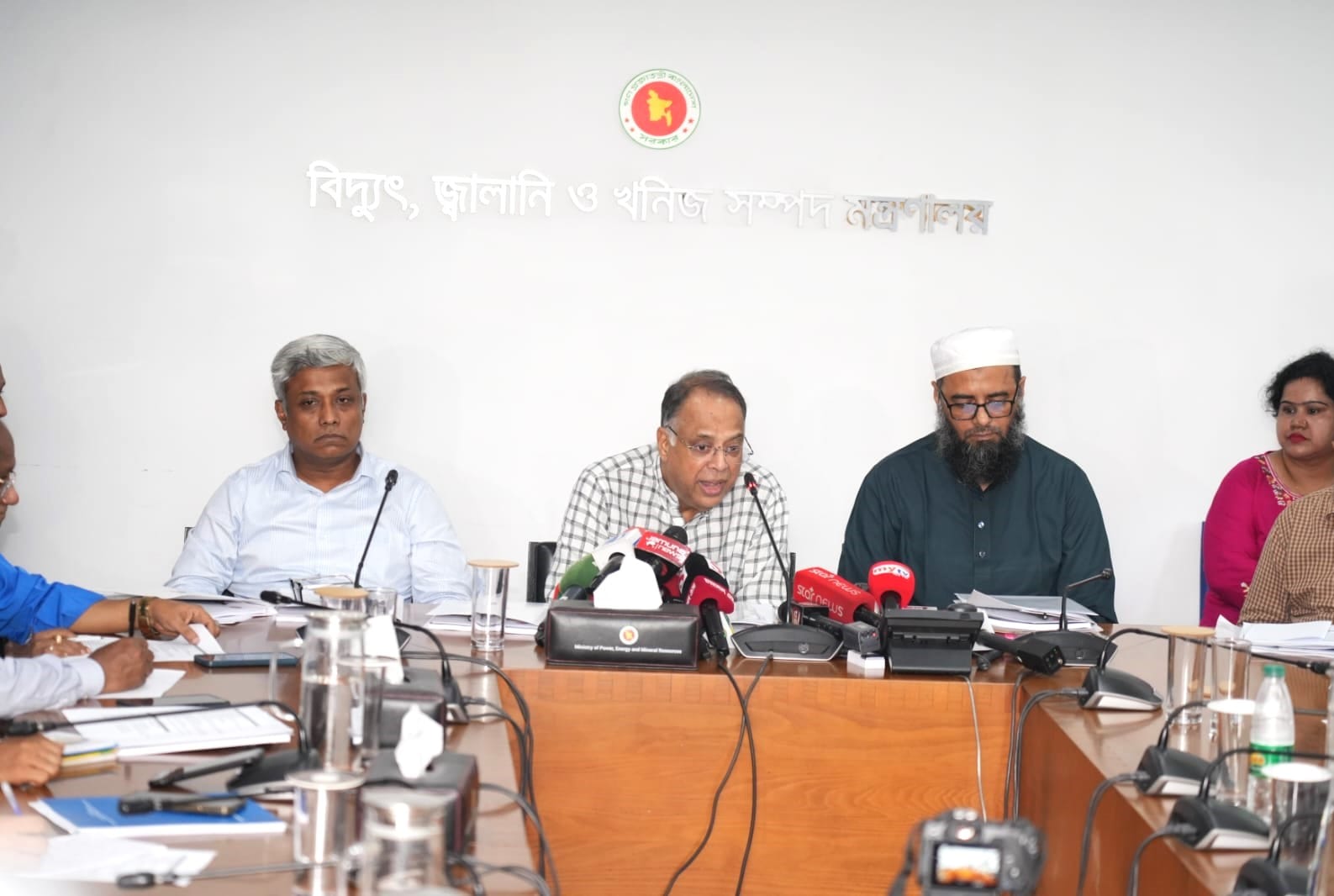
At a press conference in Dhaka on Sunday, Power and Energy Minister Iqbal Hasan Mahmud Tuku unveiled the “Bangladesh Offshore Model Production Sharing Contract (MPSC) 2026” and announced the upcoming “Offshore Bidding Round 2026”, inviting international oil companies to explore the country’s offshore blocks in the Bay of Bengal.
Tuku said the government’s democratic mandate and commitment to accountability had improved Bangladesh’s image among international investors.
“We are an elected government. There is no question regarding our election,” he told reporters at the secretariat. “We formed the government with the people’s mandate. That creates a strong sense of confidence among investors.”
He added that discussions with foreign investment groups suggested Bangladesh was increasingly being viewed as a reliable destination for energy investment, particularly in offshore exploration.
The minister said several major companies from the United States and China had already shown interest in Bangladesh’s offshore energy sector.
Tuku criticised previous administrations for relying heavily on imported fuels while leaving domestic energy resources underdeveloped, arguing that the approach had placed significant pressure on the economy and foreign currency reserves.
He pointed to Bangladesh’s last major international bidding round in 1993 under former Prime Minister Khaleda Zia, which led to discoveries that continue to supply much of the country’s natural gas demand today.
“Since then, no major international bidding round was organised,” he said.
The minister also said that despite Bangladesh securing maritime boundary settlements with neighbouring countries more than a decade ago, offshore exploration activities had failed to progress significantly, while neighbouring states had already moved into offshore gas production and exports.
Tuku said the state-owned exploration company BAPEX would be strengthened, although it currently lacked the expertise and technology required for deep-water exploration. The government therefore planned to allow joint ventures with international companies to help build local capacity.
He said offshore blocks would only be awarded to qualified firms under legal frameworks designed to protect Bangladesh’s national interests.
“If commercial discoveries are made in these offshore blocks, it will play a major role in Bangladesh’s economic development,” he said.
Attended at the press conference, State Minister for Energy Anindya Islam Amit said the BNP government’s election manifesto had pledged to make Bangladesh self-sufficient in the energy sector, and that the administration was now seeking to explore the country’s untapped energy production potential to achieve that goal.
Speaking about the government’s plans, he referred to a 180-day action programme and highlighted several initiatives already undertaken in the renewable energy sector.
The minister expressed hope that under the leadership of the current prime minister — whom he described as the worthy successor to former prime minister Begum Khaleda Zia — Bangladesh would witness another successful breakthrough in the bidding process for energy projects.
He said efforts were underway to address past shortcomings and mistakes in the tendering process in order to improve the chances of success this time.
“Everything will be done while fully safeguarding Bangladesh’s national interests,” he said, while also calling for the cooperation of all stakeholders, as he has done on previous occasions.
Energy and Mineral Resources Division Secretary Mohammad Saiful Islam said the government had managed to launch the offshore bidding initiative within three months of taking office.
“We have already addressed the concerns of international oil companies by increasing the natural gas tariff, introducing a pipeline tariff, adjusting the Workers’ Profit Participation Fund, and ensuring the availability of data to make the bidding round more attractive,” the secretary said.
He said seven oil companies — including Singapore-based KrisEnergy, US energy giants ExxonMobil and Chevron, Japan’s Inpex, Thailand-based PTTEP, China’s CNOOC and India’s ONGC Videsh Ltd — participated in the 2024 bidding round. However, none of them submitted financial offers to develop the offshore blocks.
Saiful Islam said the government had revised provisions in the Offshore Model PSC 2026 to make Bangladesh more competitive in attracting global investment.
Investor-Friendly Terms
Under the new framework, Bangladesh is offering several incentives designed to improve commercial attractiveness for foreign operators.
Key contract features including full repatriation of profits; no signature bonus or royalty payments; gas pricing linked to Brent crude benchmarks; 100% cost recovery with an annual cap of 75%; tax liabilities borne by Petrobangla; duty exemptions on imported exploration and production equipment; rights to export contractors’ shares of natural gas, subject to Petrobangla’s first refusal option and stabilisation and expropriation protection clauses for investors.
The government is also allowing operators to negotiate pipeline tariffs and permitting third-party domestic gas sales under agreed conditions.
Industry analysts say the revised terms represent a significant shift from earlier Bangladeshi offshore contracts, which many international firms had considered commercially unattractive compared with competing jurisdictions in Asia and Africa.
A notable feature of the new licensing round is the provision for higher contractor profit shares if initial exploration wells prove dry or non-commercial — a measure intended to offset geological risk in frontier deepwater acreage.
Strategic Push for Energy Security
Bangladesh’s economy has expanded rapidly over the past decade, fuelled by its export-oriented manufacturing sector and growing urbanisation. However, domestic gas production has struggled to keep pace with rising energy consumption.
Natural gas remains the backbone of Bangladesh’s power generation system and industrial base, particularly for the country’s globally significant garment manufacturing industry.
The country has increasingly relied on LNG imports in recent years, exposing it to volatile global energy prices following the Russia-Ukraine conflict and wider geopolitical instability.
Energy and Mineral Resources Division secretary Mohammad Saiful Islam believe successful offshore discoveries could transform Bangladesh’s long-term energy outlook and reduce dependence on imported fuels.
Although several international companies have explored Bangladeshi waters in previous decades, commercial offshore discoveries have remained limited. Energy experts say advances in seismic imaging technology and improved fiscal terms could revive interest in the basin.
Strict Qualification Requirements
The bidding process includes stringent eligibility criteria aimed at ensuring technically experienced operators participate.
For shallow sea blocks, bidders must already operate offshore assets producing at least 5,000 barrels of oil per day or 75 million standard cubic feet of gas daily.
For deep sea blocks, the threshold rises to 10,000 barrels of oil per day or 100 million standard cubic feet of gas daily.
Companies must also demonstrate at least one international exploration and production experience outside their home country, supported by documentary evidence from host governments or regulators.
Joint ventures are permitted, and companies may bid for multiple blocks under a single tender purchase. However, separate applications must be filed for each block, except for contiguous deep sea blocks that may be combined into one contract.
Data Packages Available from June
Petrobangla said a basic information package containing geological data, block maps, legal frameworks, and bidding information will become available from June 1, 2026 for US$100.
A mandatory promotional package, including seismic sections and geological mapping data, will cost US$7,000.
Additional seismic and technical datasets will also be available for purchase at varying price levels.
The government has reserved the right to limit the number of blocks awarded to any single bidder.
Senior officials attending the press conference included Petrobangla Chairman Md Abdul Mannan, EMRD Joint Secretary Morsheda Ferdous, Petrobangla Director (PSC) Engr Md Shoyeb, and other senior executives from Petrobangla.