


Bangladesh’s energy regulator has warned that power and energy projects must secure its approval before implementation, as investments in such projects can ultimately be passed on to consumers through bulk and retail tariffs.
Bangladesh Energy Regulatory Commission (BERC) chairman Jalal Ahmed said the requirement under Section 22 of the BERC Act was not being followed for all projects.
The commission has written to Petrobangla, Bangladesh Petroleum Corporation (BPC), Bangladesh Power Development Board (BPDB), the Energy and Mineral Resources Division and the Power Division to ensure compliance.
“BERC is responsible for approving any project in the energy sector under the BERC law. Alongside the government approval process, approval from BERC is also required because the investment in a project will ultimately be linked to bulk and retail tariffs,” Jalal Ahmed said.
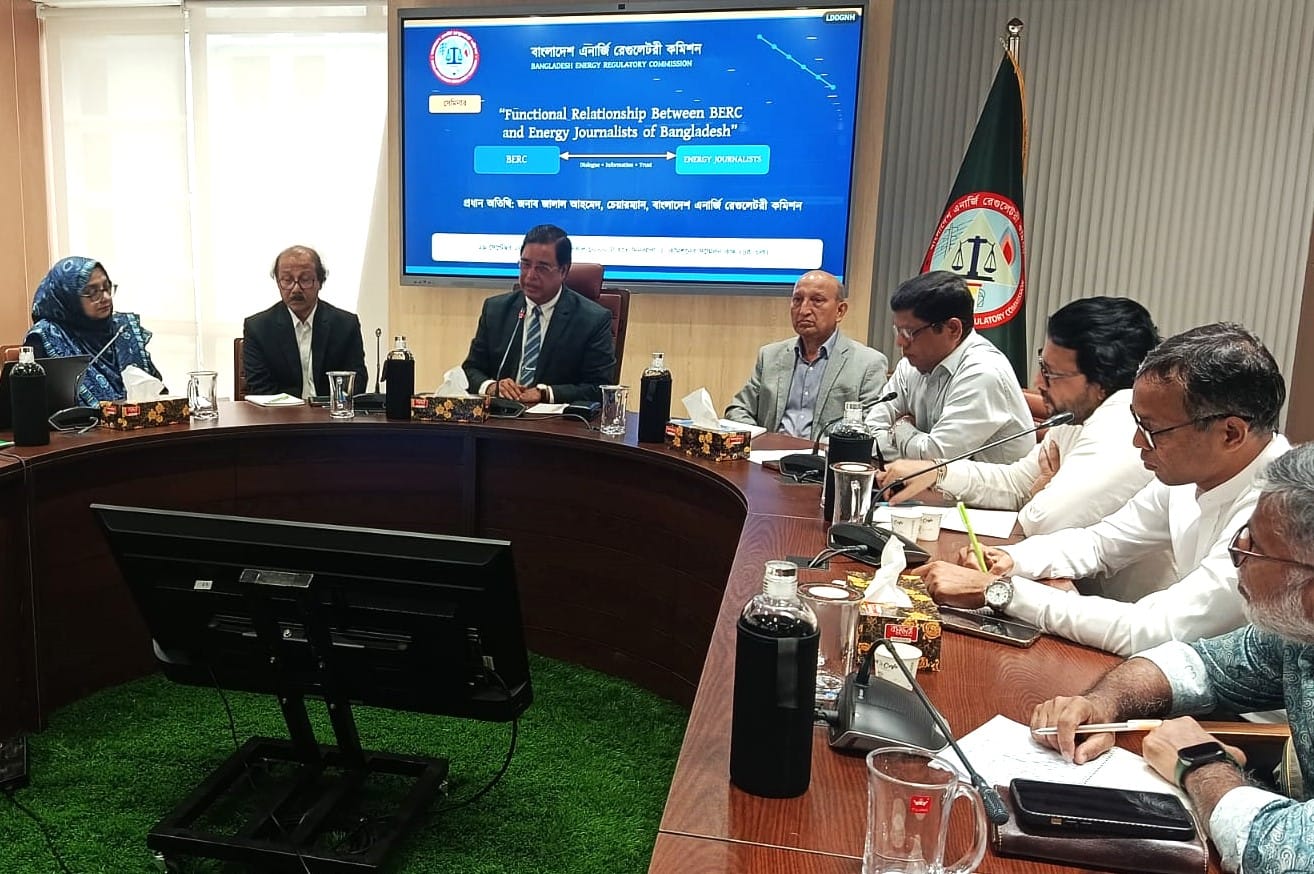
He was speaking at the opening of a training programme organised by BERC for members of the Forum for Energy Reporters Bangladesh (FERB) in Dhaka on Tuesday.
Investment scrutiny
Jalal Ahmed cited the Single Point Mooring (SPM) project as an example, saying around Tk8,000 crore had been invested in the project and the cost would eventually be reflected in tariffs.
He said the regulator needed to assess the financial viability of such investments before projects were implemented, including how the investment would be recovered and the expected payback period.
The commission could question a project cost later submitted for inclusion in tariffs if it had not been informed about the investment at the implementation stage, he said.
“The same issue applies to various contracts and projects in the power and energy sector. So BERC approval is necessary before projects are implemented,” he said.
BERC to re-audit energy companies
BERC will also re-audit the financial reports of power and energy distribution and supply companies to assess their financial strength, income and expenditure and the viability of their investments.
The commission will appoint a chartered accountant firm to review the audited financial statements submitted by the companies for the past three years, Jalal Ahmed said.
“We do not currently have the capacity to carry out this work ourselves. So, a CA firm will be appointed to re-examine and audit the companies’ audited financial reports,” he said.
The exercise is intended to give BERC a clearer picture of the financial position of individual companies and help determine whether investments and costs subsequently reflected in tariffs are financially justified.
LPG supply concerns
The BERC chairman also raised concerns over reports of LPG shortages in parts of Bangladesh ahead of the winter season.
He warned that gas demand in Europe could rise sharply during the winter, potentially putting pressure on global fuel supplies and prices.
“Ensuring gas supply in the country will be a major challenge under these circumstances,” he said.
Jalal Ahmed said Bangladesh’s liquid fuel market had also faced difficulties because of the conflict in the Middle East.
LPG shortages began emerging in November last year, he said, adding that although the situation improved for a period, problems resurfaced after the conflict began in February.
BUET study on gas use
BERC also plans to commission a study by Bangladesh University of Engineering and Technology (BUET) to compare gas consumption by metered and unmetered customers.
The study is expected to provide a clearer picture of actual gas use by the two groups, Jalal Ahmed said.
The findings could help the regulator improve its assessment of gas consumption patterns, tariffs and future supply requirements.
BERC members Mizanur Rahman, member for gas; Dr Syeda Sultana Razia, member for petroleum; Brig Gen Mohammad Shahid Sarwar (retd), member for power; and secretary Md Nazrul Islam Sarker attended the programme. FERB chairman M Azizur Rahman and executive director Serajul Islam Siraj were also present.