


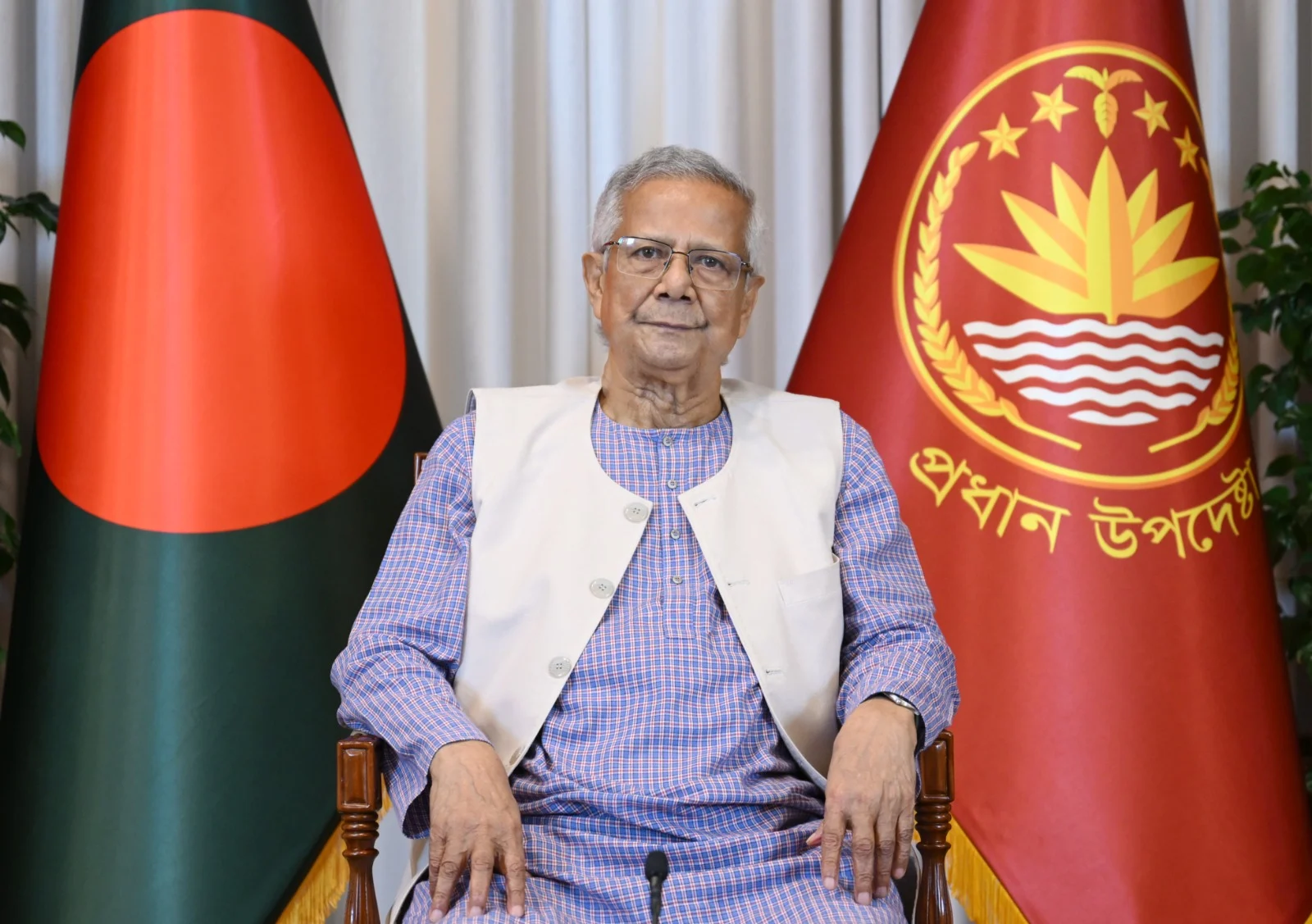
Chief Adviser Professor Muhammad Yunus has stressed the urgent need for Bangladesh to transition toward cleaner, safer, and more affordable energy solutions as the country charts a new course toward sustainable economic development, according to the Chief Adviser’s verified Facebook page.
Speaking during a virtual conference on Thursday evening with Carl Page, Chairman of the Anthropocene Institute, and his colleagues, Professor Yunus stated that Bangladesh—one of the world’s most densely populated and climate-vulnerable nations—cannot afford a prolonged reliance on fossil fuels.
“It is time for Bangladesh to seriously consider clean energy alternatives, including large-scale solar deployment,” Professor Yunus said.
Carl Page, brother of Google co-founder Larry Page, highlighted recent advancements in next-generation nuclear technologies and hybrid systems that offer reliable, zero-carbon power.
He emphasized that barge-mounted nuclear reactors are cost-effective, low-maintenance, and capable of powering Bangladesh’s growing industrial sector for decades.
“Nuclear power is no longer a taboo topic among major development financiers like the World Bank,” Page noted, adding that countries such as Indonesia are already adopting these technologies to meet rising energy demands.
He further stated that Bangladesh, with its strong track record of innovation, is well-positioned to lead the clean energy transition—bringing benefits such as job creation, energy price stability, and enhanced industrial competitiveness.
“Bangladesh can serve as a strategic hub for emerging technologies and a peaceful leader in atomic innovation,” Page added.
Professor Yunus acknowledged that the Interim Government has recently introduced a new national power policy aimed at accelerating solar energy adoption. However, he noted that any decision regarding nuclear options would require rigorous research and feasibility assessments.
“We will certainly explore these opportunities,” he said. “But we need in-depth studies on these promising technologies. There is no question—Bangladesh must drastically reduce its dependence on fossil fuels.”
Also present at the meeting were Chowdhury Ashiq Mahmud Bin Harun, Executive Chairman of the Bangladesh Investment Development Authority (BIDA), and Lamiya Morshed, Senior Secretary and SDG Coordinator.