


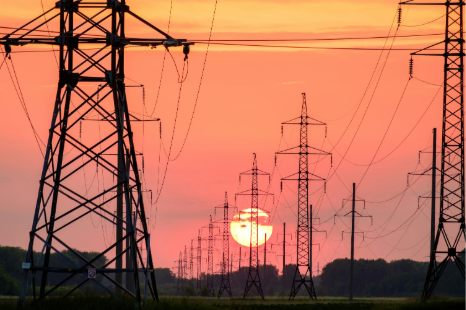
Türkiye, 19 November 2026: Global efforts to accelerate the transition to clean energy are gaining momentum, with annual investment plans of at least $156 billion for electricity grids, renewable energy and storage announced at the COP31 climate summit.
The investment commitment, unveiled under the COP31 Global Climate Action Agenda Electrification Delivery Package, comes as governments, businesses and investors face mounting pressure to accelerate the shift away from fossil fuels while improving energy security and affordability.
UN Climate Change Executive Secretary Simon Stiell described the latest developments as evidence that climate commitments are increasingly translating into tangible investments, infrastructure and economic benefits.
“Year on year, the Action Agenda is a power station of progress, and COP31 has already supercharged real-world results, turning commitments into investment, infrastructure and progress people can feel,” Stiell said at a high-level Global Climate Action Agenda event in Antalya on Wednesday.
Members of the Utilities for Net Zero Alliance (UNEZA) have announced plans to invest at least $156 billion annually across electricity grids, renewable energy and energy storage.
The proposed investment represents a 5 per cent increase on last year’s level and is 35 per cent higher than in 2024, highlighting the growing financial commitment to modernising electricity infrastructure.
The alliance also reported that more than 21,000 kilometres of new electricity grids were deployed in 2025, underlining the scale of infrastructure development required to support the global electrification drive.
Stiell said electrification could deliver multiple economic and environmental benefits by improving energy efficiency, reducing greenhouse gas emissions and lowering energy costs.
“Electrification is a huge efficiency booster, helping bring down greenhouse gas pollution and energy costs, and tackle grave injustices in energy access,” he said.
Transport and industrial transformation
The COP31 Electrification Delivery Package covers several key sectors, including electricity generation, transmission and distribution networks, transport, buildings and industry.
In the transport sector, 13 zero-emission freight corridors are under development across six continents, covering more than 29,000 kilometres of roads.
The initiative reflects growing efforts to decarbonise international freight transport, a major source of energy consumption and carbon emissions.
The broader electrification agenda aims to expand the use of electricity across economic activities, supported by renewable generation, stronger grids and energy storage systems.
Climate action extends beyond energy
Progress was also reported in agriculture, forestry and waste management.
Regenerative agriculture programmes now cover 66 million hectares across 116 countries, with nearly $2.3 billion deployed to support implementation.
Meanwhile, the Tropical Forest Forever Facility has secured commitments of nearly $500 million, taking its total capitalisation to more than $8 billion.
In addition, 20 districts across Africa, Asia, Latin America and the Caribbean are piloting local initiatives to reduce waste and promote reuse, repair and recycling under the Istanbul Zero Waste Action Platform.
Stiell said these developments demonstrated that climate action was expanding beyond the energy sector and creating opportunities for more resilient economies.
He described the latest progress as a “lightbulb moment” for the global climate movement, pointing to the potential benefits of lower energy costs, cleaner air and improved public health.
Developing countries need affordable finance
Despite the progress, the UN climate chief warned that developing countries continued to face significant barriers to participating fully in the global climate transition.
He called for affordable finance and technology to be made available to vulnerable developing economies, stressing that workers and local communities must also be supported as countries restructure their energy systems.
“Vulnerable developing countries need affordable finance and technology,” Stiell said.
He also urged governments to accelerate implementation and ensure that the benefits of climate action reach every country and region.