


Climate change is driving down workers’ incomes while pushing healthcare costs sharply higher in Bangladesh, creating what researchers describe as a “double financial burden” for millions of households.
A report published by adelphi global says rising temperatures are increasingly threatening livelihoods in one of the world’s most climate-vulnerable countries, particularly for workers in agriculture and construction who are exposed to prolonged periods of extreme heat.
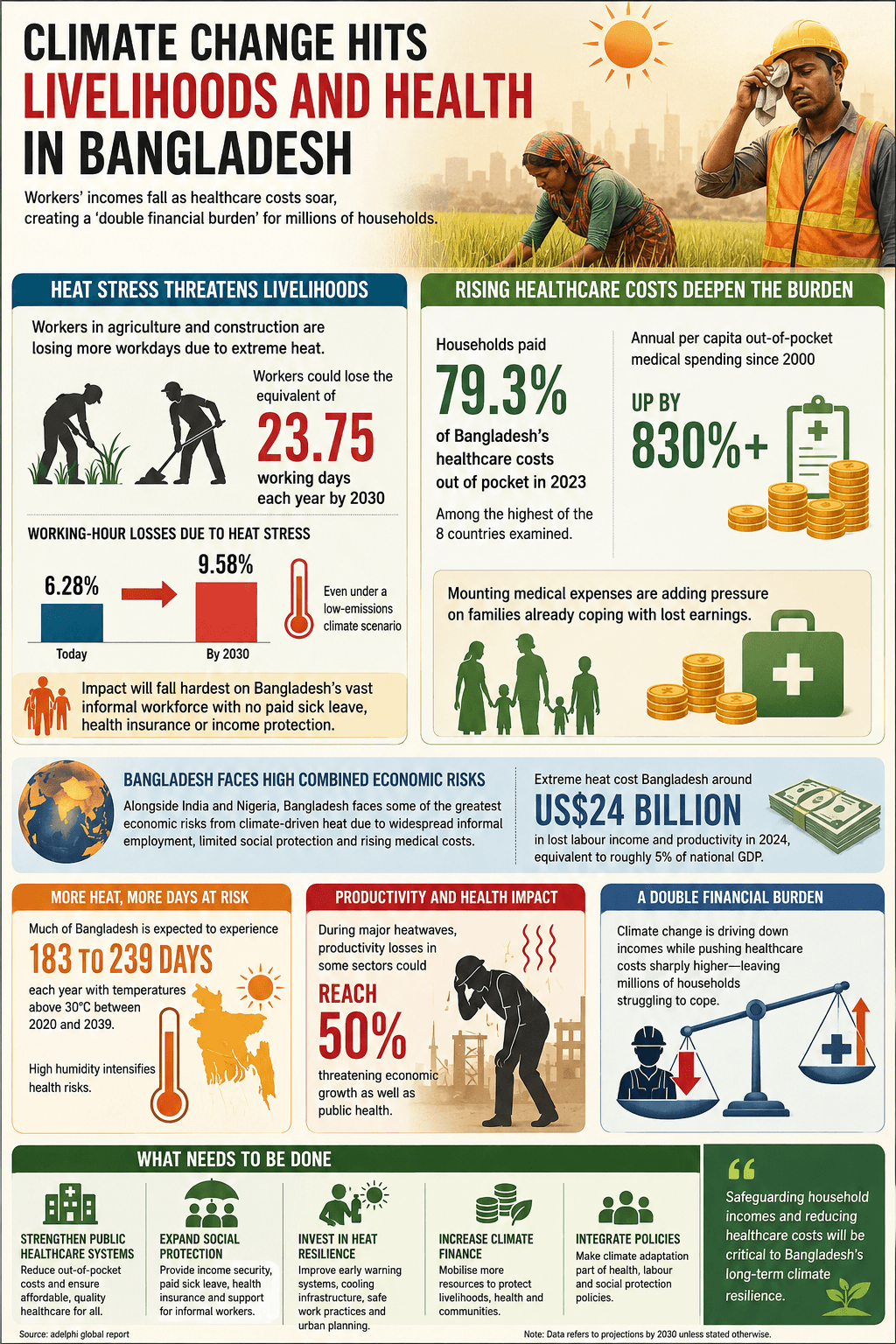
The study projects that workers in these sectors could lose the equivalent of 23.75 working days each year by 2030 because of heat stress. Working-hour losses are expected to rise from 6.28% today to 9.58% by the end of the decade, even under a low-emissions climate scenario.
Researchers warn that the impact will fall hardest on Bangladesh’s vast informal workforce, where many employees have no paid sick leave, health insurance or income protection.
The report also highlights the mounting financial strain from healthcare. In 2023, households paid 79.3% of the country’s healthcare costs out of pocket — among the highest proportions of the eight countries examined. Since 2000, annual per capita out-of-pocket medical spending has risen by more than 830%, adding pressure on families already coping with lost earnings.
Bangladesh, alongside India and Nigeria, is identified as facing some of the greatest combined economic risks from climate-driven heat because of widespread informal employment, limited social protection and rising medical costs.
The report estimates that extreme heat cost Bangladesh around US$24 billion in lost labour income and productivity in 2024, equivalent to roughly 5% of national GDP.
Scientists say much of Bangladesh is expected to experience 183 to 239 days each year with temperatures above 30°C between 2020 and 2039, with high humidity intensifying the health risks. During major heatwaves, productivity losses in some sectors could reach 50%, threatening economic growth as well as public health.
Researchers argue that climate adaptation can no longer be treated separately from health and labour policy. Instead, they call for stronger public healthcare systems, wider social protection for vulnerable workers, greater investment in heat resilience and increased climate finance aimed at protecting both livelihoods and health.
As Bangladesh experiences more frequent and longer-lasting heatwaves, the report concludes that safeguarding household incomes and reducing healthcare costs will be critical to the country’s long-term climate resilience.