


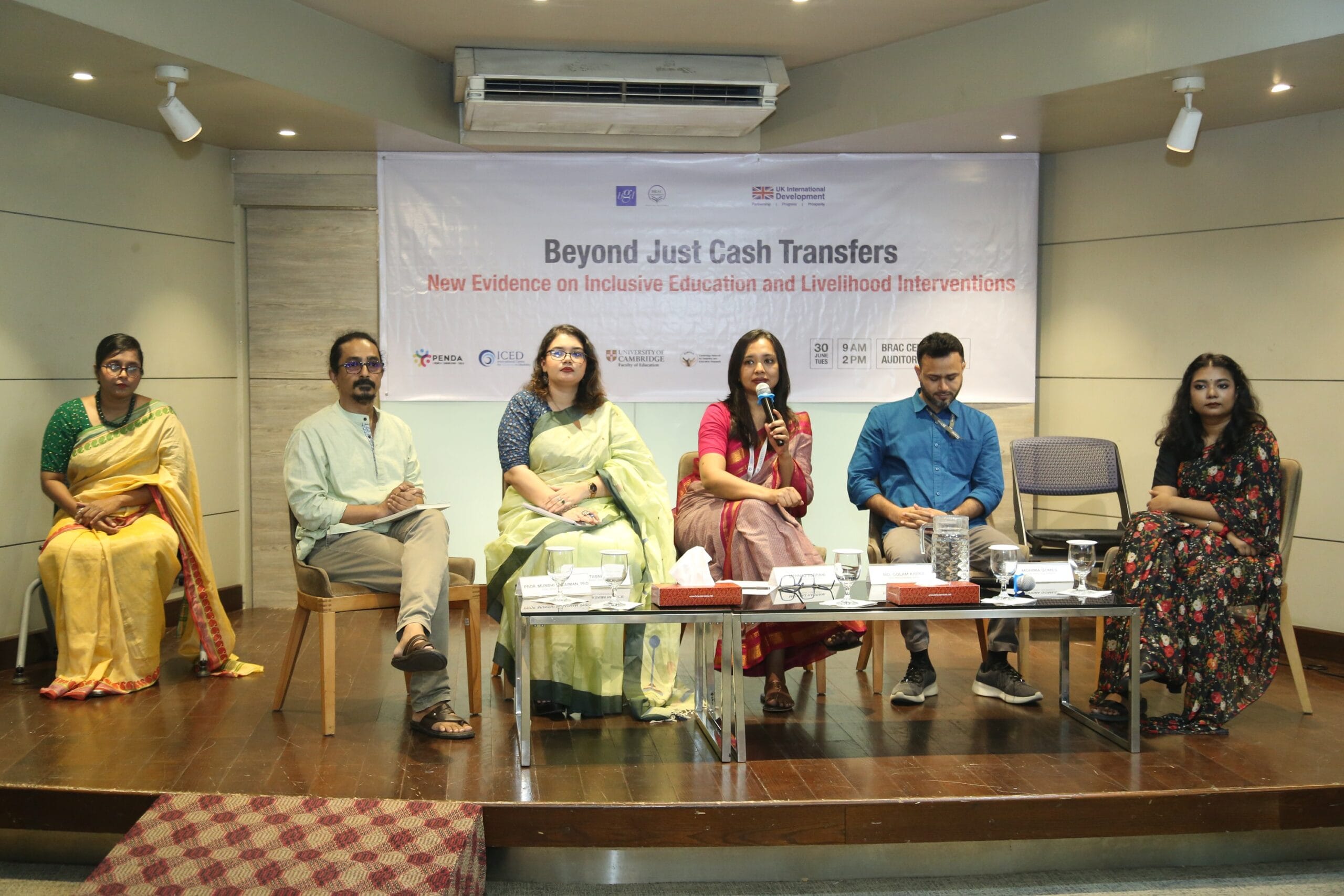
Bangladesh can significantly reduce poverty among persons with disabilities and improve educational outcomes for children with disabilities by expanding disability-inclusive programmes that combine financial support with livelihood and education interventions, according to new research presented in Dhaka on Tuesday.
The findings, unveiled at a joint event organised by the BRAC Institute of Governance and Development (BIGD), BRAC University, and the London School of Hygiene & Tropical Medicine (LSHTM), come as Bangladesh seeks to make its social protection and education systems more inclusive while pursuing sustainable economic growth.
Researchers said the evidence demonstrates that targeted, disability-inclusive interventions produce better long-term outcomes than cash assistance alone, offering policymakers a practical roadmap for addressing one of the country’s most persistent development challenges.
Globally, around 1.3 billion people live with disabilities, while an estimated 240 million children with disabilities continue to face barriers to quality education, limiting their future employment and income opportunities.
In Bangladesh, those challenges are compounded by inadequate inclusive infrastructure, limited access to assistive technologies, shortages of trained teachers and financial hardship, resulting in lower school enrolment, reduced workforce participation and a higher risk of poverty among people with disabilities.
Presenting the findings, researchers highlighted the success of BRAC’s Disability-Inclusive Ultra-Poor Graduation (DIUPG) programme, which combines livelihood support, skills development and social assistance rather than relying solely on cash transfers.
The evaluation found that participating households experienced significant improvements in economic well-being, including higher monthly income and household expenditure.
Among persons with disabilities, the gains were even more pronounced. Employment increased by 21%, working hours rose by 27%, and earnings climbed by 30%, suggesting that disability-inclusive livelihood programmes can help break the cycle of poverty more effectively than traditional welfare approaches.
Researchers said the results provide strong evidence that investments in productive assets, training and sustained support can enable persons with disabilities to become economically independent while reducing long-term dependence on social assistance.
The conference also presented findings from the evaluation of Shikhbo Shobai, an inclusive education programme designed to improve learning opportunities for children with disabilities.
The research found that a holistic approach—combining support for schools, teachers, families and students—can make mainstream education more accessible and improve participation among children with disabilities.
However, participants said major structural barriers continue to limit progress.
Executive Director of BIGD Dr Imran Matin said disability and poverty reinforce each other, making it considerably harder for affected households to escape deprivation.
While cash transfers remain an important entitlement, he argued that Bangladesh must move beyond grant-based support by investing in programmes that strengthen livelihoods and social inclusion.
Experts also pointed to persistent shortcomings in the country’s education system.
Salma Mahbub, founder and general secretary of disability rights organisation B-Scan, said children with disabilities continue to lag behind because of a shortage of teachers trained in inclusive education, Braille and sign language.
She also called for disability education to be brought fully under the Ministry of Education and for greater investment in teacher training and assistive learning methods.
Government representatives acknowledged the challenges while outlining plans to strengthen disability inclusion through broader social protection reforms.
Mohammad Nazmul Ahsan, Joint Secretary at the Ministry of Social Welfare, said the government is pursuing a life-cycle approach in which social safety nets and support services accompany individuals throughout different stages of life.
Rather than treating disability programmes as isolated initiatives, he said the goal is to integrate education, financial support and other services into a coordinated system that promotes long-term stability and independence.
Development partners also stressed the importance of evidence-based policymaking.
Representatives from the British High Commission said the United Kingdom continues to support disability-inclusive development in Bangladesh through research and programmes aimed at removing systemic barriers across education, health and other sectors.
The event concluded with researchers and policymakers agreeing that stronger coordination among government agencies, development partners, non-governmental organisations and the private sector will be essential to scale up successful models nationwide.
Research Director at the Bangladesh Institute of Development Studies (BIDS) Dr S. M. Zulfiqar Ali said the government must remain at the centre of efforts to expand inclusive development, while bringing together civil society and other stakeholders to ensure that proven interventions are translated into national policy.
Researchers from LSHTM said the next challenge is moving from pilot projects to institutional reforms that embed disability inclusion across Bangladesh’s development agenda, enabling persons with disabilities to participate fully in education, employment and society.