


The government has approved 16 development projects involving Tk33,298.48 crore, including an Tk8,888 crore scheme to construct 256 long bridges across 48 districts to improve rural connectivity and ease the movement of goods and people.
The bridges, with a combined length of 49,050 metres, will be built on upazila, union and village roads under a five-year project running from October 2026 to June 2031.
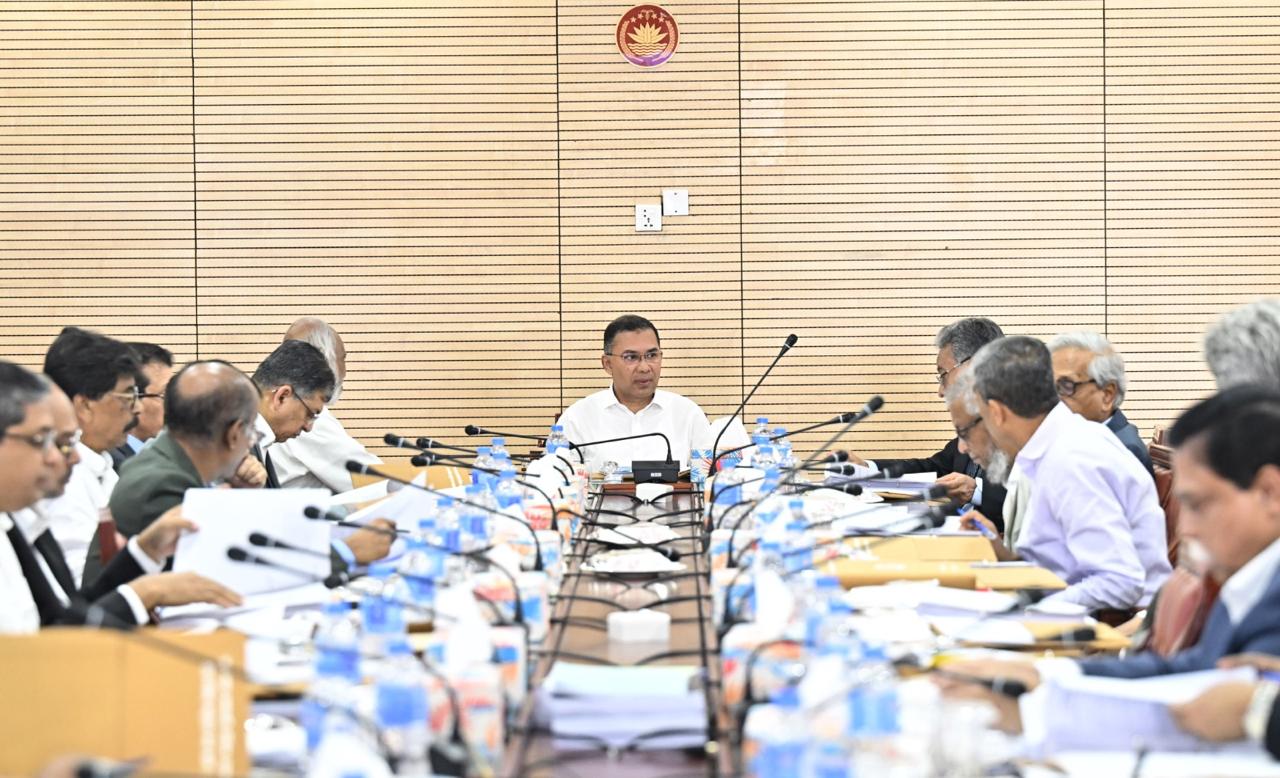
The Executive Committee of the National Economic Council (ECNEC) approved the projects at a meeting chaired by Prime Minister Tarique Rahman at the Bangladesh Secretariat on Wednesday.
The Local Government Engineering Department (LGED) will implement the bridge project with full government funding.
Besides bridge construction, it includes 7,700 metres of protective works, 65.187 kilometres of connecting roads and land acquisition of 300 acres.
The project aims to improve road links with rural markets, industrial establishments, agricultural production centres, ferry terminals, healthcare facilities and educational institutions, particularly in areas where the absence of long bridges has disrupted direct communication.
The bridges are expected to reduce travel time and transportation costs, facilitating the movement of agricultural produce and other goods to markets.
Of the 16 projects approved, 14 are new and two are revised. The total cost will be financed by Tk32,863.76 crore from government funds, Tk424.73 crore from project loans and Tk10 crore from the implementing organisations’ own resources.
State Minister for Planning Md Zonayed Abdur Rahim Saki briefed reporters after the meeting.
The Local Government, Rural Development and Cooperatives Ministry secured approval for seven projects, including rural infrastructure development in Joypurhat, Faridpur, Rajbari, Sylhet, Sunamganj, Moulvibazar, Habiganj and the greater Jashore region.
The committee also approved the second revision of the third phase of the Rural Livelihood Project and a project to construct sewage collection lines for the Dasherkandi Sewage Treatment Plant.
Four projects under the Water Resources Ministry were approved, focusing on canal, small river and waterbody excavation and re-excavation to improve drainage and irrigation.
The projects also include riverbank protection along the Brahmaputra and Jinjiram rivers in Jamalpur, protection of areas in Babuganj and Uzirpur upazilas of Barishal from erosion by the Sugandha and Sandhya rivers, and protection of the Goranchatbari retention pond and the Turag River under the Metro Dhaka project.
The Agriculture Ministry’s small-scale irrigation development project in Joypurhat, Bogura and Gaibandha also received approval.
The Road Transport and Highways Division secured approval for upgrading three district highways under the Joypurhat Road Division and widening the Mokamtala-Kalai-Joypurhat regional highway into a four-lane road with service lanes.
The meeting also approved a training centre for the National Security Intelligence (NSI) under the Prime Minister’s Office and an infrastructure development project to address residential accommodation shortages for Bangladesh Air Force officers in Dhaka.
The meeting was informed about 14 projects costing less than Tk50 crore each that had already received approval from the Planning Minister.
These include river re-excavation in Cumilla’s Muradnagar, climate-smart agriculture and water management, agricultural training institutes, biotechnology-based seed development, tissue culture laboratories, horticulture centres and initiatives to increase cropping intensity in greater Mymensingh.
Other smaller projects involve fisheries and livestock information services, conservation and research on Mir Kadim cattle, climate-resilient fisheries in Rajshahi, aquatic ecosystem conservation in the northeastern and southwestern regions, and replacement of risky old concrete and Bailey bridges on highways.
A project to expand Teletalk’s high-speed mobile network using satellite technology in remote areas and important tourist destinations was also among those reported to the meeting.