


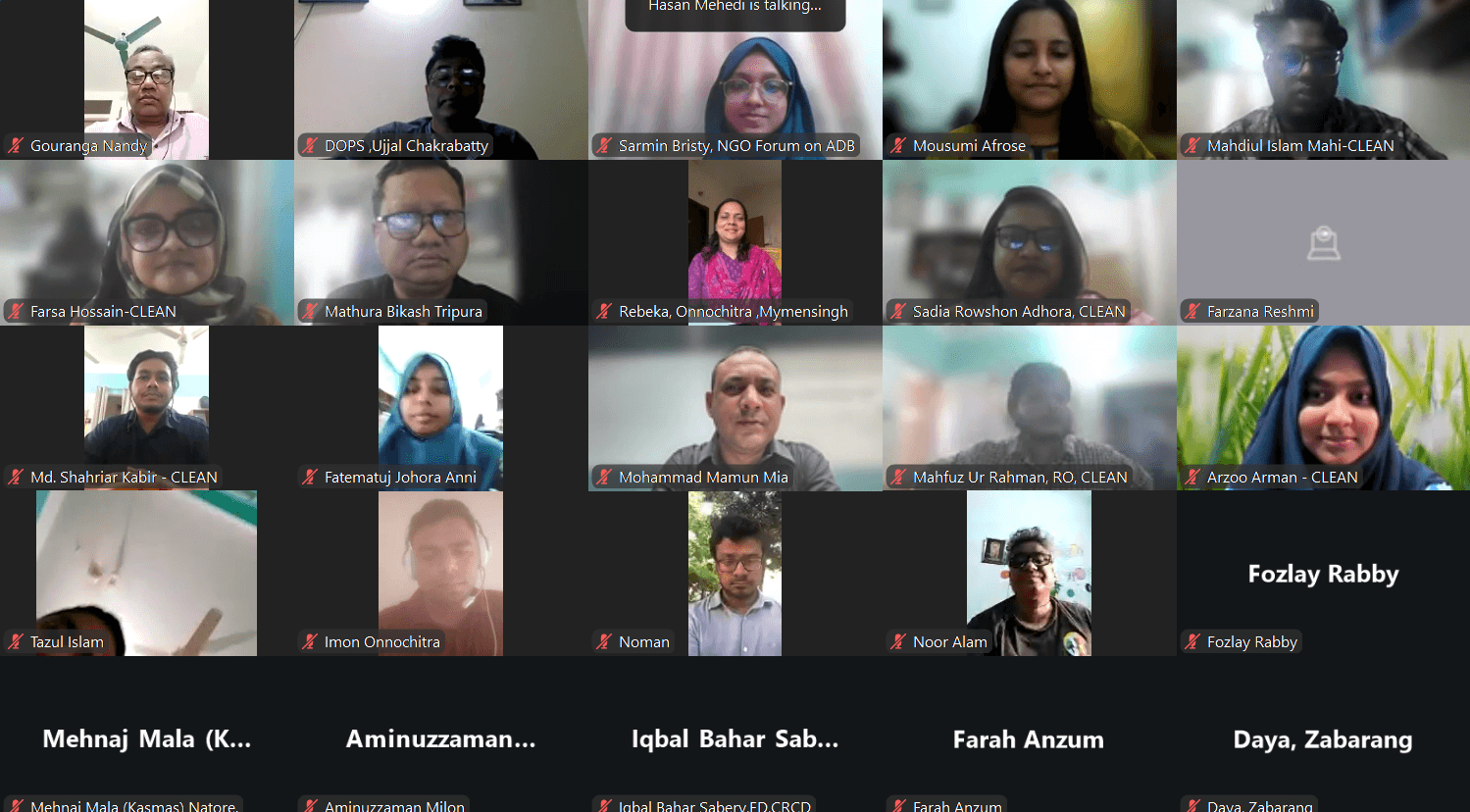
Climate activists and civil society leaders from across Asia have issued a strong warning to multilateral development banks (MDBs), accusing them of perpetuating fossil fuel dependence despite global climate pledges.
Rayyan Hassan, Executive Director of the NGO Forum on ADB, opened the discussion at a webinar by noting that the planet has already crossed 1.55°C of global temperature rise, with 2024 recorded as the hottest year in history.
“We are well beyond safe limits. The shift from fossil fuels to renewable energy must happen now—both globally and locally,” he urged.
Hassan pointed out that while Bangladesh’s contribution to global emissions is minimal, its energy mix remains 85% fossil-based, with renewables contributing less than 3%. He criticized the continued gas dependence in national energy planning, with MDBs—particularly the Asian Development Bank (ADB) and the Asian Infrastructure Investment Bank (AIIB)—still prioritizing fossil-based projects.
Monower Mostafa, Networking Adviser at CLEAN, highlighted the contradiction between MDBs’ climate commitments and their ongoing fossil fuel financing.
“Every dollar spent on fossil fuels is a dollar not spent on renewable energy or adaptation. This is the opportunity cost of climate injustice,” he said.
Mostafa added that MDBs’ indirect financing through financial intermediaries and policy loans deepens fossil dependence while allowing institutions to evade accountability.
From India, Vidya Dinker, Coordinator of Growthwatch, criticized MDBs for influencing national energy policies under the guise of “technology neutrality.”
“Our governments listen to these banks as if they were their masters. MDBs are locking us into fossil fuels and destructive large-scale projects like hydros, mineral mining, and nuclear power—calling them green,” she stated.
She urged South Asian movements to reclaim their collective voice, adding,
“We represent one-fourth of the world’s population. We must push back, educate, agitate, organize and make the MDBs listen to communities, not corporations.”
From Pakistan, Noor Bajeer of the Community Support Services Program (CSSP) drew attention to the Jamshoro 660 MW coal power plant, co-financed by ADB (USD 900 million) and ISDB (USD 220 million).
“Originally approved for imported coal, the plant now runs on 100% Thar lignite—meaning more coal mining, more displacement, and more pollution,” he warned.
Bajeer demanded accountability, saying MDBs’ continued support for such projects violates their pledges to end coal finance.
“Climate justice must include social and economic justice for affected people,” he stressed.
In his closing remarks, Hasan Mehedi, Member Secretary of the Bangladesh Working Group on External Debt (BWGED), outlined three key demands for MDBs:
Stop financing false solutions, including fossil fuels, waste-to-energy, and other harmful projects, whether direct or indirect.
Invest in distributed, community-based renewables to ensure a rapid and just energy transition.