


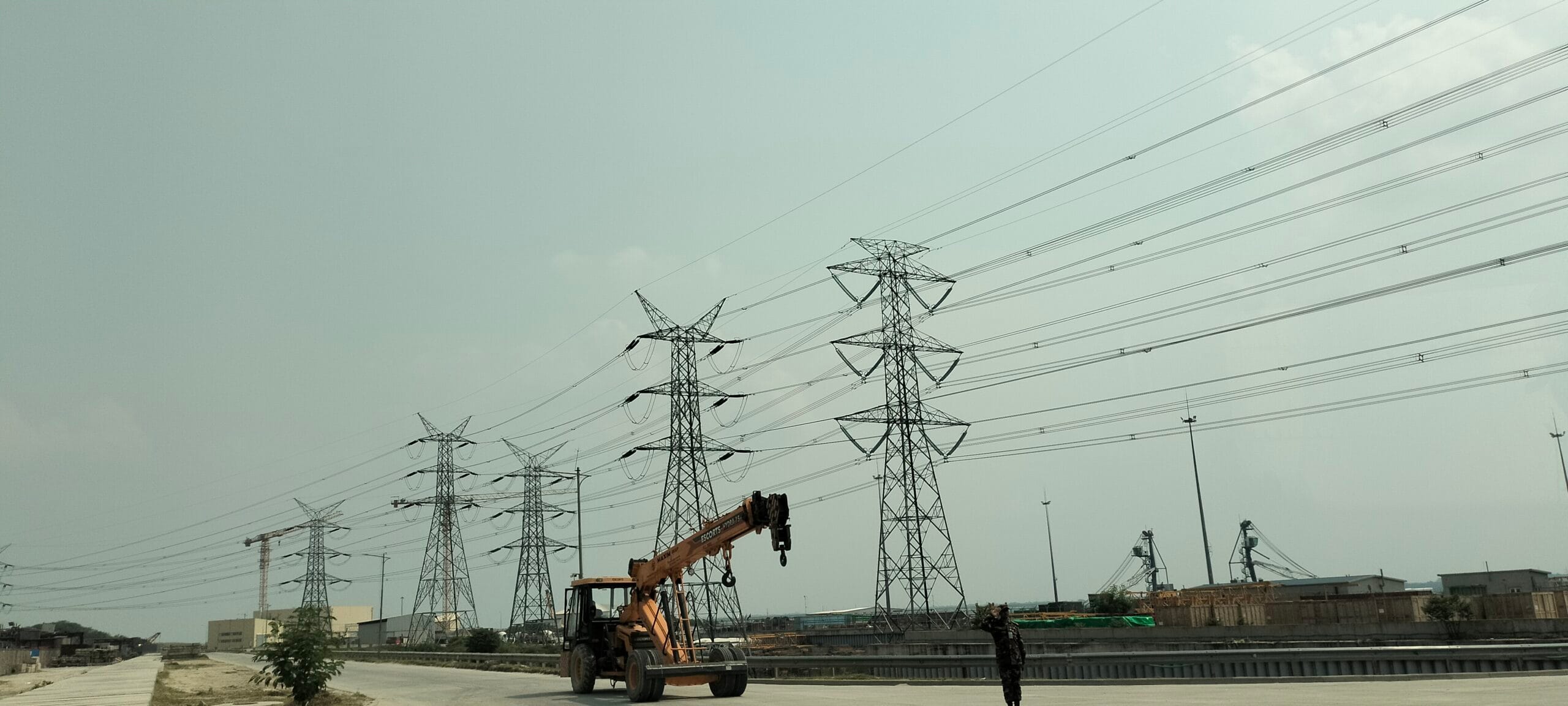
The government is moving ahead with a nearly Tk3,000 crore project to expand electricity distribution across the three Chattogram Hill Tracts (CHT) districts, aiming to improve power access in one of the country’s least-developed regions.
The project, titled “Extension of Power Distribution System Network in Three Hill Districts,” seeks to strengthen climate-resilient electricity infrastructure in 26 upazilas across Rangamati, Bandarban and Khagrachhari.
Last week, the Project Evaluation Committee (PEC) of the Planning Commission reviewed the proposal, rationalising project costs and making observations before it is placed before the Executive Committee of the National Economic Council (Ecnec) for final approval, Planning Commission officials said.
If approved, the five-year project will be implemented by the Bangladesh Power Development Board (BPDB) from July 2026 to June 2031 and is expected to provide grid electricity to about 88,586 new consumers in remote hill areas.
“The project has been undertaken as one of the new government’s priorities to ensure reliable electricity supply in the lagging hilly areas,” Shibraj Chowdhury, a senior official of the Industry and Energy Division’s power wing, told Just Energy News.
“It is the second phase of a similar project completed in 2022, as the first phase could not cover all the hilly areas,” he said.
He added that final approval may take some time as the PEC had sought revisions to several project components.
Follow-up to incomplete electrification
The project builds on an earlier BPDB electrification programme completed in June 2022, which covered only about 55% of its targeted beneficiaries, leaving large parts of the three hill districts without grid connectivity.
According to BPDB, the three districts currently have around 191,723 electricity consumers.
For decades, the Chattogram Hill Tracts have lagged behind the rest of the country in infrastructure development because of difficult terrain, dispersed settlements and frequent natural disasters, making power network expansion both technically challenging and costly.
Coverage across 26 upazilas
The project will extend electricity connections to households, schools, healthcare facilities and businesses in the districts.
In Rangamati, the paces include Rangamati Sadar, Kaptai, Kawkhali, Bilaichhari, Rajasthali, Juraichhari, Barkal, Langadu, Naniarchar and Baghaichhari.
In Bandarban, the connections will extend to Bandarban Sadar, Rowangchhari, Ruma, Thanchi, Lama, Alikadam and Naikhongchhari and in Khagrachhari, Khagrachhari Sadar, Dighinala, Panchhari, Laxmichhari, Mahalchhari, Matiranga, Guimara, Manikchhari and Ramgarh.
Project cost and infrastructure
The project is estimated to cost Tk2,952 crore. Of the total, the Asian Development Bank (ADB) is expected to provide Tk2,125 crore in loans, while the government will contribute Tk 446 crore and BPDB will finance the remaining Tk371 crore.
Under the project, BPDB will construct six new 33/11 kV substations — three in Rangamati, two in Khagrachhari and one in Bandarban; upgrade existing substations and establish a regional workshop; build new 33 kV and 11 kV distribution lines; renovate and modernise about 1,874 kilometres of existing distribution lines, including 33 kV, 11 kV, 11/0.4 kV, 0.4 kV and 0.23 kV networks.
The project will require about seven acres of land — four acres in Rangamati, two in Khagrachhari and one in Bandarban.
Given the region’s rugged terrain, BPDB plans to use specialised engineering techniques to construct power lines across mountainous and forested areas.
Existing substations and distribution networks will also be upgraded with disaster-resilient features designed to withstand heavy rainfall, flash floods and landslides.
Social safeguards
The project includes a draft Resettlement and Small Ethnic Community Plan (RSECP) to ensure fair compensation and rehabilitation for people affected by land acquisition, particularly Indigenous communities living in the CHT.
It will also be supported by a separate $2 million Technical Assistance programme financed through the Japan Fund for Poverty Reduction (JFPR).
The programme aims to help small ethnic communities develop electricity-based livelihoods, strengthen climate resilience and expand economic opportunities.
Planning Commission seeks revisions
While supporting the project’s objectives, the Planning Commission has sought further clarification on several issues, including land acquisition, social safeguards and project costs.
Officials have asked BPDB to provide stronger assurances that Indigenous communities will not be adversely affected without adequate compensation and rehabilitation.
They have also sought detailed cost justifications for transporting heavy electrical equipment through difficult mountainous terrain to minimise the risk of future cost overruns.