


Bangladesh has proposed a higher allocation for the power and energy sector in the FY2026-27 budget as the government seeks to strengthen energy security, reduce import dependence and address economic pressures arising from instability in the Middle East.
Finance Minister Amir Khasru Mahmud Chowdhury proposed an allocation of Tk173.45 billion for the sector, up from Tk169.52 billion in FY2025-26.
Presenting the budget in parliament on Thursday, the minister said renewed tensions in the Middle East have posed significant challenges to Bangladesh’s economy by driving up global prices of fuel, liquefied natural gas (LNG) and fertiliser.
Higher import costs have increased production expenses in the agriculture, transport, industrial and power sectors, placing additional pressure on inflation, government subsidies and foreign exchange reserves.
He also warned that prolonged instability could affect overseas employment opportunities and remittance inflows from Bangladeshi workers, as the Middle East remains the country’s largest labour market abroad.
Power Sector Faces Mounting Costs
Chowdhury said annual government subsidies for the power sector have exceeded Tk400 billion, attributing the burden to years of poor planning, corruption and mismanagement.
He criticised capacity payment arrangements that require payments to power producers even when electricity is not generated, saying such agreements have significantly increased costs. Expensive power import contracts and several energy projects have also continued to place financial pressure on consumers and the government, he added.
Despite installed generation capacity reaching 28,919 megawatts, including imported electricity and grid-connected renewable energy, ensuring a reliable and uninterrupted power supply remains a challenge, the minister said.
Reform Measures Planned
The government has announced a broad reform agenda covering power generation, transmission and distribution. Planned measures include stronger oversight, greater transparency, action against corruption, modernisation of ageing power plants and a review of power purchase agreements.
Authorities also aim to upgrade transmission and distribution networks and reduce system losses to improve service reliability.
Under the government’s long-term strategy, installed power generation capacity is targeted to reach 35,000 megawatts by 2030, with renewable energy expected to meet at least 20% of total electricity demand. Transmission infrastructure will also be expanded to 25,000 circuit kilometres.
The Rooppur Nuclear Power Plant is expected to begin supplying electricity to the national grid in January 2027, when the first 1,200MW unit of the 2,400MW facility is scheduled to commence operations.
Focus on Domestic Gas Production
The finance minister said reducing dependence on imported energy is essential for strengthening long-term energy security.
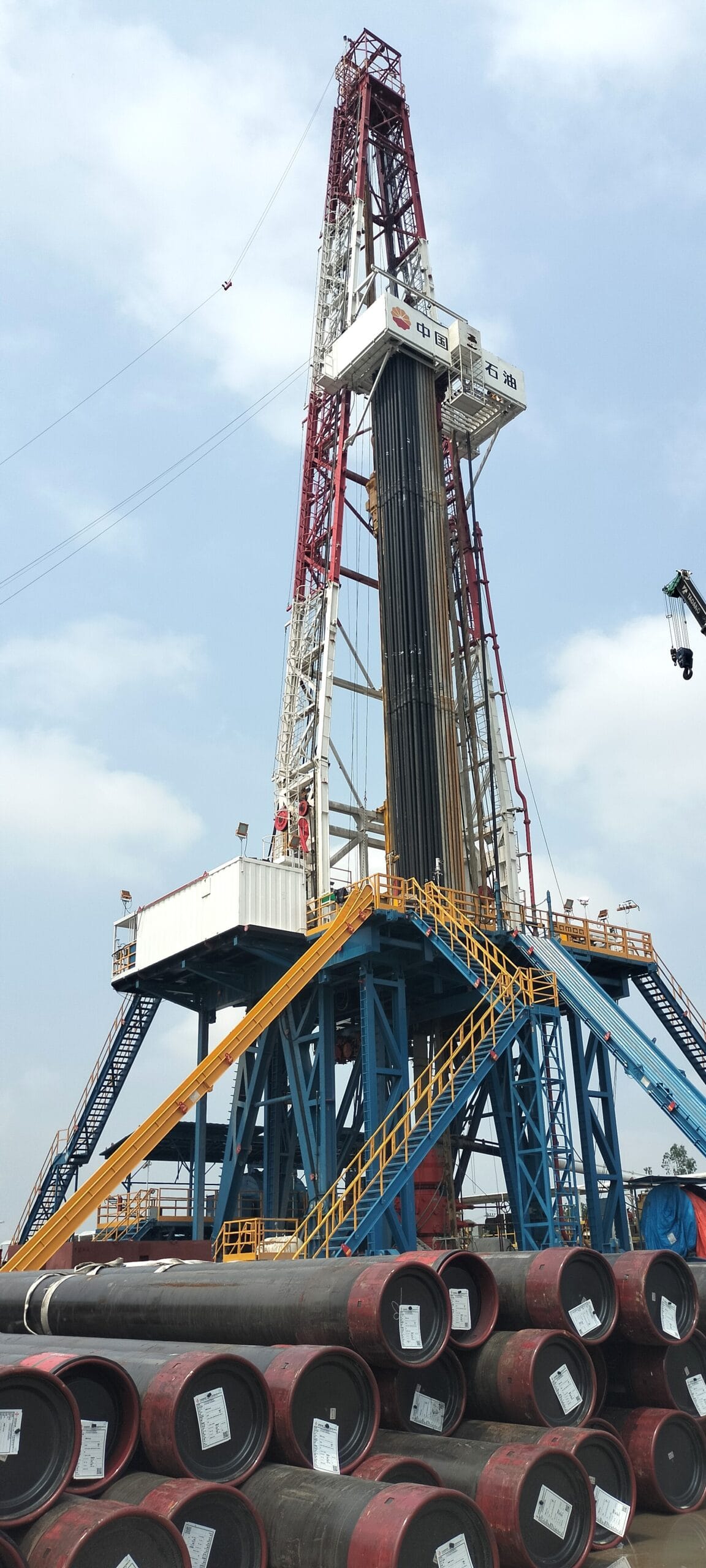
To increase domestic gas production, state-owned exploration company BAPEX will undertake extensive geological and seismic surveys over the next three years. The government also plans to drill 69 new wells and rehabilitate 31 existing wells while investing in additional exploration equipment.
To attract foreign investment in offshore exploration, the government has revised production-sharing contract terms and launched a new offshore bidding round.
LNG Expansion and Refinery Plans
As part of efforts to diversify energy sources, the government is considering a third floating LNG terminal at Moheshkhali and is moving forward with plans for a land-based LNG terminal at Matarbari.
Authorities also aim to maximise the use of existing pipeline infrastructure and expedite the commissioning of the Single Point Mooring (SPM) system to facilitate fuel imports.
In the longer term, the government is considering the construction of a new oil refinery with an annual processing capacity of five million tonnes in Chattogram or another coastal industrial zone to strengthen domestic refining capacity.
Officials said the planned reforms are aimed at improving energy security, lowering costs and ensuring a more reliable and environmentally sustainable energy supply for households and industries.