


In 2022, a devastating road accident altered the course of Sajidan Rafsan’s life forever. The crash claimed the life of his younger sister and left his mother, a university professor and three-time cancer survivor, critically injured.
What followed was not only a family tragedy, but also a painful encounter with healthcare systems ill-equipped for the realities of countries like Bangladesh.
In environments shaped by humidity, inconsistent follow-up care, fragile medical infrastructure, and severe resource constraints, even manageable medical complications can quickly escalate into life-threatening conditions.
Rafsan, then still in his teens, did everything within his power to secure the best possible treatment for his mother. Yet despite those efforts, the system failed them.
Following prosthetic use, his mother developed a severe infection. After a prolonged medical struggle, she died.
For Rafsan, the experience transformed grief into a profound reckoning with the structural inequalities embedded within global healthcare systems.
It exposed what he came to see as a deeper design failure: much of modern rehabilitative medicine is built around assumptions drawn from wealthy, stable societies – assumptions that rarely hold true across large parts of the developing world.
Global healthcare conversations often invoke resilience, innovation and equity. Yet for millions living in climate-vulnerable and resource-constrained regions, those ideals remain distant abstractions. Rehabilitation systems are frequently designed for environments where regular maintenance, predictable follow-up care, and reliable access to replacement components are taken for granted.
In much of the Global South, however, such conditions simply do not exist.
For Rafsan, recognition of the problem was not enough. Confronted by personal loss and systemic failure, he reached a stark conclusion: the available solutions were never designed for families like his.
Rather than accepting that reality, he decided to build an alternative.
That decision led to the creation of Apex Stride Mobility Systems, a Bangladeshi social innovation venture seeking to redesign prosthetic technology for the environmental and infrastructural realities of the developing world.
Founded by Ahmed Sajidan Jarjis Rafsan, a young interdisciplinary researcher and social entrepreneur, Apex Stride represents more than a medical technology start-up.
It is part of a broader attempt to rethink how healthcare innovation itself is conceived, produced and distributed.
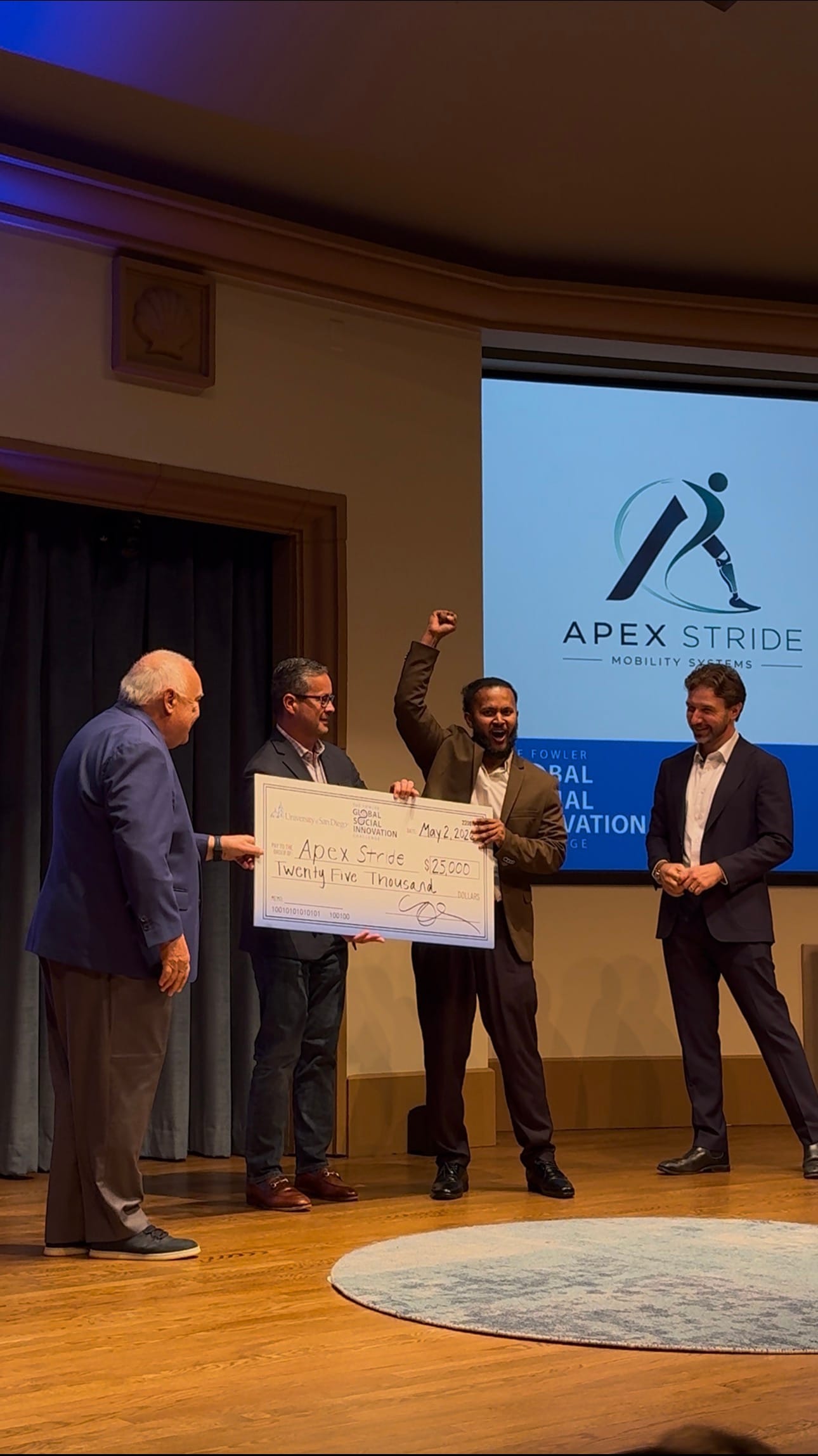
The initiative has already gained international recognition. Earlier this year, Apex Stride won the Fowler Global Social Innovation Challenge in California, emerging as a global champion among thousands of participants from more than 25 countries.
“We want everyone to have access to quality prosthetics, regardless of cost or environmental conditions,” Rafsan said.
Yet prosthetics, he insists, are only the beginning.
“We’re starting with prosthetics, but this is only the beginning. Healthcare inequalities extend far beyond a single field, and many are not simply the result of material costs or production constraints, but of systems that have normalised exclusion through pricing and access,” he explained.
“Our belief is simple: as much quality care as possible should be made accessible to as many people as possible.”

That vision now extends far beyond rehabilitation devices.
Rafsan is currently developing what could become one of the Global South’s most advanced medical innovation laboratories, integrating industrial-grade 3D manufacturing, biomedical engineering, precision prototyping, diagnostic infrastructure and advanced design workflows to address healthcare challenges long neglected by conventional innovation markets.
The ambition is striking. It challenges the longstanding assumption that world-class medical innovation must emerge exclusively from wealthy institutional centres in Europe or North America.
Instead, Rafsan’s work proposes that globally relevant healthcare technologies can also be designed, engineered and scaled from regions historically viewed merely as recipients of aid and adaptation.
If realised, the implications would extend far beyond expanded medical access. They could begin to reshape the geography of global healthcare innovation itself.
Alongside Apex Stride, Rafsan also leads the Shirin Sajmila International Foundation (SSIF), a United States-registered humanitarian systems organisation named in memory of his late mother and sister.
Through work spanning South Asia, Africa and the Middle East, the organisation has reached more than 700,000 beneficiaries across public health, refugee support, women’s healthcare, climate resilience, humanitarian logistics and trauma response.
During Bangladesh’s devastating floods in 2024, SSIF expanded beyond conventional relief distribution efforts.
The organisation supported more than 20,000 stranded families and provided healthcare services to over 25,000 patients in regions where environmental collapse had effectively severed access to formal medical systems.
Maternal and neonatal care, infectious disease response, sanitation programmes, emergency referrals and women’s healthcare quickly became urgent priorities in communities facing overlapping ecological and public health crises. SSIF also distributed 15,000 menstrual dignity kits — addressing a dimension of healthcare that is frequently overlooked during emergencies.
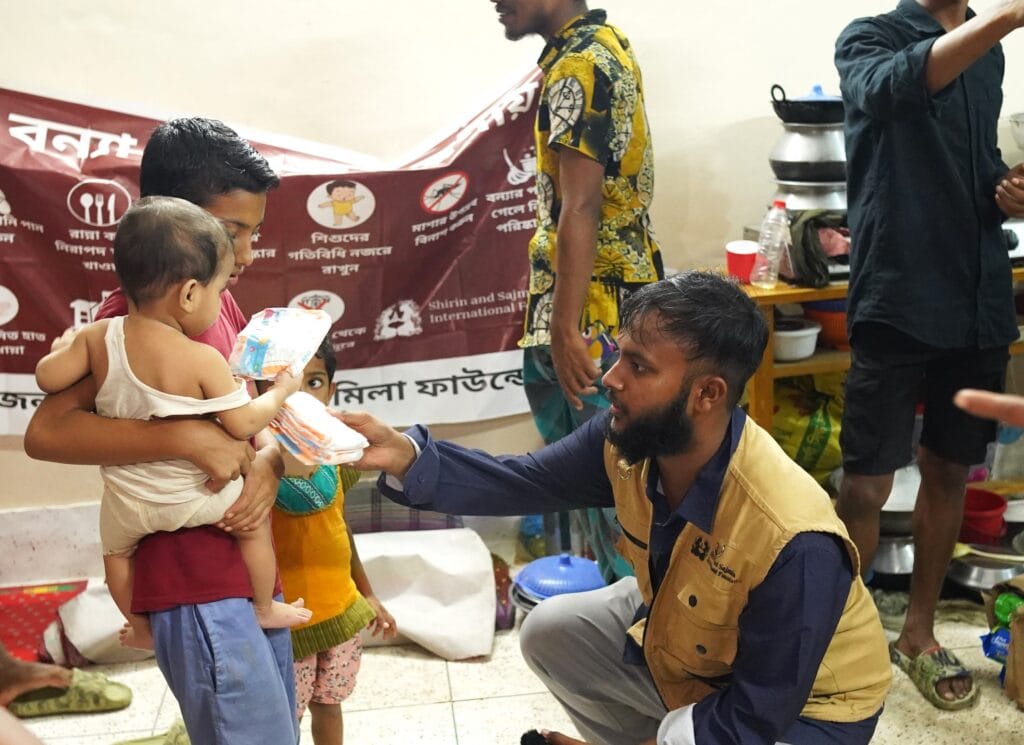
Rafsan himself was often present in floodwaters waist-deep, coordinating relief operations on the ground.
For him, leadership appears less an exercise in distant administration than one rooted in direct engagement with communities experiencing crisis first-hand.
Beyond Bangladesh, SSIF has also led refugee support initiatives in Egypt, serving displaced Sudanese and Syrian populations.
More than 3,000 refugees received assistance through healthcare access, psychosocial support and livelihood interventions, including direct support for over fifty refugee children undergoing cancer treatment.
In these contexts, Rafsan argues, healthcare failure is rarely about the absence of medical knowledge alone.
More often, it stems from the collapse of continuity, the inability of vulnerable families to navigate, afford or remain connected to institutional systems long enough for treatment to succeed.
Elsewhere, the organisation has established trauma-response networks in Nepal, mobilising over 80 psychologists and psychiatrists to support more than 1,600 young people and families affected by political unrest.
Humanitarian partnerships in Sudan and the Democratic Republic of Congo have similarly exposed recurring patterns of displacement, gendered vulnerability and weakened healthcare infrastructures.
Across these vastly different environments, one question repeatedly emerges: what does resilience look like when assumptions about continuity, stability and infrastructure no longer hold?
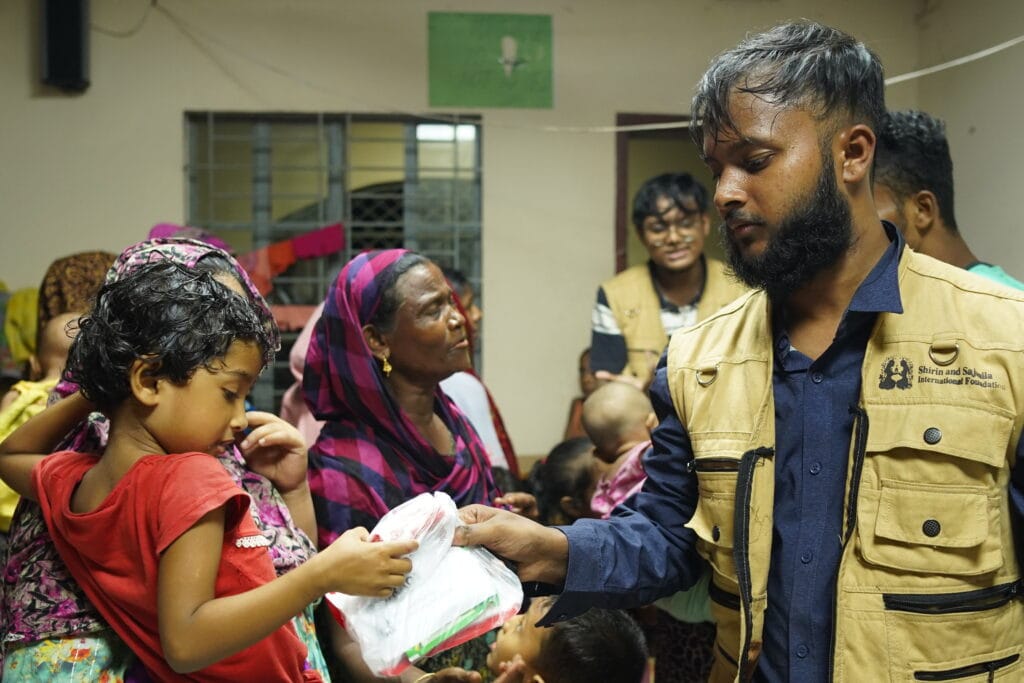
Even SSIF’s seemingly unrelated initiatives reflect that same systems-oriented philosophy.
Project Aranaya Kala, for instance, works with Indigenous communities in environmentally sensitive hilly regions through sustainable livelihood development, ecological stewardship and decentralised economic resilience.
Meanwhile, Bir Chattala Shajai, one of Bangladesh’s largest youth-led civic reconstruction movements, mobilised more than 100,000 young people to restore public spaces and urban infrastructure during periods of institutional strain.
Though these projects differ in sectoral focus, their underlying logic remains remarkably consistent: systems must be locally adaptive, socially embedded and capable of functioning under conditions of environmental and institutional stress rather than assuming their absence.
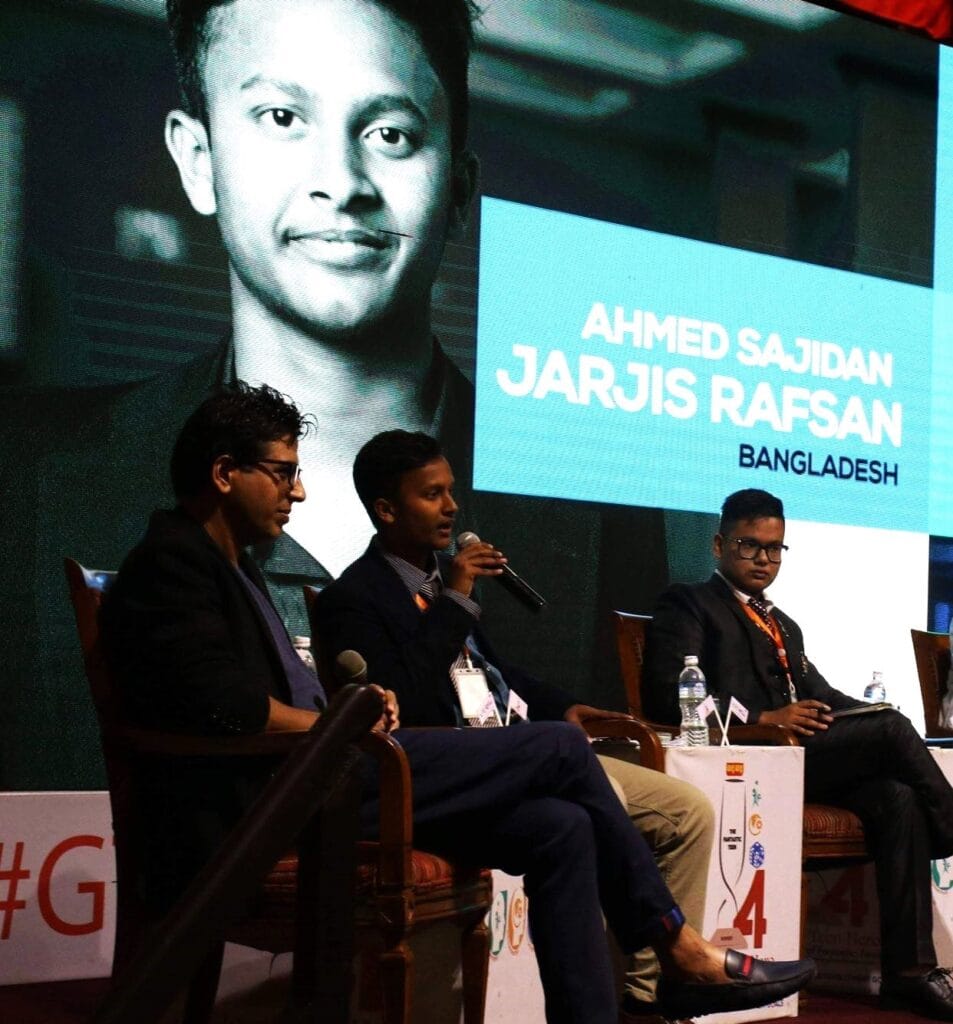
That same principle informed SSIF’s Projects for Peace initiative, recognised through the prestigious Kathryn W Davis programme in the United States.
Focused on women-led preventive healthcare systems in climate-vulnerable Bangladeshi communities, the initiative approached maternal health, hygiene preparedness and community referral systems not as supplementary interventions, but as essential components of adaptive public health infrastructure.
Rafsan’s thinking has also been shaped by his work within major academic and biomedical institutions. His experience at the Dana-Farber Cancer Institute at Harvard Medical School exposed him to translational medicine, diagnostics and systems-level approaches to healthcare innovation.
At the same time, his interdisciplinary research leadership at the Caribbean Studies Network, a United States-based multidisciplinary research lab, has explored climate precarity, migration governance, digital inequality and institutional fragility.
Presentations at Yale University’s Caribbean Digital XII Conference and Harvard’s ALARI IV Conference reflect a recurring intellectual concern underpinning much of his work: how societies adapt when political and environmental instability outpaces institutional capacity.
Earlier this year, Rafsan was shortlisted for several major international sustainability recognitions, often as one of the youngest candidates in the field. Increasingly, his work is being recognised not merely as humanitarian entrepreneurship, but as a broader form of systems innovation operating at the intersection of healthcare, climate adaptation, infrastructural resilience and biomedical technology.
What makes Apex Stride particularly significant, then, is not simply its promise as a prosthetics platform.
It is the possibility that healthcare systems designed under conditions of fragility may become increasingly relevant in a century shaped by climate disruption, conflict, displacement and institutional stress.
Historically, technological innovation has tended to flow outward from stable centres of wealth and expertise, while much of the developing world has been positioned as a passive recipient of adaptation. Apex Stride challenges that hierarchy.
It suggests that regions long viewed primarily through the lens of vulnerability may also possess forms of design intelligence uniquely suited to the crises of the future.
Ultimately, Apex Stride is not merely a prosthetics company. To describe it solely in those terms would underestimate both the scale of its ambition and the intellectual foundations behind it.
Rafsan is not simply attempting to improve a category of medical device. He is attempting to rethink some of the core assumptions upon which modern rehabilitation systems have long been organised.
His work exists at the intersection of humanitarian systems design, biomedical innovation, climate adaptation and decentralised manufacturing, a combination that remains rare precisely because the problems involved are seldom approached in their full complexity.
At a remarkably young age, Rafsan has already moved across humanitarian relief operations, research institutions, biomedical ecosystems and social entrepreneurship with unusual fluency.
Whether that trajectory ultimately places him among the world’s most consequential innovators remains uncertain.
What is already clear, however, is the emergence of a young Bangladeshi figure whose seriousness of purpose, technical competence and sustained commitment increasingly distinguish him within the crowded landscape of global social innovation.