


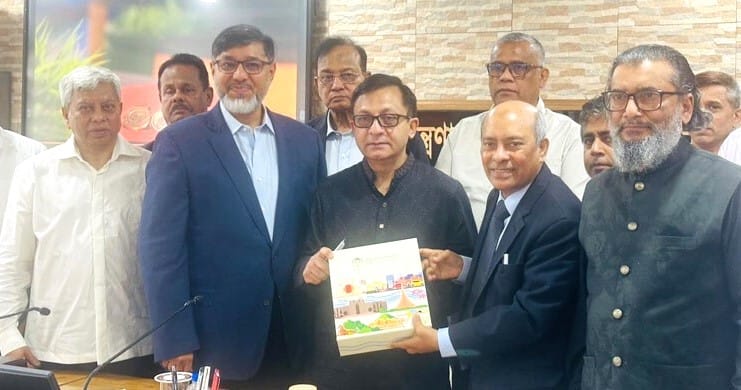
Commerce Minister Khandaker Abdul Muktadir has called for a shift to sector-based planning to unlock Bangladesh’s export potential in Saudi Arabia and the wider Middle Eastern market.
Speaking at a meeting with a delegation from the Saudi Arabia–Bangladesh Chamber of Commerce and Industry at his office on Sunday, he said Bangladesh must move beyond conventional approaches to tap emerging opportunities.
The minister noted that while exports remain heavily dependent on ready-made garments, there is strong potential to expand shipments of pharmaceuticals, leather goods, jute products and food items. He also highlighted opportunities in producing garments tailored to Saudi consumer demand.
“To fully utilise these prospects, we need targeted, sector-specific strategies rather than traditional export approaches,” he said.
Muqtadir emphasised that Bangladesh’s global image is shaped by its trade and workforce abroad. He said the government is ready to support initiatives aimed at strengthening export capacity, improving skills and enhancing the country’s reputation.
Referring to migrant workers, he said overseas employment involves significant sacrifice, but better training and skills development can yield greater benefits for individuals and the economy. “A skilled workforce can become one of Bangladesh’s greatest assets, alongside foreign currency earnings,” he added.
He urged the delegation to submit specific proposals identifying areas where policy, financial or sectoral support is required, assuring that practical suggestions would receive due consideration.
Ashraful Haque Chowdhury, president of the chamber, said Bangladesh has considerable export potential in the Saudi market. With coordinated efforts and policy support, exports could reach $1 billion by 2027, he said.
The delegation also highlighted new opportunities arising from Saudi Vision 2030 and upcoming global events, particularly in education, skills development, green technology, environmental management, desert afforestation, agriculture and food sectors, as well as microfinance-based financing.
Both sides discussed ways to strengthen bilateral trade, investment and sector-focused cooperation.