


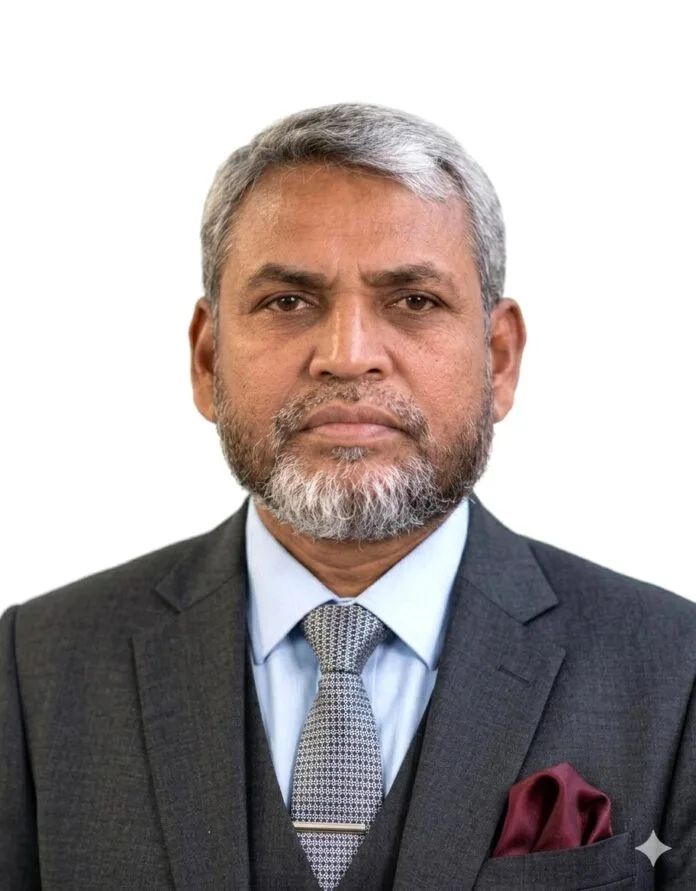
Bangladesh’s goal of installing 10,000MW of solar power by 2030 is ambitious but achievable, provided the country adopts a clear implementation strategy, strengthens institutional capacity, attracts private investment and modernises its power infrastructure, says Mohammad Alauddin, former chairman of the Sustainable and Renewable Energy Development Authority (SREDA).
He argues that Bangladesh must make greater use of floating and rooftop solar technologies to overcome land constraints and avoid repeating the shortcomings that caused earlier renewable energy targets to fall short.
In an interview with Just Energy News (JEN) Editor Md Shamim Jahangir, Alauddin discusses the opportunities, challenges and policy reforms needed to accelerate the country’s solar transition.
JEN: The government has announced a target of 10,000MW of solar power by 2030. How do you assess this goal?
Mohammad Alauddin: I welcome the decision. Bangladesh has long depended heavily on imported fuels, making the country vulnerable to global energy price shocks and supply disruptions. Expanding renewable energy is therefore both timely and necessary from an energy security perspective.
Setting a clear target is important because it provides direction for policymakers, investors and other stakeholders. While achieving 10,000MW by 2030 will be challenging, I would not say it is impossible.
The key question is whether we have learned from past experience. The Renewable Energy Policy of 2008 set targets of generating 5% of electricity from renewable sources by 2010 and 10% by 2015, but neither was achieved. More recently, a 3,000MW renewable energy target also progressed slowly.
The main problem was the absence of a detailed roadmap. Targets were announced, but there was little clarity on implementation. If we are serious about delivering 10,000MW, we need a comprehensive action plan from the outset.
Previous targets remained unfulfilled due to the lack of a clear roadmap and the absence of a designated implementing agency responsible for achieving them.
JEN: What are the biggest challenges?
Alauddin: Land is the first challenge. Utility-scale solar projects require large areas, and Bangladesh is one of the world’s most densely populated countries.
However, not all of the 10,000MW must come from land-based projects. Bangladesh has considerable potential for floating solar.
Kaptai Lake alone covers about 6,000 square kilometres. Even if a small portion of its surface were used for floating solar installations, the generation potential would be significant. Detailed feasibility studies are needed, but the opportunity is substantial.
There is also potential at sites such as the Barapukuria coal mine, where pit lakes created by mining operations could host floating solar projects. Studies conducted during my tenure at SREDA indicated the possibility of developing a 50MW floating solar plant there.
Another major challenge is implementation capacity. Policies alone do not deliver projects; institutions must have the ability to execute them efficiently.
JEN: What role can the private sector play?
Alauddin:The government cannot achieve this target alone. Private-sector participation will be critical.
To attract investment, there must be a strong business case, and rooftop solar already offers one. Industrial and commercial consumers often pay Tk9 to Tk12 per unit for grid electricity, while rooftop solar generation can cost around Tk3 per unit. That creates a clear financial incentive.
Export-oriented industries, particularly garment manufacturers, are also facing growing pressure from international buyers to reduce their carbon footprint. Rooftop solar helps lower energy costs while improving environmental performance.
Two business models can support expansion. Under the CAPEX model, building owners invest in and operate their own systems. Under the OPEX model, third-party investors finance, install and operate solar systems and sell electricity to building owners at rates lower than grid tariffs.
I see enormous potential in the OPEX model because factory owners are experts in manufacturing, not energy management. Third-party investors can fill that gap.
The same approach could be applied to government buildings, schools, colleges and universities, many of which have large unused rooftop spaces.
JEN: Can rooftop solar make a major contribution to the 10,000MW target?
Alauddin:Absolutely. Rooftop solar could contribute several thousand megawatts.
I would not offer a precise figure without a comprehensive assessment, but achieving 3,000MW, 4,000MW or even 5,000MW through rooftop installations is certainly possible. A nationwide feasibility study is needed to determine the full potential.
JEN: What kind of planning is required to make the target achievable?
Alauddin: The government needs a technology-specific roadmap.
There should be clear targets for land-based projects, floating solar and rooftop solar. If suitable land can be secured in each upazila, developing 10-15MW per upazila is not unrealistic.
Floating solar should become a major pillar of the strategy, while rooftop solar must be expanded aggressively across both public and private sectors.
Most importantly, responsibilities must be clearly defined. The government’s role should be to create an enabling environment, while the private sector drives investment and deployment.
JEN: Can Bangladesh eventually become fully dependent on solar power?
Alauddin: Solar can play a much larger role in Bangladesh’s energy mix, but we must recognise its limitations.
Solar generation is intermittent and depends on sunlight. As a result, it cannot currently replace all other energy sources.
The long-term solution lies in energy storage. Battery technologies are becoming more affordable, but large-scale deployment remains expensive. The viability of a predominantly solar-powered energy system will depend heavily on future advances in storage technology.
For now, solar should be viewed as a key component of a diversified energy mix rather than a complete substitute for conventional energy sources.
JEN: What about environmental concerns related to solar panels at the end of their life cycle?
Alauddin: This is an important issue that often receives insufficient attention.
Through IDCOL-supported programmes, around six million solar home systems have been installed across Bangladesh. The challenge is managing these systems once they reach the end of their operational life.
Bangladesh currently lacks a comprehensive framework for collecting, recycling and reusing solar equipment. Improper disposal could create environmental risks.
Many countries have adopted Extended Producer Responsibility (EPR), under which manufacturers are responsible for collecting and recycling products after use. Bangladesh should consider introducing a similar system.
Renewable energy expansion must be accompanied by effective recycling and waste-management mechanisms to ensure long-term sustainability.
JEN: Can such measures be introduced through policy?
Alauddin: Certainly. A dedicated policy for solar-panel recycling and end-of-life management can be developed. The Department of Environment could lead the process in collaboration with renewable-energy agencies and industry stakeholders.
JEN: Beyond renewable energy, how do you assess the broader power sector?
Alauddin: One of the sector’s biggest weaknesses is implementation.
Targets are often announced, but monitoring and accountability remain inadequate. Progress should be reviewed regularly against annual milestones.
I have long advocated the establishment of dedicated renewable-energy units within electricity distribution companies. Renewable energy requires specialised expertise that traditional utilities do not always possess.
These units could support installation, maintenance and monitoring while helping ensure that solar systems continue to perform efficiently throughout their lifespan.
JEN: Electricity tariffs continue to rise. Is this due to poor management or international fuel prices?
Alauddin: Electricity is produced from primary energy sources such as gas, coal and oil. When fuel prices increase, electricity costs inevitably rise as well.
However, tariff increases alone cannot solve the sector’s financial challenges. Despite repeated adjustments, the government continues to spend heavily on subsidies.
A balanced approach is needed. Prices should reflect market realities, but inefficiencies within the sector must also be addressed. Consumers should not bear the cost of poor management.
Greater accountability, improved operational efficiency and stronger governance are essential alongside tariff reforms.