


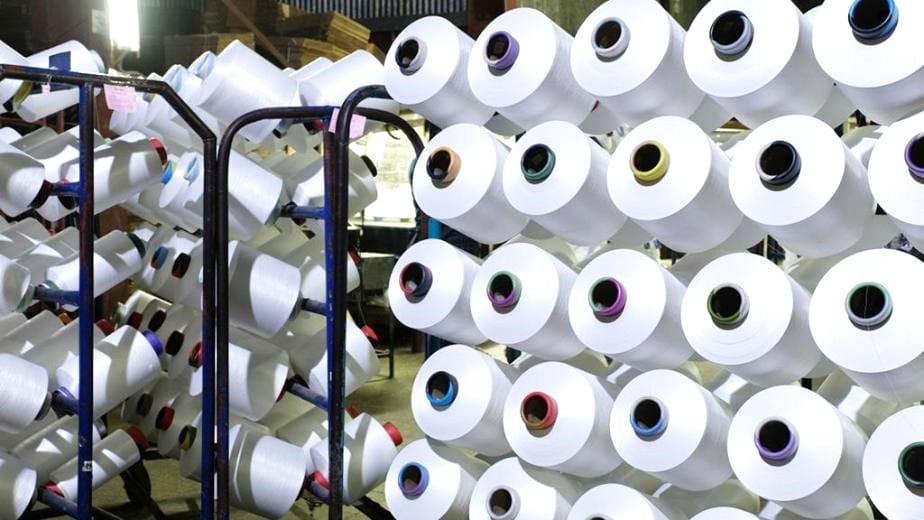
The Asian Development Bank (ADB) on Tuesday signed a $50 million loan agreement with Modern Syntex Limited (MSL) to expand energy-efficient polyester chips production in Bangladesh and strengthen the country’s textile supply chain.
The project will increase MSL’s polyester chips production capacity nearly fourfold, from 107 tonnes to 407 tonnes a day, while refinancing short-term local working capital loans.
The expanded facility in the Mirsarai Economic Zone in Chattogram will produce high-intrinsic-viscosity polyester chips, which are used in higher-value textile and apparel products.
ADB Country Director for Bangladesh Qingfeng Zhang said the financing would help reduce the textile industry’s reliance on imported synthetic inputs while deepening domestic backward linkages.
“ADB’s long-term financing will help MSL expand efficient domestic production, deepen backward linkages, strengthen supply chains, and support higher-value textile manufacturing,” he said.
The project is also expected to support the development of the Mirsarai Economic Zone, attract investment, create jobs and improve Bangladesh’s industrial competitiveness, according to ADB.
Focus on energy efficiency
MSL will install energy-efficient machinery under the project, which is expected to save around 4,840 megawatt-hours of electricity annually.
The investment is also projected to cut about 2,222 tonnes of carbon dioxide equivalent emissions each year.
The company plans to pursue Leadership in Energy and Environmental Design (LEED) Platinum certification for its factory and building as part of its sustainability drive.
The expanded production is expected to reduce Bangladesh’s dependence on imported polyester chips, shorten lead times and improve efficiency for local textile manufacturers.
The project is expected to create about 100 new jobs, with MSL planning to promote greater participation of women through inclusive recruitment practices.
MSL Managing Director Abu Sufian Chowdhury said the ADB financing would allow the company to expand production, strengthen local supply chains and reduce dependence on imported inputs.
“By investing in advanced energy-efficient technology, we are improving our competitiveness while supporting a more sustainable textile industry,” he said.
Strengthening textile value chain
MSL, a member of the T.K. Group, operates Bangladesh’s first continuous polymerisation facility at Mirsarai Economic Zone.
The plant is located close to major port and logistics infrastructure and produces polyester chips, synthetic yarn and fibre, mainly for domestic textile manufacturers.
The expansion comes as Bangladesh’s textile and apparel industry seeks to increase domestic sourcing of synthetic and other intermediate inputs, reducing exposure to import costs and supply-chain disruptions.
ADB said the project would contribute to a more resilient and competitive textile value chain by expanding domestic production of polyester chips and supporting higher-value manufacturing.