


The Bangladesh Power Development Board (BPDB) has proposed increasing wholesale electricity tariffs by Tk1.20 to Tk1.50 per unit, equivalent to a rise of around 17% to 21% over existing rates.
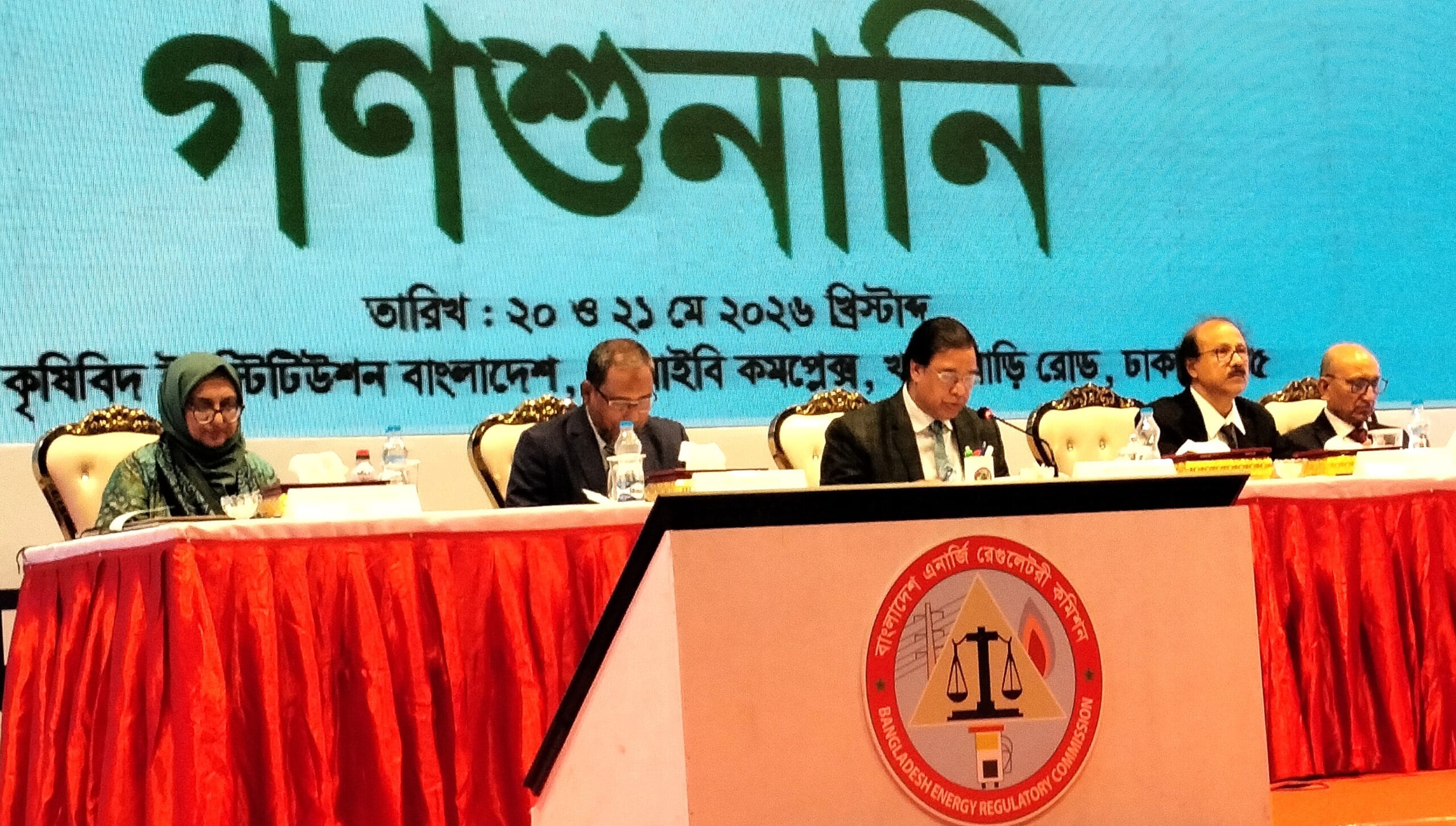
The proposal was presented on Wednesday during a public hearing organised by the Bangladesh Energy Regulatory Commission (BERC) at the Krishibid Institution Bangladesh (KIB) auditorium in Dhaka’s Farmgate area.
The move drew strong criticism from political leaders, business representatives and consumer rights organisations, including the Consumers Association of Bangladesh (CAB), who warned that higher electricity prices would further burden households and undermine industrial competitiveness.
Presenting the proposal, BPDB chairman Md Rezaul Karim said the power sector was facing a severe financial crisis, with projected deficits of Tk620bn (£4.1bn) in the current fiscal year and Tk650bn (£4.3bn) in the next.
He warned that failure to adjust tariffs could place the sector at “serious risk”.
Critics, however, argued that any increase would worsen pressure on industries and consumers already grappling with rising living costs.
Advocate Humayun Kabir Bhuiyan, general secretary of CAB, said: “This is not the right time to increase electricity prices, as it will further burden marginal consumers who are already under significant stress.”
Several consumer rights campaigners said there had been expectations that BERC would move to lower tariffs, which they claimed had been set at artificially high levels during the previous administration. Instead, they alleged, the regulator was pursuing the opposite course.
They also accused BERC of lacking transparency and accountability, claiming that electricity theft and inefficiencies are often passed on to consumers under the guise of “system losses”.
Prof Dr Syed Miznur Rahman of Daffodil University said: “In Bangladesh, many irregularities are carried out under legal cover,” alleging that BERC’s public hearings were little more than “an eyewash serving vested interests”.
Ruhin Hossain Prince, former general secretary of the Communist Party of Bangladesh (CPB), said higher electricity prices would sharply raise industrial production costs and could have serious economic consequences.
He argued that the proposal failed to reflect public interest and called for the hearing process to be scrapped.
Mohammad Jamal Uddin Mia, director of the Bangladesh Knitwear Manufacturers and Exporters Association (BKMEA), described the proposed increase as “a final blow to an already struggling sector”.
Bangladesh’s export industry is already facing a downturn, he said, and higher electricity costs would further weaken the competitiveness of local manufacturers in international markets.
“At one stage Bangladesh was second only to China in garment exports, but that position is gradually weakening,” he said. “There is no room to increase electricity tariffs at this moment.”
Defending the proposal, BPDB chairman Mohammad Rezaul Karim said electricity prices had last been revised in February 2024, while the costs of gas, coal and liquid fuels had risen sharply over the past two years.
Although diesel-fired plants are currently inactive, he said heavy fuel oil (HFO)-based plants still needed to operate. He added that many public and private power producers pay fuel costs in US dollars, meaning that the depreciation of the Bangladeshi taka and rising global fuel prices had substantially increased generation costs.
Karim rejected claims that Bangladesh imports 70% of its electricity, stating that only around 15% to 16% currently comes from India, with the remainder generated domestically. However, he acknowledged that local generation also relies heavily on imported fuel.
He stressed that the proposed increase was not intended to make the entire power sector profitable, but rather to reduce part of the government’s subsidy burden.
“Even after the proposed adjustment, the government will still have to bear the majority of the subsidy burden,” he said.
Karim also cited transmission losses and tax-related expenses as additional pressures on BPDB finances. He noted that consumers had become accustomed to uninterrupted electricity supply, with complaints arising even after brief outages.
“If fuel supplies to power plants cannot be guaranteed, there could be serious disruptions to electricity generation,” he warned.
Addressing the hearing, BERC chairman Jalal Ahmed said one of the main reasons behind high electricity costs in Bangladesh was excess installed generation capacity, which he said should ideally remain 20% to 25% above actual demand levels.
He added that ensuring uninterrupted grid supply could eliminate the need for nearly 6,000MW of inefficient captive power generation.
Ahmed also said reforms to Bangladesh’s energy policy were necessary as the global power sector rapidly shifts towards renewable energy.
He noted that nearly half of the European Union’s electricity now comes from renewable sources, while solar energy accounts for more than 20% of India’s electricity generation and over 30% in Pakistan.
“If Bangladesh can move further towards solar power, with BPDB playing a supportive role, electricity production costs will fall in the future,” he said. “That, in turn, will reduce the financial pressure on consumers.”
BERC will hold a further public hearing on proposed retail electricity tariff increases on Thursday before making a final decision.