


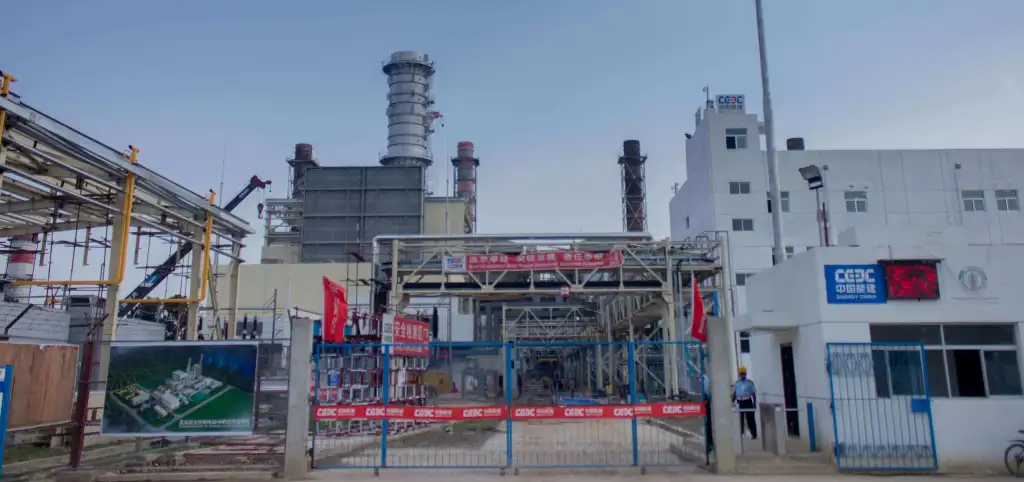
What was meant to be a quick efficiency upgrade to an ageing power plant has instead evolved into a prolonged, costlier and controversy-ridden project, with the Ghorashal Third Unit Repowering initiative emerging as a case study in weak planning, contractual lapses and poor execution.
Approved in 2015 with a completion target of just two and a half years, the project is now set to run until October 2026 — stretching the timeline by nearly seven years. The cost has also climbed by about Tk 435 crore, pushing the total outlay close to Tk 3,000 crore.
A draft review by the Implementation Monitoring and Evaluation Division (IMED) paints a picture of repeated disruptions, many of which could have been anticipated or mitigated at the planning stage.
Early Missteps, Lingering Impact
The project stumbled at the outset as delays in activating foreign financing prevented timely advance payments to the contractor, violating key contractual conditions. This initial setback slowed mobilisation and set the tone for subsequent delays.
Officials cite a long list of reasons — including contractor-related complications, legal disputes, and technical challenges — but analysts argue these largely reflect inadequate risk assessment and weak project design.
“Such prolonged delays point to systemic issues in project preparation,” said a Planning Commission high-up, stressing that foreseeable risks should have been factored in before approval.
Engineering Failure, Legal Gridlock
The project briefly showed progress when a gas turbine unit began operation in 2019, generating significant electricity output. But the momentum was short-lived.
A mechanical failure in 2021 shut down the unit, triggering a complex repair process that became entangled in international legal complications. The import of critical spare parts was delayed for years, highlighting vulnerabilities in procurement and dispute management.
Audit Flags and Governance Gaps
Audit findings have added to concerns, with multiple objections — most still unresolved — pointing to financial and procedural irregularities. Repeated revisions of timelines and financing arrangements further underscore governance weaknesses.
Delays in loan disbursement, slow decision-making, and lack of coordination among agencies have been cited as recurring issues. The project has also faced obstacles ranging from land and site complications to pandemic-related disruptions and delays in supporting grid infrastructure.
Near Completion, But at a Price
The project involves installing a 260.30 MW gas turbine unit, modernising an existing 210 MW steam turbine, and setting up associated systems including heat recovery, transformers, and power evacuation infrastructure.
Despite the setbacks, physical progress of the project reached 97 percent as of March this year, though financial progress remains significantly lower at 77.29 percent. This reflects inefficiencies in fund utilisation and implementation sequencing.
A Familiar Pattern
Power sector insiders say the Ghorashal experience is not an isolated case but part of a broader pattern of underprepared large-scale projects suffering from time overruns and escalating costs.
The extended timeline — nearly four times the original duration — raises questions not just about this project, but about institutional capacity to design and deliver major infrastructure efficiently.
As the project nears completion, the focus is shifting from delivery to accountability — and whether lessons from this drawn-out process will translate into better project governance in the future.
“A timely implementation of this efficiency improvement project would have already delivered significant benefits to the power sector and consumers. However, the prolonged delay and the resulting cost escalation will ultimately increase the generation cost of this plant. Consequently, the benefits of the efficiency improvement will be significantly diminished by the substantial increase in project costs,” Shafiqul Alam, the Lead Energy Analyst at IEEFA told the Just Energy News.
Given the broader challenges facing the power sector, effective planning and coordination, along with comprehensive risk and capacity assessments at the outset, are essential, he said.
“Going forward, project implementation teams should establish robust mechanisms to monitor progress and take timely corrective actions to ensure projects are completed within the stipulated timeframe,” he suggested.
This project offers important lessons for future initiatives, according to him. “To achieve the intended outcomes and maximize effectiveness, the country must ensure that projects are implemented on time and within budget,” he recommended.
The plant is now repayment of loan to ICBC US$14.03 million with $3.16million interest with 20 installments.