


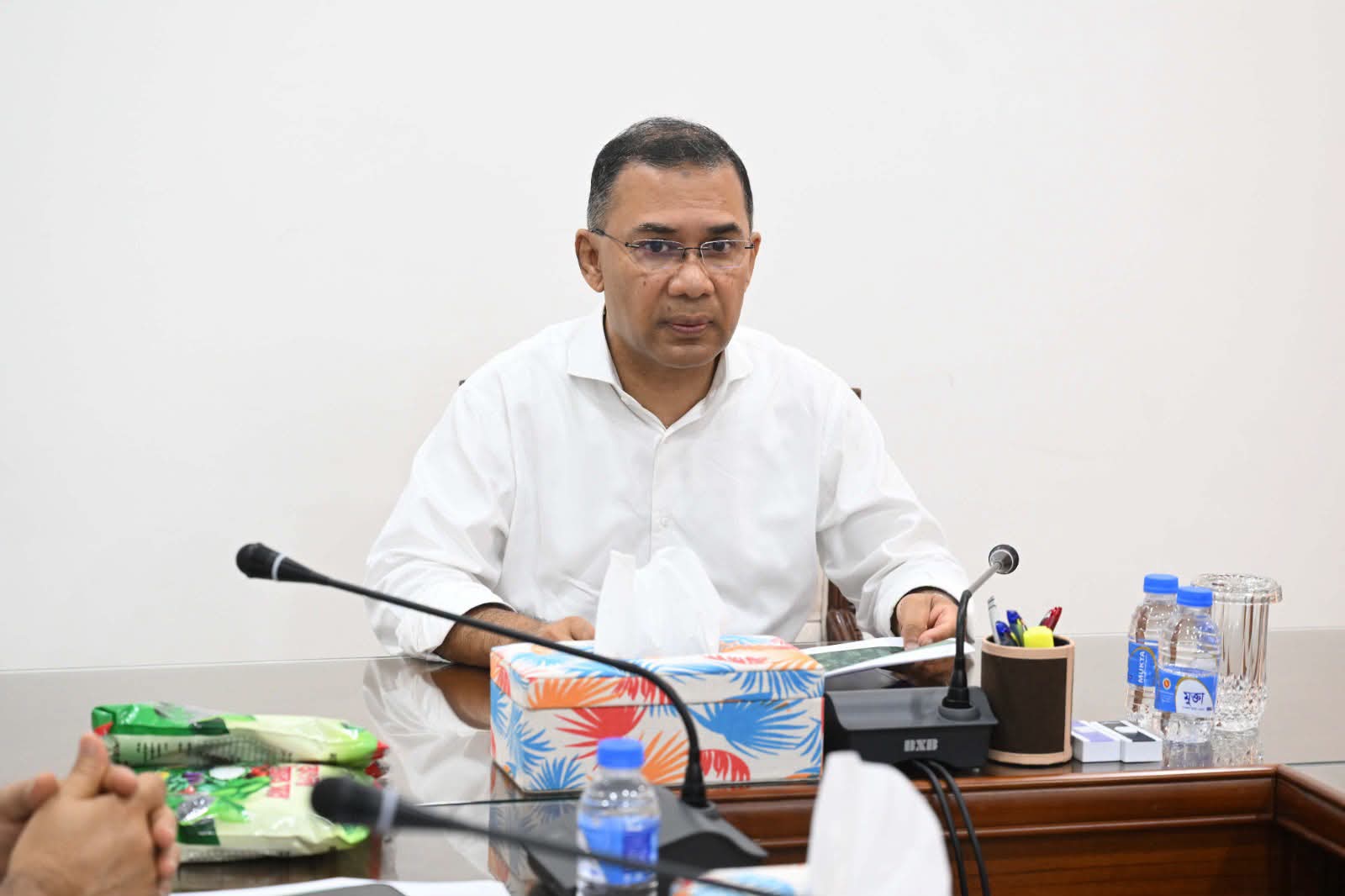
Prime Minister Tareq Rahman on Sunday reviewed the progress of two major waste-to-energy projects for Dhaka and directed authorities to expedite their implementation through closer coordination among the ministries concerned.
The meeting was held at the Cabinet Division conference room at the Bangladesh Secretariat.
Officials informed the prime minister that China’s CMEC Group will invest in the construction of a waste-to-energy (WTE) power plant at Aminbazar. The facility is expected to process around 3,000 tonnes of municipal waste a day to generate 42.5 megawatts (MW) of electricity.
The project is scheduled to begin supplying electricity to the national grid by August 2028 and is expected to remain operational for 25 years.
The meeting was also told that South Korea’s B&F Company will implement an integrated waste management and power generation project at Matuail under the Dhaka South City Corporation.
The project is expected to produce around 15,000 tonnes of methane annually from municipal waste, generating approximately 81,000 megawatt-hours (MWh) of electricity each year, equivalent to an average daily output of about 221MWh.
In addition to electricity generation, the facility will produce solar power, organic fertiliser, animal feed and environmentally friendly eco-bricks. It is designed to process between 3,000 and 3,500 tonnes of waste each day.
Officials said the project would improve waste management in the capital while contributing to climate change mitigation and efforts to reduce global warming.
To accelerate implementation, the prime minister instructed the ministries of Local Government, Power and Environment to hold an inter-ministerial meeting to resolve outstanding issues and ensure timely execution.
Rahman stressed the importance of completing both projects within the stipulated timeframe and ensuring the adoption of the best available environmentally friendly technologies.
The meeting was attended by Local Government, Rural Development and Cooperatives Minister Mirza Fakhrul Islam Alamgir, State Minister Mir Shahe Alam, Dhaka North City Corporation Administrator Md Shafiqul Islam Khan, Dhaka South City Corporation Administrator Md Abdus Salam, Principal Secretary to the Prime Minister ABM Abdus Sattar, Additional Press Secretary Atikur Rahman Ruman and other senior government officials.