


Energy experts, academics and environmental campaigners on Saturday called for accelerating Bangladesh’s transition to renewable energy, warning that the country’s growing dependence on imported fuels has become a major threat to long-term energy security.
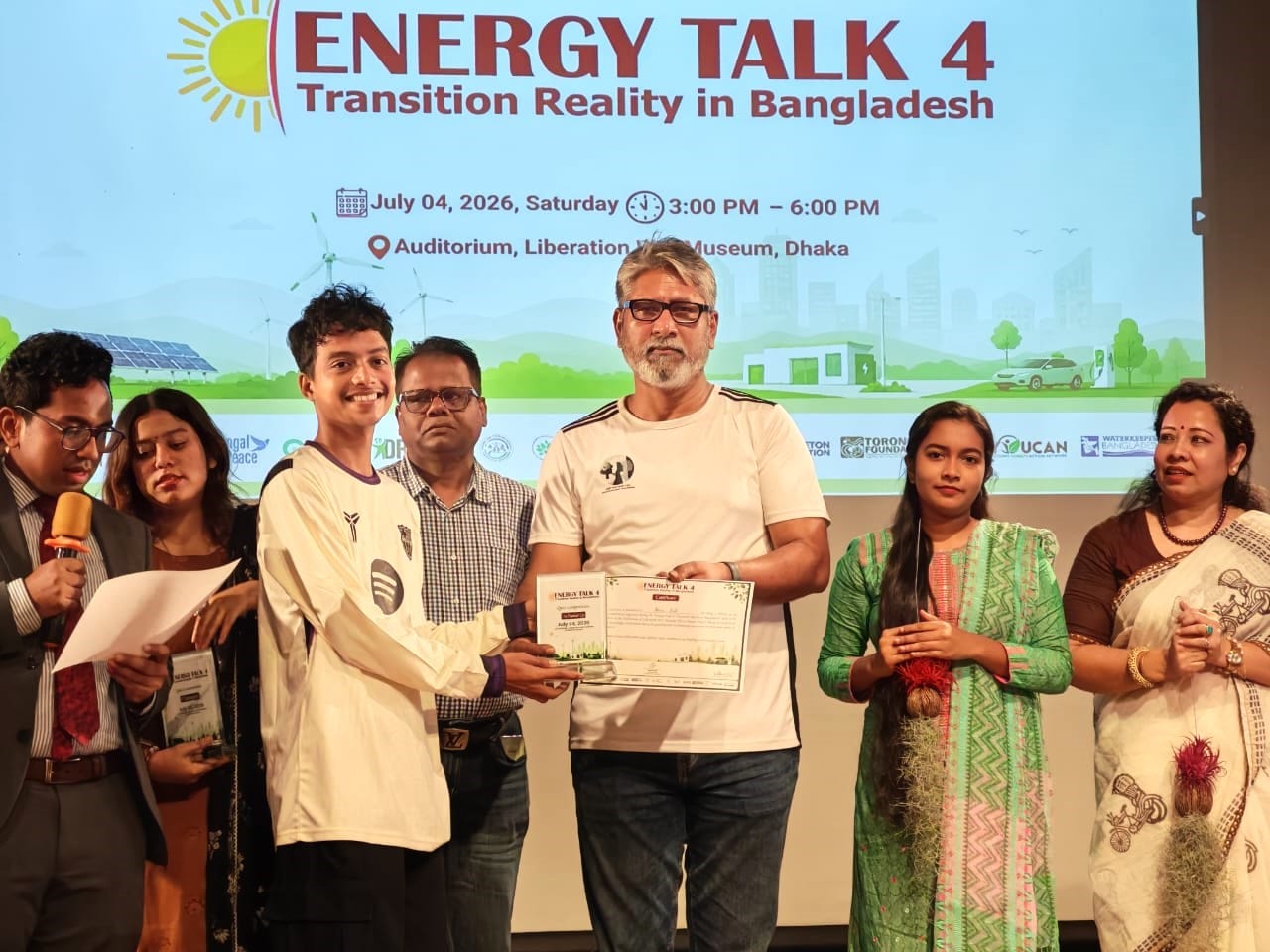
The call came at the fourth edition of Energy Talk, titled “Transition Reality in Bangladesh,” held at the Liberation War Museum auditorium in the capital.
Speakers stressed that policy reforms, greater investment in renewable energy, improved energy efficiency and broader public participation are essential to ensuring a just and sustainable energy transition.
Speaking on the rationale for Bangladesh’s energy transition, Shafiqul Alam, Lead Energy Analyst at the Institute for Energy Economics and Financial Analysis (IEEFA), said the country’s energy crisis stems not only from supply shortages but also from its increasing reliance on imported fuels.
“Expanding renewable energy, improving energy efficiency and making better use of domestic resources offer the most effective pathway towards a sustainable energy future,” he said, adding that the present moment provides an opportunity to accelerate the transition.
Associate Professor Dr Mosahida Sultana of the University of Dhaka said energy policy should not be viewed solely through the lens of technology or economics, as it is also closely linked to trade, geopolitics and national interests.
She said future international trade agreements should strengthen Bangladesh’s long-term energy security and support the country’s transition to renewable energy.
Sharif Jamil, coordinator of Waterkeepers Bangladesh and member secretary of Dhara, said a transition to clean energy is no longer optional but a necessity for Bangladesh.
He said reducing dependence on fossil fuels would help address pollution, climate risks and import vulnerabilities, while creating a more equitable and sustainable energy system.
Development projects that damage the environment and threaten people’s livelihoods cannot be regarded as sustainable, he added.
The discussion brought together energy specialists, researchers, university teachers and students, development professionals, environmental activists and youth representatives.
Participants also highlighted the need to promote renewable energy, strengthen policy reforms, expand research, facilitate technology transfer and enhance public engagement to build a more resilient and environmentally sustainable energy sector.
The event was organised by Dhara (We Protect the Earth) with support from several civil society organisations, including Dream Research and Development Foundation (DRDF), Waterkeepers Bangladesh and Braty.
Organisers said the Energy Talk series would continue to promote public awareness, policy dialogue, research and youth engagement on ensuring a just and sustainable energy transition in Bangladesh.