


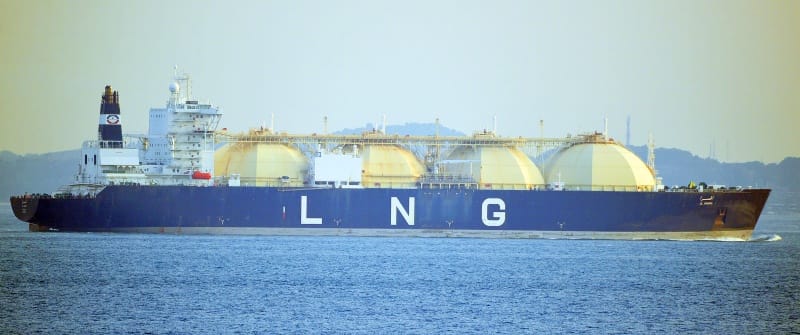
A liquefied natural gas (LNG) cargo supplied by Saudi Aramco has been rejected for berthing by both LNG floating storage and regasification units (FSRUs) at Moheshkhali, further disrupting gas supplies to Bangladesh, a senior Petrobangla official has said.
The cargo, named Al Hamra, was supplied by ADNOC on behalf of Aramco, according to officials.
The disruption has pushed LNG supplies to their lowest level in more than two decades, contributing to a sharp fall in gas availability to the national grid. Gas supplies stood at around 1,900 million cubic feet per day (mmcfd), against demand of about 3,800–4,000 mmcfd.
“We have already asked Aramco to replace the cargo according to our schedule,” Petrobangla acting chairman Md Abdul Mannan told Just Energy News.
Mannan said Petrobangla’s sales and purchase agreement (SPA) with the supplier allows it to seek a replacement cargo if an LNG shipment is found to be unsuitable.
Officials said the cargo was not accepted by either the Excellerate-operated Moheshkhali LNG FSRU or Summit’s FSRU. The vessels’ insurers had raised concerns about providing coverage for any risks associated with the cargo, according to sources.
The Al Hamra arrived at Moheshkhali on Wednesday, but transferring the LNG to another vessel would require prior notification to the FSRU operator, sources said.
“Another cargo ship will berth tomorrow. We expect to recover some of the supply within a day or two through ship-to-ship transfer,” Mannan said.
However, officials cautioned that completing the ship-to-ship transfer could take at least three days.
“We are also not interested in berthing the cargo as one of our units at Moheshkhali LNG suffered a fire incident,” Mannan said.
The disruption to ship-to-ship LNG operations has affected industrial users, household consumers and fertiliser plants, while also putting pressure on electricity generation, officials said.
On Thursday, LNG supplied around 300 mmcfd to the grid, while domestic gas fields contributed about 1,600 mmcfd, leaving a substantial shortfall against national demand. Earlier, Petrobangla officials said rough weather had disrupted ship-to-ship LNG operations, contributing to the shortage of gas supplied to the national grid.
The government has little immediate scope to ease the country’s acute gas shortage and will have to manage load shedding and wait for repairs to an out-of-service floating LNG terminal, Power, Energy and Mineral Resources Minister Iqbal Hasan Mahmud Tuku said on Thursday.
“There is actually nothing I can do at this moment,” the minister said, explaining that the government could neither increase domestic gas production overnight nor bring imported LNG into the national grid until the floating storage and regasification unit (FSRU) is repaired.
He was speaking virtually as the chief guest at a dialogue titled “Navigating Bangladesh Energy Crisis: Immediate Priorities and the Path to a Sustainable Energy Future”, organised by the Centre for Policy Dialogue (CPD) at BRAC Centre in Dhaka.