


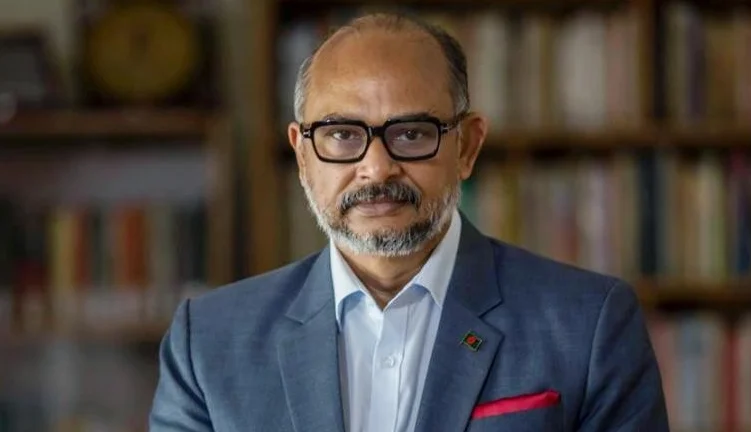
Bangladesh has reached broad policy consensus with the World Bank and the International Monetary Fund (IMF) on economic reforms, as the government seeks to attract investment, reopen closed factories and create jobs to revive the economy, Finance and Planning Adviser Rashed Al Mahmud Titumir said on Monday.
The government’s five-year economic strategy prioritises financial-sector discipline, higher tax collection, industrialisation and expanded social protection, he told journalists ahead of the 2026 annual meetings of the IMF and the World Bank Group in Thailand.
Titumir said the government had a politically mandated roadmap to recover, restore and rebuild the economy, with domestic and foreign investment expected to play a major role.
While the reform priorities broadly align with those of the multilateral lenders, the government will retain ownership of the agenda and responsibility for implementation, he added.
Reopening shuttered factories is a key part of the recovery plan. The government is exploring special financing to restart closed industrial units and attract fresh investment, as rising unemployment among educated young people adds to economic pressure.
Titumir said Bangladesh needed to expand production, nurture new entrepreneurs and generate jobs rather than rely solely on social protection programmes.
Restoring discipline in the banking sector remains one of the biggest challenges to economic recovery, according to the adviser. Past irregularities and lending-related disorder have weakened the financial system, with ordinary citizens now bearing the consequences.
The government is discussing refinancing support with the International Finance Corporation (IFC) and other institutions to rehabilitate the banking sector and restore confidence.
Without a stable financial system, achieving higher investment and employment would be difficult, Titumir said.
The government also wants to raise the tax-to-GDP ratio, which has been held back by excessive tax exemptions and irregularities in tax administration. Weak revenue collection has widened the fiscal deficit and constrained spending on development and social protection, he added.
The government has discussed with the World Bank the additional financial pressure on the energy sector following the outbreak of conflict in the Middle East on February 28.
Titumir said the government had avoided fully passing international energy price increases on to domestic consumers to limit the burden on households.
Citing the World Bank’s recent poverty assessment, he said the government planned to support poor households through programmes such as the Family Card. Assessments by independent research institutions suggest such initiatives could potentially reduce the poverty rate by around five percentage points over five years, he added.
Financing for climate resilience, renewable energy and essential infrastructure is also part of the government’s broader development agenda.
Alongside reform negotiations, the government is seeking investment from a wider range of countries and international partners to finance economic recovery and expand industrial activity.
Titumir said investment from China had begun, while the government had engaged with Japanese companies, including Toyota and Marubeni Corporation. A US delegation had also visited Bangladesh, and discussions were under way with Silicon Valley-based investment and innovation platform Plug and Play and major technology companies.
He said expectations of political stability and policy continuity were helping generate investor interest.
The government plans to combine private investment, domestic resource mobilisation and financing from development partners. Bangladesh is expanding cooperation with the World Bank, the Asian Development Bank (ADB), the Asian Infrastructure Investment Bank and the Islamic Development Bank.
Titumir said the ADB had already announced assistance worth $5 billion.
The government is also seeking to deepen trade and investment ties with Thailand, particularly in agro-processing, food production and regional supply chains.
Thai investors have shown interest in agro-processing, fruits, dairy products and halal food processing following discussions with the Thai Chamber of Commerce, Titumir said.
Bangladesh’s production of mangoes, jackfruits and lychees offers scope for investment in cold storage and processing facilities. Such investment could reduce post-harvest losses, improve farmers’ earnings and open up export opportunities for processed foods.
Titumir said the aim was not simply to reduce Bangladesh’s trade deficit with Thailand but to expand overall trade by linking the two countries’ production networks.
Bangladesh could supply raw materials for processing in Thailand, while the two countries could collaborate on intermediate goods and finished products for export.
The discussions also covered improved maritime connectivity between Chattogram Port and Thailand’s Ranong Port, which could facilitate cargo movement and regional trade.
Titumir called for exploring free trade agreements with members of the Association of Southeast Asian Nations and opportunities under the Regional Comprehensive Economic Partnership framework to widen access to regional markets.
Cooperation in agriculture, agro-processing and fisheries could further boost production, exports and employment, he added.