


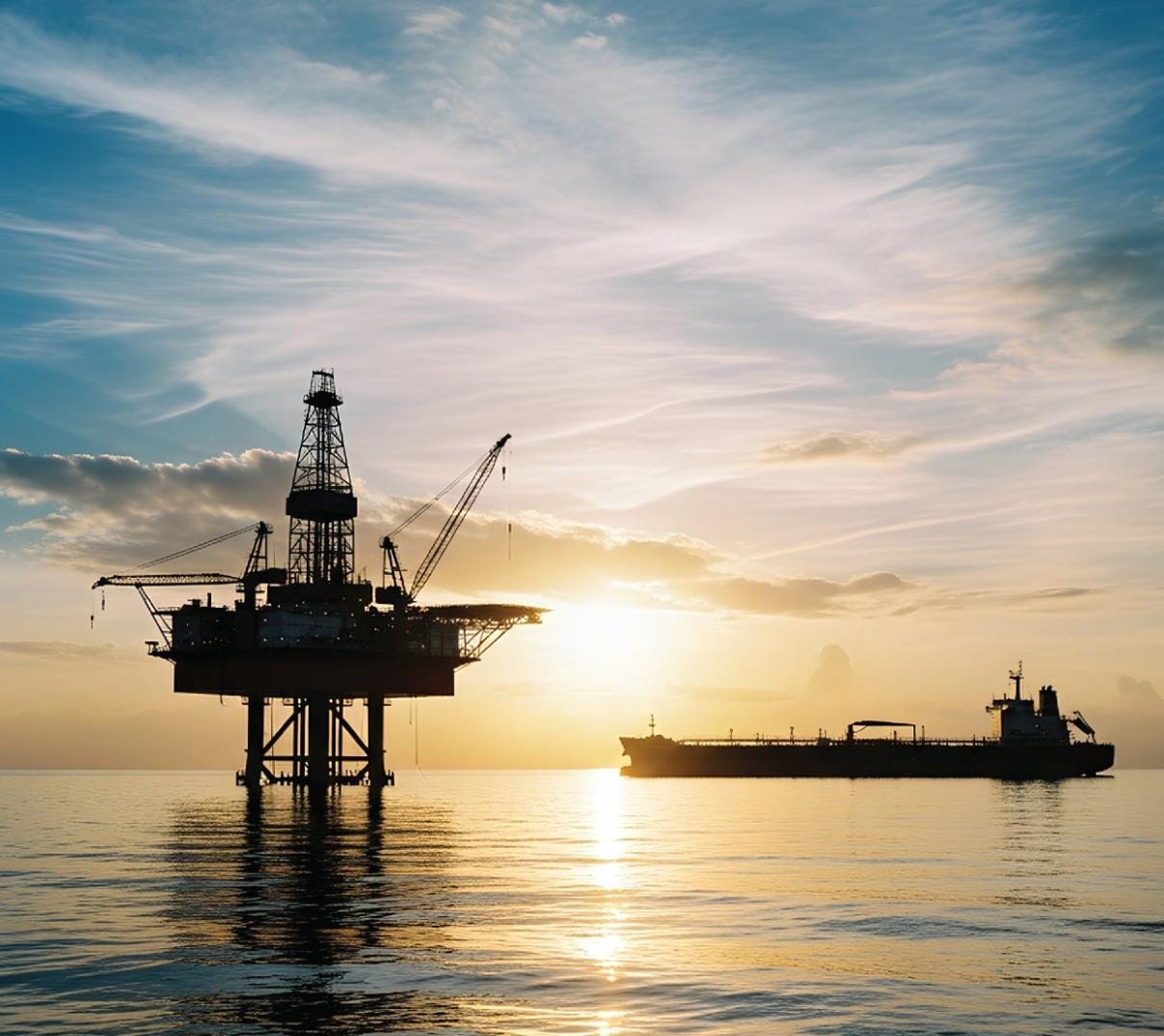
Bangladesh has moved a step closer to launching a long-delayed offshore energy auction after the Cabinet Committee on Economic Affairs approved in principle a new production sharing contract today designed to attract international oil companies to the Bay of Bengal.
The draft “Bangladesh Offshore Model Production Sharing Contract (PSC) 2026” was endorsed at a meeting chaired by Finance Minister Amir Khosru Mahmud Chowdhury at the Secretariat in Dhaka on Thursday, paving the way for a fresh offshore licensing round that officials hope to launch by mid-May.
The revised framework comes as Bangladesh faces mounting pressure from rising liquefied natural gas (LNG) imports, higher global fuel prices and concerns over long-term energy security.
Officials said the government plans to offer 26 offshore exploration blocks, with significantly revised fiscal and contractual terms aimed at overcoming investor reluctance that undermined previous bidding rounds.
Mohammed Saiful Islam, secretary of the Energy and Mineral Resources Division, said the new terms were intended to address longstanding concerns raised by foreign energy companies over pricing, cost recovery and operational flexibility.
“We have reviewed the earlier production sharing contract and introduced a pricing structure that will be adjusted within upper and lower ceilings every five years,” he said.
Under the revised model, companies will be allowed to relinquish only 20 per cent of awarded acreage during exploration, compared with the previous requirement of 50 per cent. The government has also cut the contribution to a workers’ welfare fund from 5 per cent of profits to 1.5 per cent.
Pipeline tariffs, another contentious issue in earlier negotiations, will now be settled through direct talks with successful bidders, while full recovery of infrastructure investment costs will remain available.
Bangladesh has also overhauled its gas pricing formula in an effort to make offshore projects commercially viable. Prices will now be linked to Brent crude rather than high-sulphur fuel oil.
Deep-water gas output will receive 11 per cent of the three-month average Brent price, based on a floor price of $70 and a ceiling of $100 per barrel. Shallow-water production will receive 10.5 per cent, while onshore gas pricing will range between 8 and 8.5 per cent depending on location.
The changes replace a 2023 pricing model that offered a flat 10 per cent of Brent but failed to secure any bids despite several companies purchasing tender documents.
The revised framework also replaces the London Interbank Offered Rate (LIBOR) with the Secured Overnight Financing Rate (SOFR), bringing the contract structure closer to international financial standards.
Officials said the reforms were developed following recommendations from consultancy Wood Mackenzie and reviewed by the law ministry.
The offshore push comes as Bangladesh struggles with soaring energy subsidy costs linked to volatile LNG markets and supply disruptions.
Officials estimate the country’s energy subsidy bill could exceed Tk19,000 crore (£1.4bn) during the current fiscal year, driven partly by higher LNG prices following reported regional attacks that disrupted facilities at QatarEnergy’s Ras Laffan complex.
According to state-owned Petrobangla, subsidy calculations were initially based on LNG prices of around $20 per million British thermal units (MMBtu), though spot prices have already climbed above $25 per MMBtu. Before the recent market turmoil, prices were closer to $10.
In parliament, Energy Minister Iqbal Hassan Mahmood said Bangladesh’s recoverable natural gas reserves stood at 29.74 trillion cubic feet (TCF), of which 22.11 TCF had already been extracted by the end of 2025. Remaining reserves are estimated at 7.63 TCF.
Officials also confirmed that a separate onshore bidding round is being prepared and is currently under legal review.
The upcoming offshore auction is widely viewed as a key test of whether Bangladesh can establish itself as a competitive frontier energy market while reducing its growing dependence on imported fuel.