


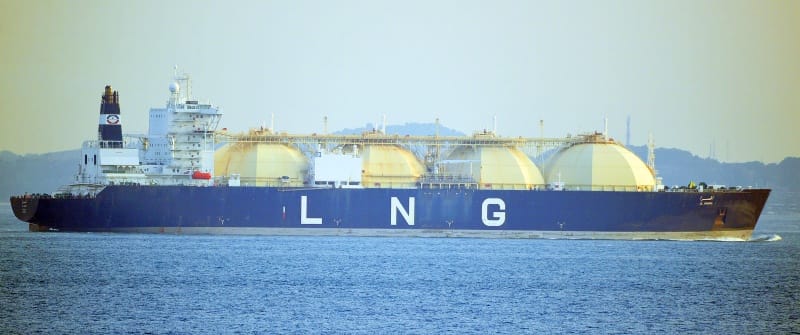
The government has approved the purchase of six liquefied natural gas (LNG) cargoes from Singapore and Qatar, with prices linked to the international benchmark, as Bangladesh moves to secure supplies to meet domestic gas demand.
Of the six cargoes, five will be purchased from BP Singapore Pte Ltd at $0.17 per million British thermal units (MMBtu) below the Japan-Korea Marker (JKM), while QatarEnergy Trading LLC will supply one cargo at $0.10 per MMBtu below the benchmark.
The Cabinet Committee on Government Purchase approved the proposals at a meeting chaired by Finance Minister Amir Khosru Mahmud Chowdhury on Saturday. The Ministry of Finance disclosed the decisions on Sunday.
Under the approved arrangement, Bangladesh may also buy additional cargoes from BP Singapore if both parties agree.
The purchase will be made through direct procurement under Section 68 of the Public Procurement Act 2006 and Rule 99(2) of the Public Procurement Rules 2025.
The additional cargo from QatarEnergy Trading will be procured under the existing long-term government-to-government agreement, but at a price different from the contractual rate. It is scheduled for delivery on December 20.
The government did not disclose the total cost of the six cargoes in its announcement.
Separately, the Cabinet Committee on Economic Affairs discussed a proposal to purchase LNG directly from Japan’s JERA Global Markets Pte Ltd and sign a short-term sale and purchase agreement with the company.
However, the committee deferred the proposal pending vetting by the Legislative and Parliamentary Affairs Division. It will be placed before the committee again after the legal review, meaning the proposed purchase has not yet received final approval.
The proposal was submitted by the Energy and Mineral Resources Division and includes a draft short-term LNG sale and purchase agreement and term sheet between Petrobangla and JERA Global Markets.
Bangladesh relies on imported LNG to supplement domestic gas production and meet demand from power plants, industries and other consumers. The latest purchases will add to the country’s contracted supplies, while the JERA proposal remains subject to further scrutiny.