


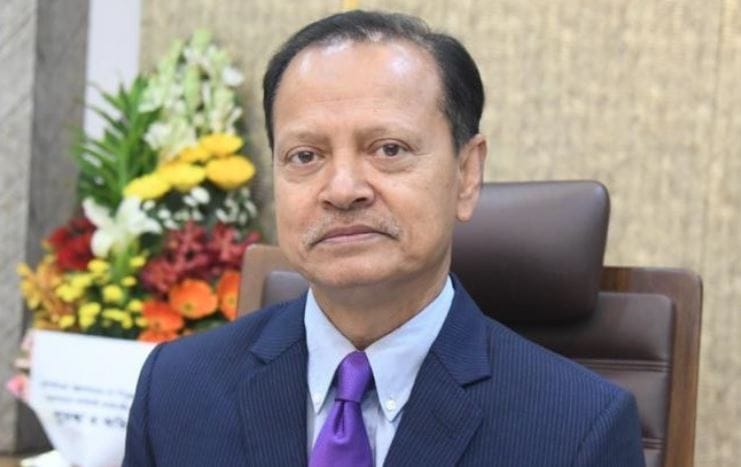
Three major terminals — the New Mooring Container Terminal (NCT) and Laldiar Char terminal in Chattogram, and the Pangaon Inland Container Terminal in Keraniganj, Dhaka — will be handed over to foreign operators by December this year, says Shipping Secretary Mohammad Yusuf.
Speaking as the chief guest at a seminar titled “Investment Opportunities in the Ocean-Going Ship Industry,” organized by the Economic Reporters Forum (ERF) on Sunday, the secretary said discussions are underway to finalize the handover process.
“Among the three terminals, the transfer of Pangaon will take a little more time. The NCT handover was initially planned for October, but that too will take some additional time,” Yusuf said.
Addressing concerns over foreign involvement, he explained, “There are strategic and geographical issues when it comes to foreign operators in Chattogram port. But this should not be a major concern. Ports in countries like Sri Lanka and India already operate under foreign management without issues. If it works for them, it can work for us too.”
Highlighting capacity constraints, the secretary said, “We are expanding Chattogram port’s capacity. Uniquely, we are delivering goods after opening containers inside the port. Of the port’s 13 gates, only six have scanning machines, and three to four of them are often out of order.”
“This situation is unsustainable, so we are bringing in foreign operators to improve efficiency and attract more foreign investment,” he added.
Responding to a question about opposition from business groups, Yusuf remarked, “They often express concern at first, but once they see the situation improve, they stop objecting.”
On the issue of higher costs for improved services, he noted, “If service quality improves and ships can be cleared faster, demurrage costs will drop significantly. In that case, paying slightly higher fees won’t be a problem.”
Speaking as special guest, Azam J. Chowdhury, president of the Bangladesh Ocean-Going Ship Owners’ Association, raised questions about the dual flag system in the shipping industry. “According to law, goods purchased with government funds must be carried by ships under the national flag — meaning state-owned vessels. But then, which flag do our private Bangladeshi ships operate under?” he asked.
In his keynote presentation, Dr. Zaidi Sattar, chairman of the Policy Research Institute (PRI), said Bangladesh’s shipbreaking and small vessel manufacturing sectors have laid the groundwork for large-scale shipbuilding.
“We currently have export orders worth around $200 million. If we deliver properly, that number will grow. However, we need a banking system tailored to the needs of the shipbuilding industry rather than relying solely on traditional banking,” he added.
He emphasized that shipbuilding depends on global trade and that the current international trade environment is positive. “If we can take advantage of this opportunity, the shipbuilding industry could become a $2 billion sector,” Dr. Sattar said.
As Bangladesh transitions from a least developed country (LDC) to a developing nation, he noted, “We must now move toward industries suited for a developing economy. Shipbuilding is one such sector that can help establish a sustainable industrial base beyond the ready-made garment industry.”
The seminar was chaired by ERF President Daulat Akhtar Mala and conducted by General Secretary Abul Kashem.