


The government has taken an initiative to bring the country’s gold sector out of the informal economy and transition it into a legitimate, recognized, and accountable business industry.
As part of this effort, relevant government agencies and stakeholders have been requested to submit their written feedback on the draft “Gold Policy 2018 (Amended 2026)” by next Sunday.
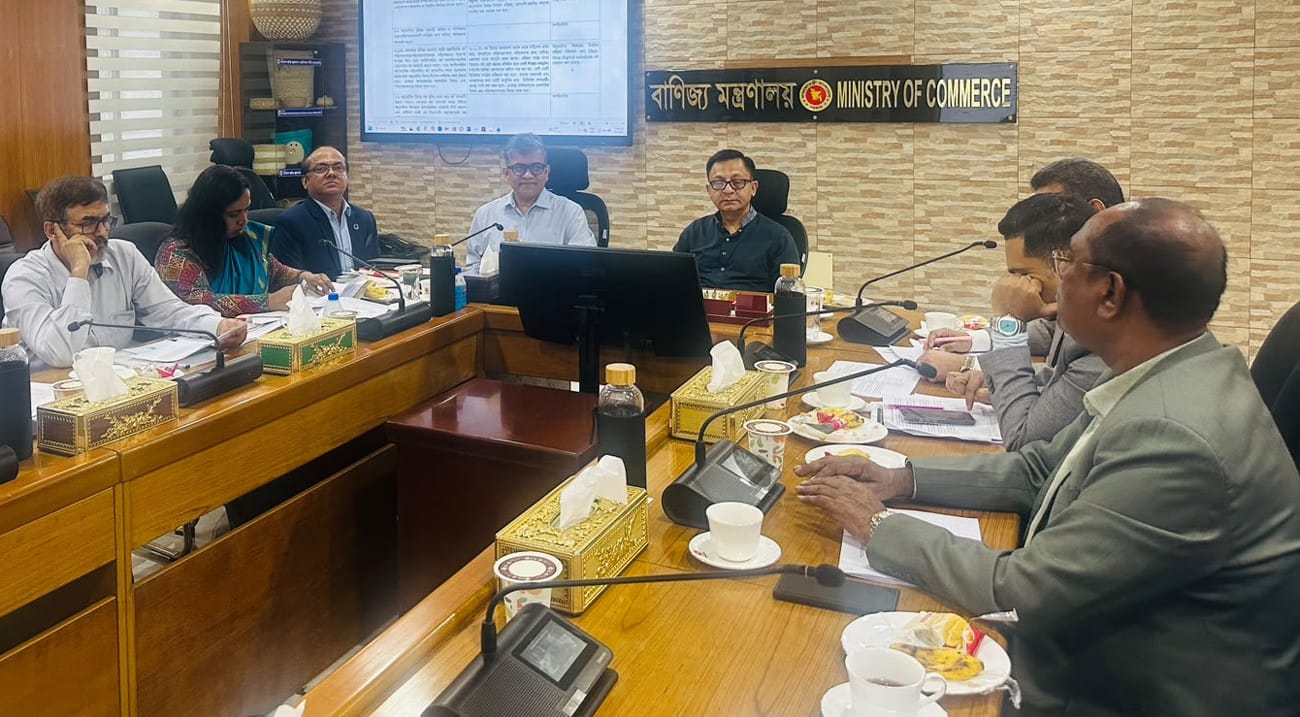
Commerce Minister Khondaker Abdul Muktadir gave these directions during a meeting on the draft policy held at the Commerce Ministry’s conference room at the Secretariat on Thursday (August 6).
The meeting was presided over by Commerce Secretary Md Ataur Rahman Khan. Bangladesh Jewellers Association (BAJUS) President Enamul Huq Khan and Export Promotion Bureau (EPB) Vice-Chairman Mohammad Hasan Arif addressed the event, alongside representatives from the National Board of Revenue (NBR) and Bangladesh Bank.
Addressing the session, the Commerce Minister noted that despite playing a vital role in the national economy for a long time, the gold sector failed to achieve institutional structure due to the absence of proper regulatory frameworks.
“We must fix our mindset. It is inappropriate for a recognized business sector to remain outside the formal structure for so long,” the minister said, adding that regulatory weaknesses must also be considered alongside traders’ roles.
He emphasized that bringing the sector into a formal structure would boost employment, facilitate legal imports, increase revenue collection, and ensure transparency in gold stocks and transactions.
Under the proposed framework, every stage of legally imported gold—including purchase, sale, and inventory—must be properly accounted for and regularly monitored by regulatory authorities.
Highlighting the economic significance of gold, the minister stated that gold serves as a globally recognized store of value. Central banks worldwide maintain significant gold reserves alongside foreign currencies.
He stressed that if gold worth $4 billion or $10 billion is imported legally and remains within the country without being smuggled out, it effectively secures internal wealth for the nation.
To curb smuggling, the minister called for maintaining realistic pricing alignment between domestic and international markets, particularly referencing key trading hubs like Dubai.
Significant price disparities compared to neighboring countries create economic incentives for illegal outflow, he warned, urging rationalization of customs tariffs and taxes.
The draft policy also focuses on local value addition and boosting jewelry exports. Allowing raw material imports at rational tariffs will enable local artisans to manufacture competitive products for the global market.
Additionally, the policy addresses internal demand—driven by weddings and cultural events—aiming to make gold more affordable for general consumers by enhancing market competition and supply chain efficiency.
Before finalizing the policy, regulatory frameworks of major gold-exporting nations, including India, will be reviewed for comparative analysis covering tariff structures, stock management, and export incentives.
The NBR, Bangladesh Bank, and other regulatory bodies have been instructed to identify potential operational risks and implementation hurdles in their written submissions.
The minister assured that the government’s intention is not to create new bottlenecks, but to establish a transparent, sustainable, and legally compliant framework in the national interest.
Following the synthesis of stakeholder feedback, additional consultations will be held if necessary to finalize the amended policy swiftly.