


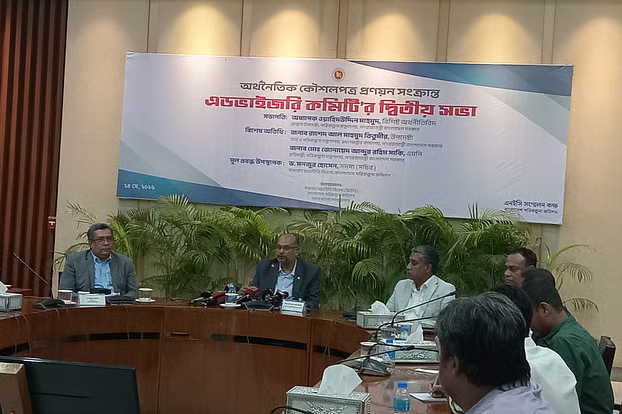
The government is set to introduce four major reforms to its development planning framework, aiming to make it more realistic, accountable and results-oriented, Prime Minister’s Adviser on Economy and Planning Rashed Al Mahmud Titumir said on Thursday.
The reforms seek to move away from what he described as an outdated system where plans often failed to translate into effective implementation.
Speaking to reporters after the second meeting of the Advisory Committee on Economic Strategy at the NEC conference room in Sher-e-Bangla Nagar, Titumir said the new framework would emphasise transparency, public accountability and measurable outcomes.
At the core of the reform package is a restructuring of the project selection—or programming—process to better reflect public priorities.
This will be complemented by a strengthened system of regular monitoring and evaluation to track progress and ensure timely implementation.
The framework also предусматриes greater transparency through the free flow of information, allowing researchers, academics and citizens to independently assess project performance.
In addition, the overall process will be redesigned to make it more citizen-friendly and accountable.
Titumir said a major weakness of past planning exercises was that many approved plans quickly turned into “dead documents,” with little follow-through on stated goals and strategies.
He pointed to entrenched problems such as politically influenced project selection, cost escalations and weak alignment with ground realities, which, he said, have long weighed on the economy.
Since taking office, the government has begun reassessing such projects and aligning future decisions more closely with expert recommendations, he added.
Highlighting structural bottlenecks, the adviser cited delays in implementation, repeated project revisions, late appointment of project directors and the so-called “June syndrome” as key factors undermining efficiency in the past.
Looking ahead, Titumir said the new economic strategy sets a target of building a trillion-dollar economy by 2034. This will be supported by sector-based planning, clearly defined strategies and measurable indicators to track progress.
He also said efforts are underway to transform the Planning Commission from a largely procedural body into an effective policy institution, where project approvals will be guided by macroeconomic and sectoral priorities.
Describing the process as participatory, Titumir said the framework has been developed with inputs from economists, researchers, businesses and civil society.
It also integrates short-term (180-day), annual and five-year plans prepared by different ministries.
“The government’s economic agenda is now being shaped by public mandate and electoral commitments,” he said, adding that the ultimate goal is to build a humane, democratic and welfare-oriented state.
Economists and senior government officials attended the meeting.