


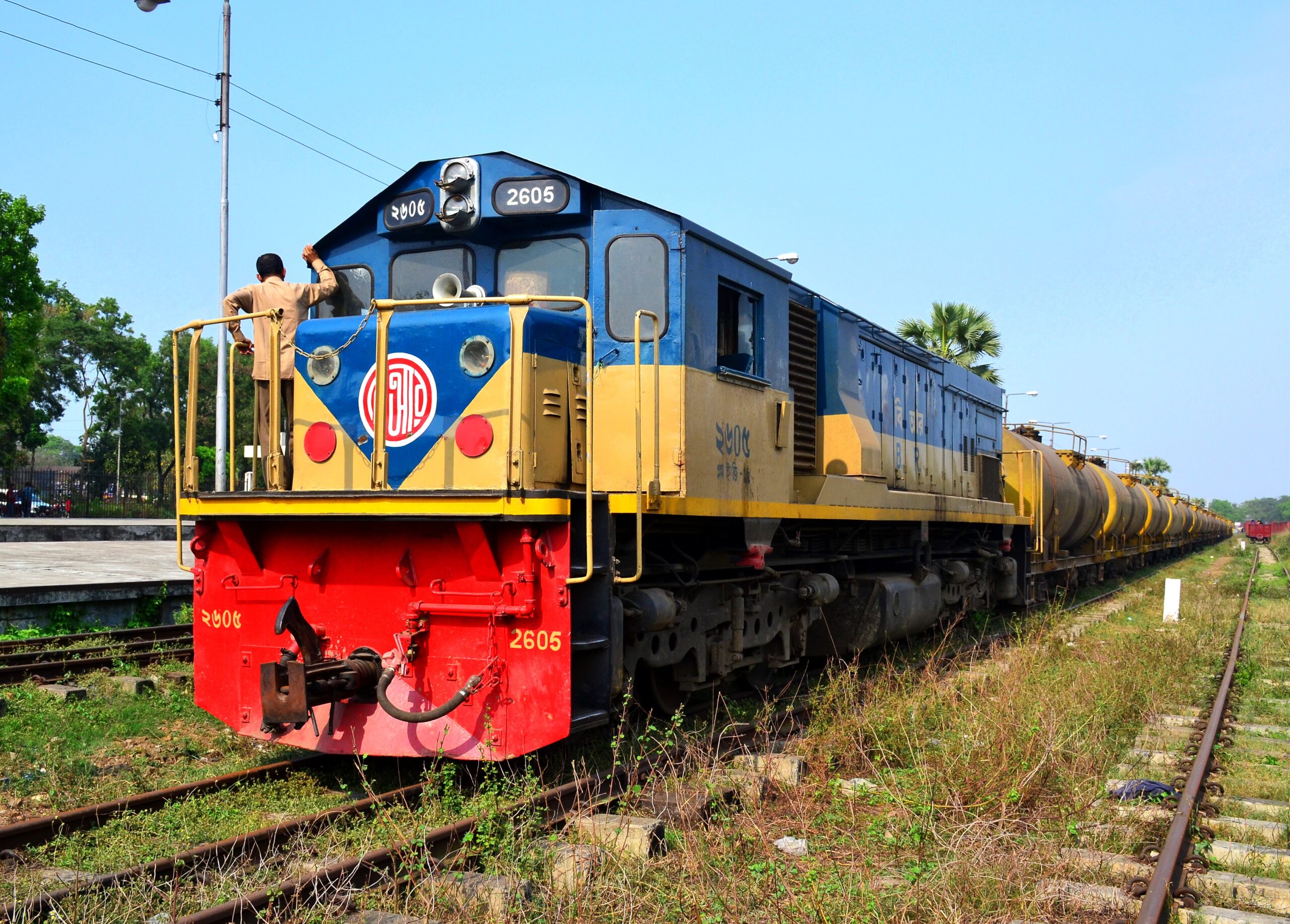
The government plans to procure 70 to 80 more locomotives in phases to ease a severe shortage that is disrupting Bangladesh Railway’s passenger and freight services.
The ongoing project to procure 30 metre-gauge locomotives is only the first step in the broader procurement plan, State Minister for Planning Zonayed Abdur Rahim Saki said yesterday.
“We need around 70 to 80 locomotives. The procurement of 30 locomotives under the current project is therefore only the beginning,” he told reporters after an ECNEC meeting chaired by Prime Minister Tarique Rahman.
The Executive Committee of the National Economic Council (ECNEC) approved the project at an estimated cost of Tk 2,769.86 crore.
The project will procure 30 metre-gauge diesel-electric locomotives for Bangladesh Railway with joint financing from the government and the Asian Infrastructure Investment Bank.
The shortage has already forced the railway authorities to suspend, cancel or reduce services on some routes, Saki said.
It has also created difficulties in transporting freight.
The shortage is particularly acute for metre-gauge locomotives. About 65 percent of the country’s railway tracks are still metre gauge, according to the state minister.
Bangladesh is gradually shifting from metre gauge to dual gauge or standard gauge. But the transition is expected to continue until around 2050.
“Until the transformation is completed, we need sufficient metre-gauge locomotives to ensure uninterrupted passenger and freight services,” Saki said.
Locomotives generally have an operational life of around 20 years. Their service life can, however, be extended through repairs and overhauling.
Bangladesh Railway has kept many ageing metre-gauge locomotives running through such maintenance, he said.
More rolling stock
Saki said the government would bring forward additional locomotive and carriage procurement projects in phases.
It will also strengthen the capacity of the Parbatipur and Saidpur railway workshops to manufacture and maintain locomotives and carriages.
“The use of meter-gauge locomotives is declining globally, but Bangladesh will need them for quite some time because a large part of our railway network will remain meter gauge during the transition,” he said.
Building domestic maintenance capacity is therefore essential, he added.
“Capacity building is equally important. We need to maintain the existing systems while developing the capability to adopt new technologies,” Saki said.
The government is simultaneously implementing projects to convert metre-gauge tracks into dual gauge or standard gauge.
Electric trains, faster Dhaka-Chattogram route
An initiative is also underway to introduce electric trains, Saki said.
A project for an electric railway service between Joydebpur, Dhaka and Narayanganj has already been approved, he said.
Another major project aims to establish a more direct railway connection between Dhaka and Chattogram.
The new alignment is expected to cut travel time by around two to two-and-a-half hours, potentially reducing the journey to about two-and-a-half hours.
The government is also advancing a dual-gauge railway connection to the northern region.
A related project has already achieved around 70 percent progress, Saki said.
“We are trying to expedite the ongoing railway projects and establish railway as an efficient service for both passengers and freight transportation,” he said.
The state minister said the latest locomotive procurement should therefore be viewed as part of a wider railway modernisation programme covering rolling stock, infrastructure, maintenance and manufacturing capacity.
The government will continue bringing forward projects in phases to improve the efficiency and reliability of railway services, he added.