


Despite renewed optimism following tax and duty incentives announced in the proposed national budget for FY2026–27, industry leaders have warned that the benefits are being confined to a small group of solar power companies, potentially undermining the sector’s broader growth.
The Bangladesh Sustainable and Renewable Energy Association (BSREA) on Sunday said the current incentive structure largely excludes the majority of stakeholders, making it difficult to achieve the country’s renewable energy targets.
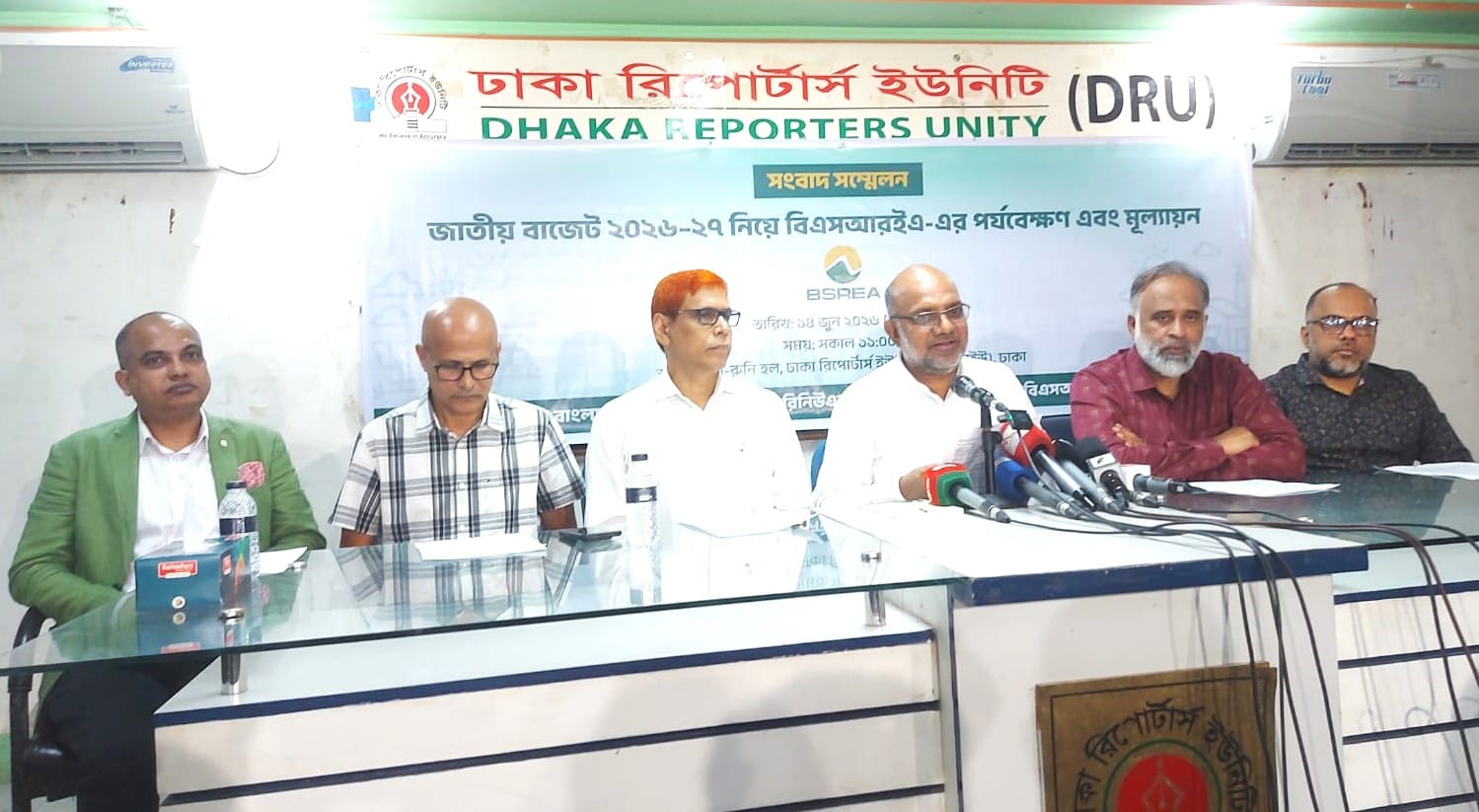
Speaking at a press conference at the Dhaka Reporters Unity, BSREA leaders alleged that unless the National Board of Revenue (NBR) revises the relevant statutory regulatory orders (SROs), expansion of the solar power sector will be constrained and the 2030 targets may remain out of reach.
According to the association, the existing SRO framework effectively covers only 20–22 percent of total electricity consumption, leaving a significant portion of users outside its scope. While the Renewable Energy Service Company (RESCO) model may suit large industrial clients, residential, agricultural, and rural consumers are unlikely to benefit from the current provisions.
In a written statement, BSREA President Mostofa Al Mahmud said the post-budget SRO analysis shows that incentives are mainly applicable to selected solar power producers and companies operating under the RESCO model.
As a result, residential users, solar irrigation projects, and small commercial consumers—as well as a large number of sector-related businesses—are being left out.
He noted that a substantial part of the renewable energy market has developed through importers, distributors, dealers, retailers, and engineering, procurement and construction (EPC) firms.
However, the present policy framework offers little effective support to these stakeholders, putting thousands of businesses and jobs at risk.
Mahmud further pointed out that while the government has provided duty benefits for solar equipment tied to projects with secured power purchase agreements, individuals installing solar irrigation systems or rooftop solar units for personal use will not receive such incentives, as they must procure equipment from the open market.
BSREA estimates that under the current SRO, only 4–5 percent of market participants will actually benefit from the incentives.
The association also expressed concern over public misconceptions that duties on solar panels and related equipment have been fully withdrawn.
In reality, it said, the existing tax structure remains largely unchanged for most products, creating confusion in the market and putting undue pressure on businesses.
Additionally, BSREA criticised the absence of new incentives for solar irrigation, solar street lighting, and battery energy storage systems (BESS) in the budget.
With around 1.7 million diesel-powered irrigation pumps still in use across the country, the association said there is no clear roadmap or financial support to transition these systems to solar power.
The organisation also highlighted the continuation of the “weight-based assessment” method for valuing imported renewable energy equipment, instead of adopting the internationally accepted “transaction value” system. This, it argued, leads to inflated valuations and increases project costs.
Concerns were also raised over the decision to limit duty benefits on mounting structures, lithium cells, battery packs, and BESS components until June 30, 2028.
BSREA warned that if the current policy remains unchanged, Bangladesh may achieve only 2,000–3,000 megawatts peak (MWp) of solar capacity by 2030, far below the 10,000 MWp target.
However, it claimed that opening up zero-duty benefits to all stakeholders—including importers, EPC firms, and distributors—could enable the country to generate 6,000–8,000 MWp of solar power by utilising just 25 percent of rooftop space in Dhaka and other major cities.
The association called for uniform duty benefits on all renewable energy equipment, including solar modules, inverters, battery storage, mounting structures, DC cables, connectors, and smart meters.
It also demanded at least a 10-year tax holiday, income tax exemptions, and inclusive incentives for residential and agricultural users.
“Renewable energy is not a privilege for a specific business group; it is directly linked to the energy security of every citizen,” said Mahmud. “The incentive framework must therefore be inclusive and accessible to all.”
Among others present at the press conference were BSREA Senior Vice-President Zahidul Alam, Vice-President MA Taher, General Secretary Md Ataur Rahman Rozel, and Director (Finance) Nitai Pada Saha.