


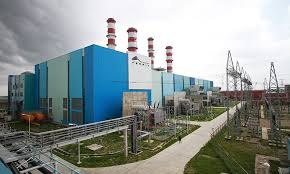
Two Asian Development Bank (ADB)-funded base-load power projects with a combined capacity of 1,318 MW risk imposing a significant financial burden on the Bangladesh Power Development Board (BPDB) due to a lack of natural gas supply needed to operate them.
The 718MW JERA Meghnaghat Power Ltd and 600MW North-West Power Generation Company Ltd (NWPGCL) plants are seeking natural gas for commercial operations. However, officials say the country’s ongoing gas shortage makes timely supply unlikely.
“If the government allows commercial operations without ensuring gas supply, the plants could receive monthly capacity payments of around Tk 170 crore without generating electricity,” a BPDB official warned.
The state-owned 600MW Rupsha Combined Cycle Power Plant remains idle, despite increased demand during peak summer, as it too lacks a viable gas supply. Officials noted that larger plants have already been shut due to the crisis, leaving Rupsha’s future uncertain.
JERA Pushes for Gas Supply
According to official documents, JERA Meghnaghat Power Ltd (JMPL) has requested immediate gas supply to achieve its Commercial Operation Date (COD), which is essential for servicing its ADB loan.
In a recent meeting attended by ADB’s country director and the Japanese ambassador to Bangladesh, JERA expressed willingness to reduce its annual maintenance costs by Tk 8 crore—around 10%—to help reach COD.
“We’ve responded positively to the Power Ministry’s call and hope to receive the gas supply soon,” a JERA official said, requesting anonymity.
The Power Division, however, has asked JMPL to agree to a tariff reduction under the existing Power Purchase Agreement (PPA) that helps to reduce tariff significantly. An official confirmed BPDB will formally issue a letter requesting JMPL to review its PPA before chief adviser Prof Muhammad Yunus visit in Japan mid of the current month.
JMPL’s 718MW combined-cycle power plant at Meghnaghat in Narayanganj is the country’s largest gas-based Independent Power Producer (IPP). It is funded by Japan’s JERA, with financing from the Japan Bank for International Cooperation (JBIC), ADB, and other Japanese commercial banks.
“The plant, one of the most efficient in Bangladesh, has been ready for commissioning since March 2024 but awaits a continuous gas supply for 7–10 days to complete final tests,” said Takao Onuki, JMPL’s Chief Financial Officer, in a letter to the Power Division.
He added that loan repayments began in June 2023, despite the plant not achieving COD, forcing JERA to inject additional equity to avoid default.
“The project faces a potential default if commissioning is further delayed. We remain open to tariff negotiations in good faith but only after discussions with lenders,” Onuki wrote.
Indicative Tariff Adjustment Proposed
In response to BPDB’s request, JERA has proposed reducing the Variable Operation and Maintenance Payment (VOMP) by 10%, from Tk 0.02690 to Tk 0.02421 per kilowatt-hour. The project initially requires 60 mmcfd of gas, scaling up to 130 mmcfd.
BPDB estimates the government may be liable to pay approximately Tk 100 crore monthly in capacity charges for the JERA plant alone if operations do not begin due to the gas crisis.
ADB Defends Investment, Cites Due Diligence
Responding to concerns, an ADB spokesperson reiterated the institution’s commitment to supporting sustainable energy development in Bangladesh.
“In collaboration with development partners, ADB supports projects aligned with Bangladesh’s national priorities. All investments undergo rigorous due diligence, including legal and financial reviews,” the spokesperson said.
The Rupsha 800MW project, approved in 2018, and the JERA Meghnaghat 718MW project, approved in 2019, were both deemed technically and economically viable. Risk mitigation measures, including implementation agreements with the government, were put in place to ensure project bankability.
“The projects are backed by reputable sponsors and contractors, such as JERA and Siemens. The government has committed to honoring payment obligations through agreements with BPDB and TITAS,” the ADB added.
ADB under fire for fossil fuel investments in Bangladesh’s energy sector
The Asian Development Bank (ADB) is facing strong criticism from civil society organizations over its $17.34 billion investment in Bangladesh’s energy sector including Rupsha and JERA power projects, the majority of which has been allocated to fossil fuel-based projects.
The concerns were raised at an event jointly organized by the NGO Forum on ADB and the Coastal Livelihood and Environmental Action Network (CLEAN), ahead of the ADB’s 58th Annual General Meeting.
Speakers accused the multilateral lender of exacerbating Bangladesh’s energy and environmental crises by adhering to an investment model that heavily favors fossil fuels over renewable energy alternatives.
According to an analysis by the NGO Forum on ADB, the ADB has supported 106 power and energy projects in Bangladesh since 1973.
A significant portion of this funding has gone toward fossil fuel-based power generation, oil and gas distribution, and related transmission infrastructure. Of these projects, 67—worth $9.84 billion—have already been closed, raising concerns about the bank’s project planning, sustainability, and long-term strategy.
The report also reveals that 65% of ADB’s energy investments in Bangladesh—amounting to $11.36 billion—lack any safeguard classification.
This has raised serious concerns about transparency and accountability. Only 7.95% of project funds were allocated to high-risk environmental considerations, and just 0.35% (or $60.58 million) was earmarked for resettlement and community safeguards.
“These figures cast serious doubt on ADB’s commitment to sustainable development,” said Sharmin Bristy, Fossil Fuel Campaigner at the NGO Forum on ADB.
CAB Criticism
Professor Shamsul Alam, Energy Adviser at the Consumer Association of Bangladesh (CAB), criticised the ADB’s loans for the Rupsha and Meghnaghat power projects, calling them ineffective and burdensome.
“These ‘bad loans’ have created a financial strain on Bangladesh’s power sector and contributed to increased power tariffs and subsidy pressures,” he said.
Government Response
Power and Energy Adviser Muhammad Fouzul Kabir Khan told Just Energy News that he has already asked the authorities of the JERA Meghnaghat Power Plant to reduce the tariff in order to make the plant operational.