


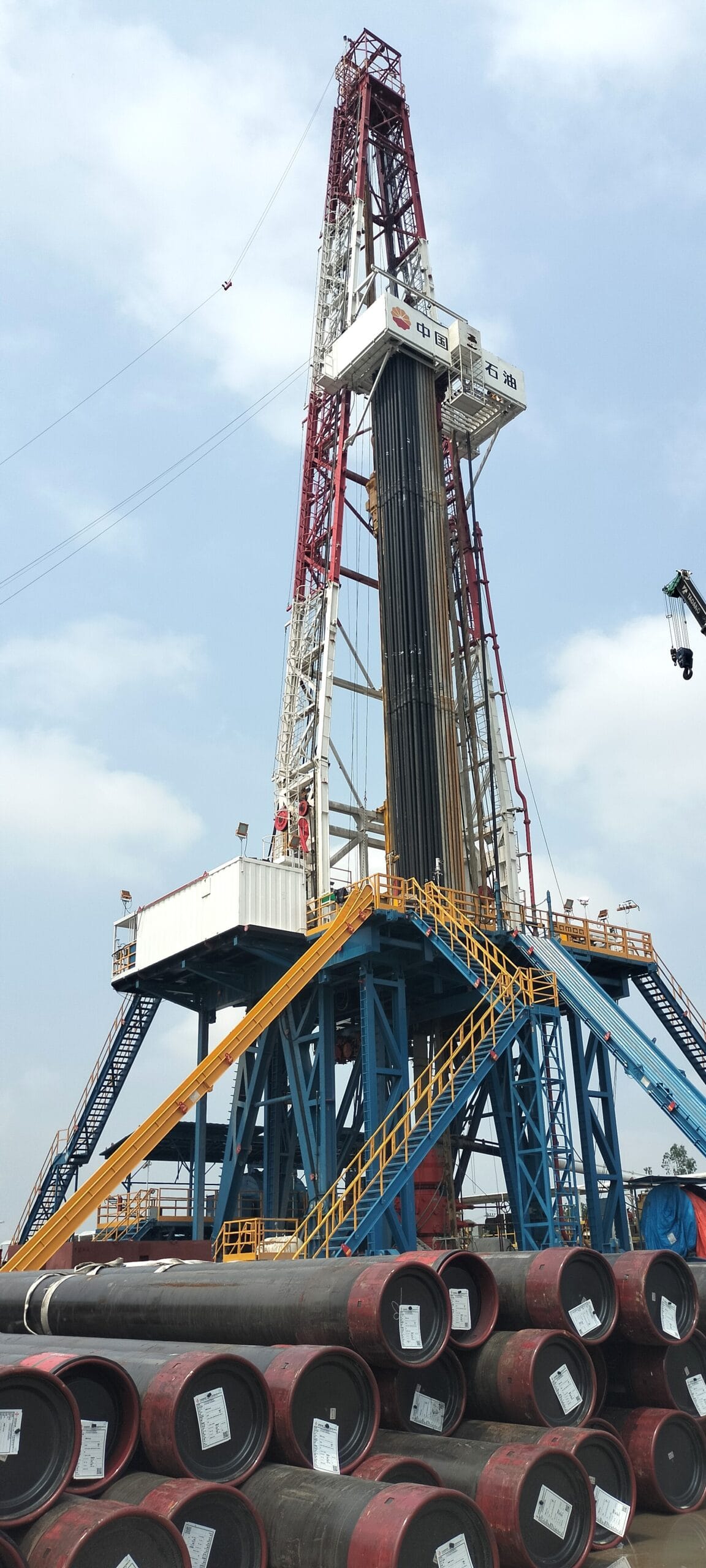
Bangladesh has embarked on its deepest-ever gas exploration effort, drilling more than 5.6 kilometres beneath the surface as it seeks to ease mounting energy shortages.
State-owned Bangladesh Gas Fields Company Limited (BGFCL) has begun work on a high-risk, high-potential well in the eastern district of Brahmanbaria, aiming to reach a depth of 5,600 metres (around 18,372 feet) deep exploration well.
The project marks the country’s first attempt at “deep drilling” on this scale.
At the Titas-31 under Titas Gas Field, the site is a hive of activity, where Bangladeshi engineers are working alongside Chinese specialists.
A high-capacity, 2,682-horsepower drilling rig operates continuously, boring through layers of earth in search of untapped gas reserves.
The effort reflects a broader push to secure domestic energy supplies as Bangladesh grapples with declining gas reserves and rising reliance on costly imports.
“We are hopeful about the prospect of 2 trillion cubic feet of natural gas,” said Abdul Jalil Pramanik, managing director of BGFCL. “If everything goes according to plan, we expect promising results, though the actual reserves will only be confirmed after testing.”
Bangladesh has historically drilled to depths of up to 4,900 metres. This new well pushes beyond that सीमा, targeting geological formations believed to hold significant gas deposits. Officials say four potential gas-bearing layers have been identified between depths of roughly 3,700 and 5,300 metres.
The current well is expected to take around 210 days to complete, with drilling having begun on April 19 and about 22% of the work finished so far.
A second well is planned at Bakhrabad Gas Field, to a depth of 4,300 metres, using the same rig.
Combined, the two projects are expected to cost about Tk5.94 billion. Officials estimate that the wells could yield up to 2 trillion cubic feet (TCF) of gas, although commercial viability will depend on post-drilling assessments.
The stakes are high. Bangladesh’s official daily gas demand stands at around 4 billion cubic feet, though actual demand is estimated closer to 5 billion. Current supply hovers between 2.6 and 2.7 billion cubic feet per day, with roughly a third coming from imported liquefied natural gas (LNG).
As domestic reserves dwindle, the country has been forced to increase LNG imports, exposing it to volatile international markets and placing pressure on public finances.
Deep drilling, however, carries significant risks. Beyond depths of about 3,750 metres, the well is expected to encounter high-pressure zones that could disrupt operations. To mitigate this, engineers are using a 15,000-psi blowout preventer—an upgrade from the 10,000-psi systems used in earlier projects.
The work is being carried out by China National Petroleum Corporation Drilling Company, which has experience drilling wells as deep as 10,000 metres.
BGFCL officials say the project represents a step change in both technology and ambition for Bangladesh’s energy sector.
If successful, the discovery of significant new reserves could help ease the country’s energy crisis, reduce dependence on imports and stabilise supply to the national grid.
For now, what lies beneath the soil of Titas remains uncertain. But with each metre drilled, expectations are rising that a new source of energy may yet be found.