


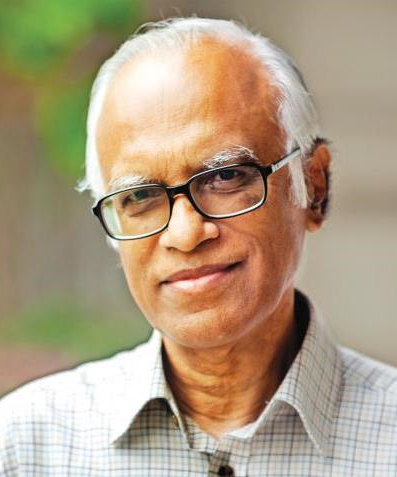
Bangladesh’s banking sector has moved beyond a culture of loan default to one of outright looting, as weak regulation and political patronage have allowed money to be siphoned off from banks, economist Wahiduddin Mahmud said on Wednesday.
“After struggling to move away from the culture of loan defaults and introducing rules to restore discipline, we entered a culture of bank looting after 2010,” said Wahiduddin, a former adviser to the interim government in charge of planning and education.
Speaking at the opening session of a two-day annual banking conference organised by the Bangladesh Institute of Bank Management (BIBM) in Dhaka, he warned that the practice of taking money out of banks without regard to rules had inflicted deeper damage on the financial sector.
He said Bangladesh had once introduced reforms to curb loan defaults, restore discipline and bring some private banks up to international standards. But those gains were undermined after 2010, when a series of new banks received approval without adequate scrutiny and regulatory safeguards were weakened.
Wahiduddin said the consequences of allowing private banks to operate without an appropriate regulatory framework had been evident in the past. At one stage, sponsor-directors borrowed an amount equivalent to around 35 percent of their banks’ total deposits, he said.
He called for legal safeguards to prevent a single business group or family from controlling multiple banks, saying Bangladesh still lacked an anti-trust or anti-monopoly law to address such concentration of ownership.
Political governments had also used state-owned banks to distribute benefits to favoured individuals, he said, warning against using the banking system as an instrument of political patronage.
“If a political government wants to distribute benefits for political reasons, it should choose sectors where the damage to the economy would not be so great,” he said, adding that such patronage through the banking and financial sectors was unacceptable.
Wahiduddin also highlighted the plight of teachers whose salaries, welfare benefits and pension funds had been deposited in banks that subsequently collapsed.
He said the failure of those banks had left billions of taka in teachers’ pension and welfare funds inaccessible, disproportionately affecting low-income and government-approved private-school teachers whose retirement benefits remained trapped.
The former adviser warned that efforts to rescue troubled banks must not repeat the mistakes that contributed to the crisis.
Over the past 15 years, excessive relaxation of banking regulations had helped bring the sector to its current condition, he said. Although some relaxation might now be necessary to rescue weak banks, he questioned whether the authorities could guarantee that the same approach would not lead to further deterioration.
Banks should be given an opportunity to stand on their own feet, but only with adequate safeguards, he said. Each case should be examined separately to ensure that funds reach genuine entrepreneurs and viable businesses rather than those seeking to exploit the system.
“Unless we can ensure this, we will fall into the same old trap again,” he warned.
Wahiduddin urged policymakers to draw lessons from decades of banking experience instead of revisiting debates that had already been settled. He said the authorities should establish an effective regulatory framework before allowing further expansion of private banking.
The remarks come as Bangladesh faces the challenge of restoring confidence in a banking sector weakened by bad loans, governance failures and the concentration of lending and ownership.
Bangladesh Bank Deputy Governor Md Kabir Ahmed, Bangladesh Association of Banks President and Dhaka Bank Chairman Abdul Hai Sarker, World Bank Bangladesh and Bhutan Division Director Jean Pesme, and Association of Bankers, Bangladesh Chairman and City Bank Managing Director Masrur Arefin also spoke at the conference.
Zaidi Sattar, chairman of the Policy Research Institute, presented the keynote paper.