


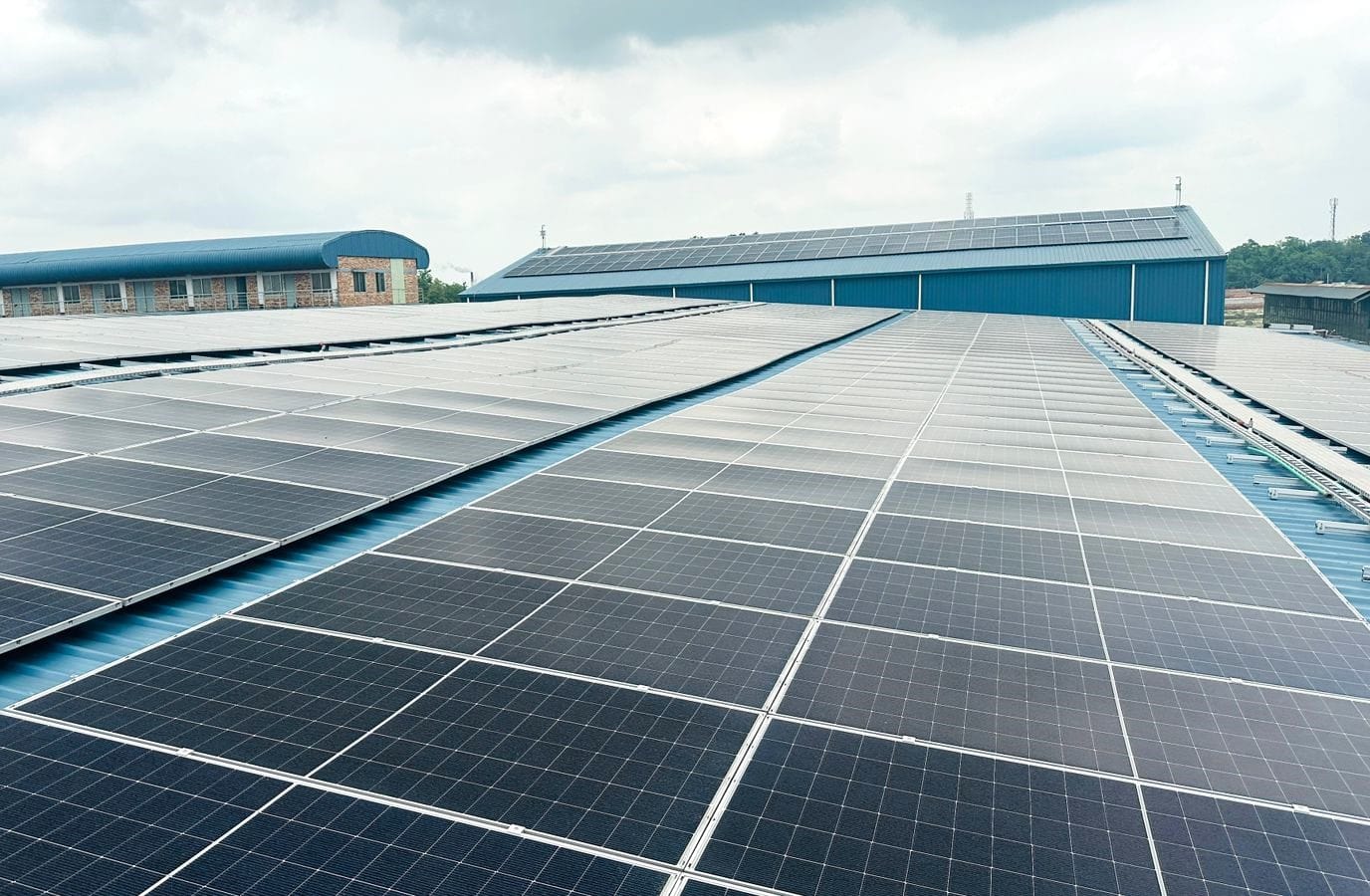
Bangladesh has the potential to generate more than 132 megawatt-peak (MWp) of solar power through rooftop installations at public universities, colleges and buildings in Rajshahi and Shailkupa, according to a study released by the Consumers Association of Bangladesh (CAB) on Wednesday.
The study also found that although access to electricity had improved living standards for lifeline consumers over the past decade, rising bills and unreliable supplies remained major concerns.
CAB unveiled the findings at a public dialogue at the Dhaka Reporters Unity (DRU), focusing on rooftop solar feasibility and a survey of lifeline electricity consumers in Rajshahi City Corporation and Shailkupa Municipality in Jhenaidah.
Ruhul Kabir Rizvi, acting secretary general of the Bangladesh Nationalist Party (BNP) and political adviser to the Prime Minister, attended the programme as chief guest. CAB general secretary Advocate Humayun Kabir Bhuiyan chaired the event, while CAB research co-ordinator Engineer Shubho Kibria moderated the session. Professor M Shamsul Alam, the association’s energy adviser, presented the main findings.
According to the assessment, 31 public university campuses have rooftop solar potential of 52.50MWp, while 150 college campuses could accommodate systems with a combined capacity of 51.12MWp.
Rajshahi City Corporation has an estimated potential of 24.60MWp, while Shailkupa municipality has the capacity for a further 4.06MWp.
The findings highlight the scope for expanding renewable energy generation by using existing rooftops, potentially reducing pressure on conventional power sources.
Electricity bills remain a burden
The comparative survey covered 556 households, including 334 in Rajshahi and 222 in Shailkupa, and examined changes in the lives of lifeline electricity consumers over a ten-year period.
It found that electricity consumption had increased in 85 per cent of households, while 77 per cent reported an increase in the number and variety of household appliances.
Refrigerator ownership rose from 10 per cent to 40 per cent, while television ownership increased from 34 per cent to 48 per cent. Some 76 per cent of households reported improvements in the environment for studying.
The survey showed that 89 per cent of respondents believed electricity had improved their quality of life, while 97 per cent said access to electricity made them feel safer at night.
However, 69 per cent said electricity bills had become more burdensome relative to their income. Another 55 per cent rated the reliability of electricity supply as poor or very poor.
The findings point to the need to improve both the affordability and reliability of electricity services, particularly for low-income households.
Electricity use proposed as poverty indicator
CAB has proposed using household electricity consumption as an initial indicator for identifying people living in poverty, potentially reducing the cost of separate surveys and welfare identification programmes.
Under the proposed system, regular meter readings would be used to identify households with low electricity consumption. Their socio-economic conditions would then be assessed through a brief verification process.
The association said the approach could offer an alternative to costly projects run by the Ministry of Social Welfare and the Ministry of Finance. It cited projects worth Tk 2,699 crore under the Ministry of Social Welfare and Tk 216 crore under the Ministry of Finance as areas where expenditure savings could potentially be achieved.
CAB proposed a 12-point action plan to test the approach, including pilot projects, clear institutional responsibilities, verification of household and meter records, collection of 12 months of consumption data, locally appropriate consumption thresholds and independent benchmarks.
It also called for representative pilot studies and the establishment of clear acceptance criteria before the system is adopted more widely.
However, the association’s proposal would require safeguards to ensure that low electricity consumption is not automatically treated as proof of poverty and that vulnerable households are not wrongly excluded from assistance.
Rizvi calls for accountability in power sector
Speaking at the event, Rizvi alleged that the Awami League government had enacted an indemnity law to create opportunities for irregularities in the power sector.
“Ensuring accountability would leave no room for irregularities in any sector,” he said, stressing that accountability across public institutions was essential to establishing a democratic society.
Rizvi said that despite claims of universal electricity access, many people in remote areas and riverine island communities, known as chars, remained without electricity. Some poor households were also compelled to share electricity connections.
He cautioned that electricity consumption figures alone could not provide a complete picture of a household’s economic circumstances.
“Real-life circumstances must be taken into account when assessing poverty on the basis of electricity consumption statistics,” he said, adding that further scrutiny of the research and its findings would be important.
On renewable energy, Rizvi said the sector offered considerable investment opportunities, including for foreign investors. Supplying surplus electricity to the national grid after meeting local demand could increase generation and create jobs, he added.
Referring to the impact of the global energy crisis on Bangladesh, he said alternative energy sources and other measures could help the country address the challenges.
BAPA urges incentives for rooftop solar
Alamgir Kabir, general secretary of the Bangladesh Poribesh Andolon (BAPA), said renewable energy was essential to addressing climate change, but its use in Bangladesh remained limited.
He called on young people to take a more active role in expanding rooftop solar projects at the local level and urged the government to introduce effective policies and incentives to accelerate the transition to renewable energy.
Researcher and journalist Kajol Rashid Shahin described the proposal to use electricity consumption data to identify poverty as timely, but stressed that transparency and accountability would be essential to its implementation.
He said measures must be in place to ensure that eligible households were not mistakenly left off beneficiary lists.
Shihab Uddin, a faculty member at Daffodil International University, said Bangladesh had considerable untapped solar potential, but realising it would require investment security, transparent long-term contracts, effective regulation and a skilled workforce.
He said the university was already training students in solar panel installation and energy auditing, adding that such initiatives should be expanded nationwide.
Researcher Anis Raihan also stressed the importance of transparency and accountability in the power sector.
CAB recommends pilot projects and public-private partnerships
CAB made three key recommendations following the study and called for household electricity consumption to be tested as an initial indicator of poverty through pilot projects, with safeguards against the exclusion of vulnerable households.
The association also recommended public-private partnerships to expand rooftop solar installations at the local level.
In addition, it urged the authorities to review the level and distribution of lifeline electricity support and take steps to ensure a more reliable power supply.
Government representatives, policymakers, researchers, academics, journalists and other stakeholders attended the dialogue.
CAB said it would continue its research and advocacy on rooftop solar development, electricity affordability and the use of household electricity data to improve the identification of people requiring social support.