


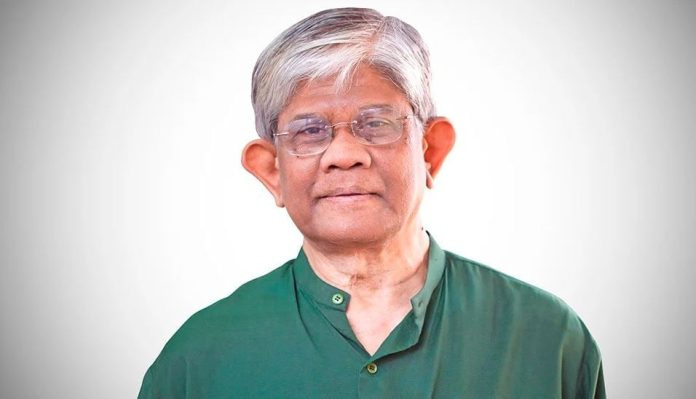
Citizens will inevitably feel frustrated if they pay taxes but receive little to no services in return, Finance Adviser Dr. Salehuddin Ahmed on Monday.
“In countries where tax rates are high, people still comply because they get quality services. In our case, people pay taxes but receive very little. Naturally, they will feel aggrieved,” he said while while speaking at a seminar.
The seminar titled: “Unveiling Bangladesh’s Bond and Sukuk Market: Revenue Sustainability, Infrastructure Implementation, and Islamic Money Market Development,”was jointly organised by the Bangladesh Securities and Exchange Commission (BSEC) and the Dhaka Stock Exchange (DSE).
A System Under Strain: Revenue Shortfalls and Rising Demands
Pointing to a chronic lack of financing as one of the country’s key structural challenges, Dr. Ahmed criticized the unrealistic expectations placed on the government. “Wherever we sit, we assume the government can provide everything — every day it’s a new demand. But we aren’t receiving revenue at a scale that matches our ambitions.”
He lamented that Bangladesh’s tax-to-GDP ratio is a meager 7.2%, far below emerging market peers like Brazil, where the ratio stands at 26%. “They pay taxes and get services. We pay taxes and get runarounds,” he said.
Poor Public Service Delivery Erodes Trust
Dr. Ahmed underscored that the lack of quality public services is weakening taxpayer morale. “Everyone wants tax cuts, but then we may not even be able to pay government salaries. At the same time, people complain about teachers not performing — but how are they supposed to with the wages they receive?”
He urged the National Board of Revenue (NBR) to improve service delivery and reduce bureaucratic inefficiencies. “If you don’t offer good service and instead send people in circles, how can you expect better compliance?”
Strengthening Capital Markets to Reduce Overdependence on Banks
A significant portion of Dr. Ahmed’s speech was dedicated to Bangladesh’s overreliance on the banking sector for funding both public and private projects — a model he described as unsustainable.
“Our financial system is excessively bank-centric. Both government and private borrowers take loans, often without repayment. This is a financial tragedy. We need to reduce this dependence through a strong, diversified capital market,” he said.
He stressed the importance of investor education, particularly for retail investors, many of whom mistakenly view the stock market as a guaranteed source of income. “Capital markets come with risk — that message hasn’t reached everyone. The BSEC and DSE must take more responsibility in public education.”
Sukuk Bonds: Untapped Potential Beyond Government Projects
Dr. Ahmed emphasized the need to expand the use of Sukuk (Islamic bonds) beyond the public sector. “We have over Tk 24,000 crore worth of Sukuk in the market, but nearly all of it is tied to government infrastructure projects. The private sector must also leverage this tool for business and infrastructure financing.”
He cited large-scale infrastructure developments such as the MRT (Mass Rapid Transit) system as ideal candidates for securitization, requiring “tens of thousands of crores in investment.”
Regulatory Barriers and a Broken Insurance Sector
The economic adviser also pointed to legal and regulatory barriers preventing the deployment of long-term investment funds such as gratuity and pension reserves. “Due to legal constraints and a lack of government accountability, it’s nearly impossible to mobilize these funds.”
He didn’t mince words in describing the state of the country’s insurance sector. “It’s in disarray — a chaotic system in urgent need of reform.”
According to Dr. Ahmed, a truly dynamic financial sector must go beyond banking and include robust insurance, capital markets, and innovative tax instruments.
“Taxation Must Be a Contract Between Citizens and the State”
In closing, Dr. Ahmed stressed that trust between the government and the people is essential for sustainable economic progress.
“People must feel that paying taxes means receiving something in return. That’s the ultimate test of good governance. Without that trust, the entire social contract breaks down.”
Other speakers at the seminar included Dr. Anisuzzaman Chowdhury, Special Assistant to the Chief Adviser and Chairman of the Capital Market Development Committee; Dr. Ahsan H. Mansur, Governor of Bangladesh Bank; and Secretary of the Financial Institutions Division, Nazma Mobarek.
The keynote was presented by Professor M. Kabir Hassan of the University of New Orleans, while BSEC Chairman Khondkar Rashid Maksud presided over the session.