


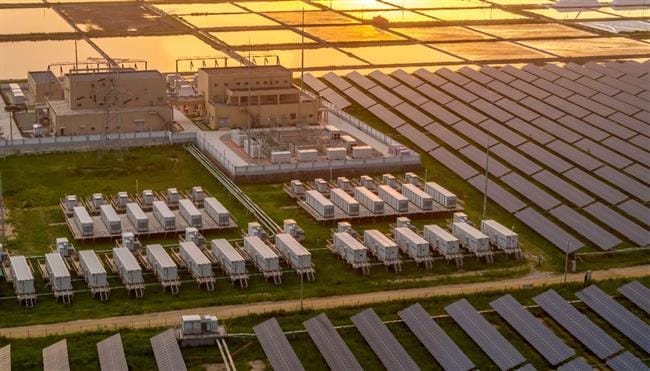
Solar and wind power combined with battery storage can now provide reliable, 24-hour electricity at a lower cost than fossil fuels in many parts of the world, according to a new report from the International Renewable Energy Agency (IRENA).
The study finds that so-called “firm” renewable energy — where intermittent sources like solar and wind are backed by storage — has reached a tipping point on affordability, challenging long-held assumptions about reliability and cost.
In regions with strong solar and wind resources, electricity generated from solar-plus-storage systems now costs between $54 and $82 per megawatt-hour (MWh).
This undercuts new coal power, which typically ranges from $70 to $85 per MWh in markets such as China, and is significantly cheaper than new gas-fired generation, often exceeding $100 per MWh globally.
António Guterres said the findings highlight a shift in the global energy landscape. “The worst energy crisis in decades has exposed the true cost of fossil fuel dependence,” he said. “Renewable power is increasingly the most affordable, reliable and secure option.”
IRENA’s Director-General, Francesco La Camera, added that the argument that renewables cannot provide consistent supply “no longer holds”. He pointed to rapid advances in battery technology and falling costs as key drivers of the transition.
The report notes that since 2010, the cost of solar photovoltaic (PV) systems has dropped by 87%, while onshore wind costs have fallen by 55%. Battery storage has seen the steepest decline, plunging by 93% over the same period.
These trends are reshaping energy markets. Hybrid systems combining solar, wind and batteries can now optimise grid use, supply electricity during peak demand hours, and reduce exposure to volatile fossil fuel prices — a concern heightened by geopolitical risks such as disruptions in the Strait of Hormuz.
The implications extend beyond household energy bills. Industries requiring constant power — including artificial intelligence infrastructure and data centres — are increasingly seen as key beneficiaries of round-the-clock renewable supply.
IRENA also projects further cost reductions, estimating that firm renewable energy could fall by around 30% by 2030 and up to 40% by 2035. In the best locations, costs could drop below $50 per MWh within a decade.
Real-world examples are already emerging. The Al Dhafra solar complex in the United Arab Emirates is cited as delivering one gigawatt of clean, continuous power at roughly $70 per MWh.
With construction timelines for renewable projects typically between one and two years — faster than most new gas plants — the report concludes that scaling up hybrid renewable systems could play a decisive role in strengthening energy security and stabilising prices.
For the UK, where energy affordability and security remain high on the political agenda, the findings are likely to intensify calls for accelerated investment in renewables and grid infrastructure.