


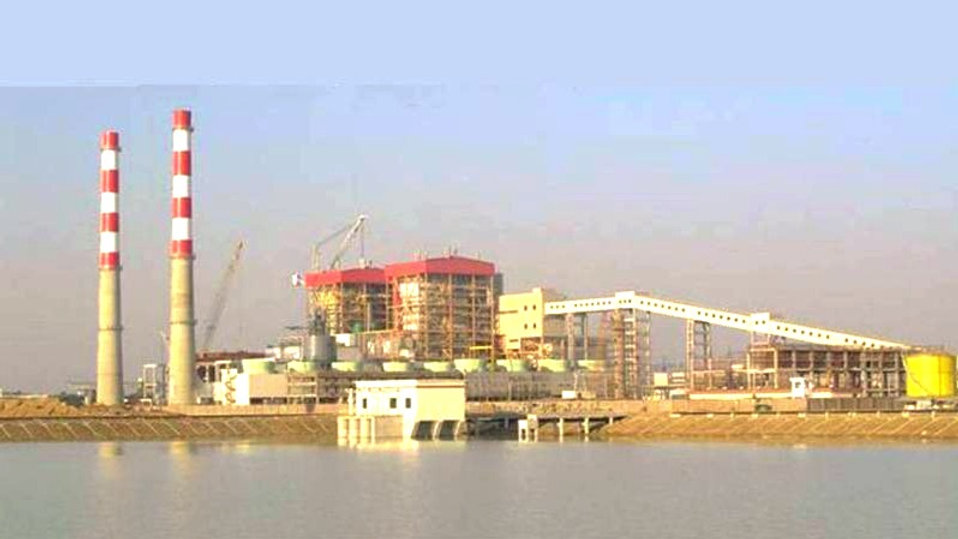
The 1,320MW Rampal coal-fired power plant is operating at full capacity, but the government has yet to finalise the price of its electricity, address outstanding financial issues or formally declare the Tk 16,000-crore project complete, nearly nine years after its approval.
The unresolved issues have prompted the government’s project-monitoring agency to ask the Power Division to settle the electricity purchase tariff in the state’s interest, help the plant recover arrears to ensure uninterrupted fuel supplies and complete the formalities for project closure.
In an inspection report dated October 11, the Implementation Monitoring and Evaluation Division (IMED) of the Planning Ministry also expressed concern over the lack of follow-up on recommendations made during an earlier inspection.
The report followed a September 18 visit to the plant in Rampal, Bagerhat, by IMED Director Md Moniruzzaman.
Electricity price still undecided
The most significant unresolved issue is the tariff at which the Bangladesh Power Development Board (BPDB) will purchase electricity from the plant.
Despite both generating units being commercially operational and supplying power to the national grid, the process of determining the purchase price is still underway, according to the report.
IMED has asked the Power Division to finalise the tariff logically, following international best practices and keeping the interests of the state foremost.
The report, however, does not disclose the proposed rate or explain why the tariff-setting process remains incomplete.
Earlier estimates of the plant’s generation cost varied widely. Some officials had put the cost at Tk 5-6 per unit, while initial projections by India’s state-run NTPC, the project’s joint-venture partner, put it at around Tk 8.
A previous report also cited an energy charge of 14.04 US cents per kilowatt-hour, in addition to a capacity charge of 4.85 cents.
“The process of deciding at what price the government of Bangladesh will purchase the electricity is still pending. The Power Division must fix the tariff logically, keeping in view international best practice and the best interest of the state,” said Md Moniruzzaman, an IMED director.
Arrears threaten uninterrupted fuel supply
IMED has also flagged financial difficulties that could affect the plant’s uninterrupted operation.
It says the plant needs assistance from BPDB to recover outstanding dues so that fuel supplies are not disrupted. It has also called for speedy approval of a proposal to increase the plant’s working-capital loan from Janata Bank to ensure uninterrupted operation of both units.
The report does not specify the amount of arrears or the proposed increase in the working-capital facility.
However, media reports in December last year quoted the plant’s coal supplier as saying that its outstanding payments had remained between $100 million and $150 million for around two years, partly because dollar shortages had slowed the opening of letters of credit.
“The electricity produced by the project can make an important contribution to meeting the country’s power demand by being supplied through the national grid. To this end, cooperation of the concerned office is needed in receiving arrears from BPDB, to keep fuel supply to the plant uninterrupted,” Moniruzzaman said.
“Cooperation is also needed in quickly approving the proposal to increase working capital from Janata Bank, so that both units can run without interruption,” he added.
Project nearly complete, but formal closure pending
The 2×660MW Maitree Super Thermal Power Project, commonly known as the Rampal power plant, was 99.94 per cent physically complete and 98.64 per cent financially complete as of August 2026, according to IMED.
The main construction work was completed in March 2024. The remaining 0.06 per cent involves landscaping and beautification of the project area and clearing technical issues identified during commissioning.
These activities are being carried out within the contractual Defect Liability Period, during which the contractor remains responsible for fixing defects.
Despite the project’s near-completion, the Power Division has yet to formally notify IMED that the project is complete. The agency has again asked the division to issue the declaration so that it can conduct the final evaluation.
Under government procedures, a project completion report must be submitted within 90 days of completion.
IMED says it had previously sought the completion declaration by April 2026, following an inspection on March 26, but received no information on what action had been taken on its earlier recommendations.
It set November 1 as the deadline for the Power Division to report on the latest recommendations. The inspection documents do not indicate whether the division responded by that date.
The agency has also asked the authorities to update the project’s information in the government’s electronic Project Management Information System (e-PMIS) before preparing the completion report.
Four deadline extensions
Approved on April 24, 2017, at Tk 16,000 crore, the project was originally scheduled to bring Unit 1 into operation in February 2021 and Unit 2 in August that year.
The completion deadline was extended four times, stretching the original schedule by nearly 60 per cent, although the project cost remained unchanged.
The project is being implemented by Bangladesh-India Friendship Power Company Ltd (BIFPCL), a joint venture between BPDB and India’s NTPC.
Around 80 per cent of the project cost was financed through a loan from India’s EXIM Bank, while the remaining 20 per cent came from equity contributions by BPDB and NTPC in equal shares.
Unit 1 began commercial operation in December 2022, followed by Unit 2 in March 2024. Both units are now supplying electricity continuously to the national grid, apart from the plant’s own consumption.
Technology and environmental concerns
IMED has identified the plant’s flue-gas desulphurisation (FGD) system as a significant technological feature, describing it as the first of its kind in Bangladesh.
The technology reduces sulphur emissions and produces gypsum as a commercially valuable by-product. The agency has suggested considering its use in future coal-fired power projects.
“The rate of sulphur emission from this power plant has been brought to the lowest level through the flue gas desulphurisation process, which is the first in Bangladesh… If any coal-based project is taken up in future, this process can be included in it,” IMED Director Md Moniruzzaman suggested in his report.
On environmental compliance, the report says activities are being carried out in line with the conditions of the Department of Environment’s clearance, with the Center for Environmental and Geographic Information Services (CEGIS) serving as the consultant.
Located about 14 kilometres from the Sundarbans, a UNESCO World Heritage site, the plant has faced opposition from environmental groups over its potential ecological impact. The latest IMED report, however, does not address these concerns.
Meanwhile, BPDB plans to develop a 442MW solar power plant on around 918 acres of unused land acquired for the Rampal project.